Truck Recovery Gear Buying Guide
Getting stuck off-road — or even on a muddy backroad — is a matter of when, not if. The right recovery gear turns a potential overnight ordeal into a 15-minute inconvenience. But walk into any off-road shop or scroll through Amazon, and you'll find hundreds of straps, shackles, winches, and kits at wildly different price points.
This guide cuts through the noise. You'll learn exactly what each piece of recovery gear does, which items you actually need for your situation, how much to spend at each level, and the costly mistakes that catch first-time buyers. Whether you're building a kit from scratch or upgrading worn-out gear, this is everything you need to make a smart purchase.
Key Takeaways
- A basic truck recovery kit with a tow strap, D-ring shackles, and a tree saver costs $80–$150 and handles most stuck situations.
- Synthetic winch rope is safer than steel cable because it doesn't store kinetic energy and won't whip back if it snaps.
- Recovery straps and tow straps serve different purposes — using the wrong one can damage your vehicle or cause serious injury.
- Working Load Limit (WLL) should be at least 1.5× your vehicle's gross weight, and Breaking Strength should be 3× or higher.
- Pre-built recovery kits offer better value than buying individual pieces, but check that every component meets your truck's weight rating.
What Recovery Gear Do You Actually Need?
The gear you need depends on where you drive and how often you venture off pavement. At minimum, every truck owner should carry a recovery strap, a pair of D-ring shackles, and heavy-duty gloves. This basic trio handles the most common scenario: another vehicle pulling you out of mud, sand, or snow.
Beyond the basics, your kit grows based on risk level:
- Casual off-roaders: Add a tree saver strap, snatch block, and a shovel. These let you use anchor points in the wild and dig out packed mud or snow.
- Dedicated trail runners: A winch becomes essential. Pair it with synthetic rope, a winch damper blanket, and proper rigging hardware.
- Remote overlanders: Full self-recovery capability including a winch, hi-lift jack, traction boards, and redundant strap sets.
One piece many people overlook is a winch damper blanket. This weighted blanket drapes over your strap or winch line and absorbs energy if something snaps. It's a $15–$30 safety item that could prevent a life-threatening whiplash injury.
If you're just starting out, a quality recovery kit bundles all the essentials at a lower price than buying each item separately. Most kits in the $80–$150 range include a strap, shackles, gloves, and a storage bag — everything a weekend warrior needs.
What's the Difference Between Recovery Straps, Tow Straps, and Winch Lines?
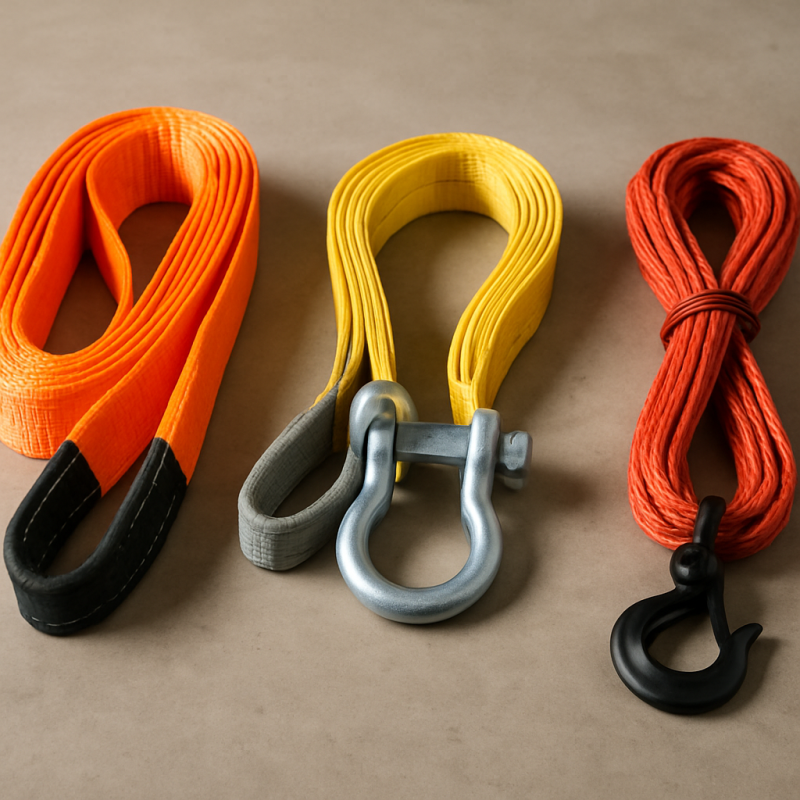
These three items look similar but work in completely different ways. Using the wrong one is the most common — and most dangerous — mistake in truck recovery. Here's how they differ:
| Feature | Recovery Strap (Snatch Strap) | Tow Strap | Winch Line |
|---|---|---|---|
| Material | Nylon (stretchy) | Polyester (non-stretch) | Steel cable or synthetic rope |
| Stretch | 15–20% | Less than 3% | Minimal |
| Purpose | Snatch recovery (momentum pull) | Flat towing on pavement | Powered winch pulling |
| Typical Length | 20–30 ft | 20–30 ft | 50–100 ft |
| Safety Risk | Moderate (stores energy) | Low | High with steel cable |
| Price Range | $30–$80 | $15–$40 | $50–$200 |
A recovery strap is made of nylon and stretches intentionally. The pulling vehicle builds momentum, and the strap's elasticity transfers that kinetic energy to the stuck vehicle. Never attach a recovery strap to a tow ball — if the ball shears off, it becomes a deadly projectile.
A tow strap is made of polyester and doesn't stretch. It's designed for flat-towing a disabled vehicle at slow speeds. Using a tow strap for snatch recovery creates a violent shock load that can snap attachment points.
For winch lines, synthetic rope has largely replaced steel cable for good reason. If a steel cable snaps under tension, it whips back with lethal force. Synthetic rope simply falls to the ground. The NHTSA recommends always using a winch damper blanket regardless of line type. For a deeper look at winch techniques, our guide on using a truck winch for recovery covers proper rigging step by step.
How Do You Choose the Right Weight Rating?
Every piece of recovery gear has two critical ratings: Working Load Limit (WLL) and Breaking Strength (MBS). Getting these wrong means your gear fails exactly when you need it most — under maximum stress.
Here's the rule of thumb:
- Working Load Limit: Should be at least 1.5× your vehicle's Gross Vehicle Weight Rating (GVWR). For a half-ton truck at 7,000 lbs GVWR, your strap's WLL should be 10,500 lbs minimum.
- Breaking Strength: Should be at least 3× your GVWR. That same truck needs gear rated to 21,000 lbs breaking strength.
- Shackle rating: D-ring shackles must match or exceed your strap's WLL. A 30,000 lb strap with 9,500 lb shackles creates a failure point at the shackle.
Common GVWR ranges by truck class:
| Truck Class | Typical GVWR | Minimum WLL | Minimum Breaking Strength |
|---|---|---|---|
| Midsize (Tacoma, Ranger) | 5,500–6,500 lbs | 9,000 lbs | 18,000 lbs |
| Half-ton (F-150, Silverado) | 6,500–7,700 lbs | 11,000 lbs | 22,000 lbs |
| Three-quarter ton (F-250, 2500) | 9,500–10,500 lbs | 15,000 lbs | 30,000 lbs |
| One-ton (F-350, 3500) | 11,500–14,000 lbs | 20,000 lbs | 40,000 lbs |
Don't forget that a stuck vehicle often requires more force than its static weight. Mud suction, steep inclines, and obstacles can double or triple the pull force needed. That's exactly why the safety margins exist — they're not optional overkill.
Always check the rating stamped directly on the hardware. If a shackle or strap doesn't have a visible rating, don't use it for recovery. Unmarked gear from no-name brands is the single biggest safety risk in this category.
What Are the Price Tiers for Truck Recovery Gear?
Recovery gear ranges from $50 budget kits to $2,000+ full winch setups. The right tier depends on how often you need it and how remote your adventures get. Here's what each price level gets you:
- Budget tier ($50–$100): A basic recovery strap (20,000–30,000 lb breaking strength), a pair of D-ring shackles, gloves, and a nylon storage bag. Adequate for occasional mud or snow situations where another vehicle is available to pull you out. Quality varies widely — inspect stitching and hardware ratings carefully.
- Mid-range tier ($100–$300): A complete recovery kit with a premium strap, bow shackles, tree saver strap, snatch block (doubles pulling force), winch damper, gloves, and an organized carry bag. This is the sweet spot for most truck owners. Brands like Rhino USA, GearAmerica, and Smittybilt dominate this range with well-tested products.
- Premium tier ($300–$800): High-end kits from brands like ARB, Warn, and Factor 55 featuring HMPE fiber straps, forged steel shackles, and premium soft shackles. Materials are lighter and stronger with higher safety margins. Worth it for dedicated off-roaders who use gear weekly.
- Full winch setup ($800–$2,500+): Electric winch (8,000–12,000 lb capacity), synthetic rope, mounting plate or bumper, wireless remote, plus all rigging accessories. This is self-recovery capability — you don't need another vehicle. Warn and Smittybilt are industry leaders.
The most common mistake? Buying a cheap kit and assuming it's "good enough." Budget straps often use thinner webbing, lower-grade stitching, and unrated hardware. For gear that sits between you and a dangerous situation, spend the extra $50 for mid-range quality. Check our top-rated recovery kit picks for specific recommendations at each price point.
Should You Buy a Pre-Built Kit or Build Your Own?
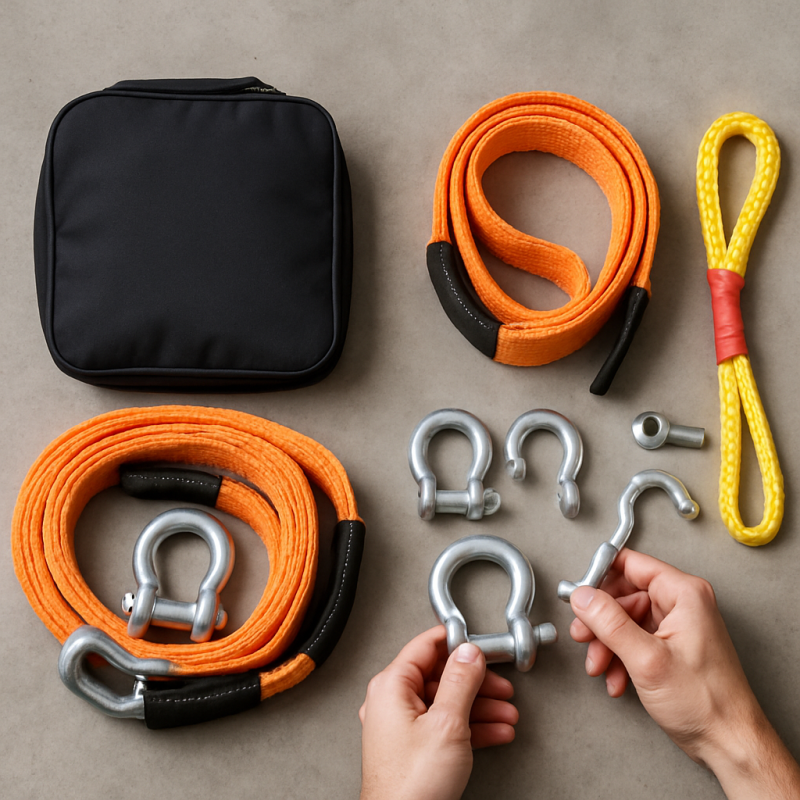
Pre-built recovery kits are almost always the better value for beginners, saving 20–35% compared to buying each item individually. But experienced off-roaders often prefer custom kits tailored to their specific truck and terrain.
Here's when each approach makes sense:
| Factor | Pre-Built Kit | Custom Build |
|---|---|---|
| Cost | $80–$300 (bundled savings) | $150–$500+ (individual pieces) |
| Convenience | One purchase, ready to go | Research each component |
| Quality Control | Mixed — some weak links | Every piece hand-selected |
| Weight Ratings | Sometimes mismatched | Perfectly matched to your GVWR |
| Best For | Beginners, casual off-roaders | Experienced trail runners, heavy trucks |
The biggest problem with pre-built kits is mismatched ratings. A kit might advertise a 30,000 lb recovery strap but include shackles rated at only 9,500 lbs. The chain is only as strong as its weakest link — literally.
If you go the kit route, always verify:
- Every component's individual rating: Strap, shackles, tree saver, and snatch block should all meet your truck's minimum WLL.
- Stitching quality: Look for reinforced box-stitching at loop ends, not simple bar tacks.
- Hardware material: Forged steel shackles are stronger than cast iron. If a shackle doesn't specify "forged," assume it's cast.
- Storage bag quality: A heavy-duty roll bag or hard case protects gear from UV damage and moisture. Cheap mesh bags fall apart.
If you're building custom, start with the strap and shackles — these are your most critical components. Then add a tree saver, snatch block, and damper blanket. Understanding fundamental recovery techniques will also help you decide which specialized items you'll actually use versus what will just take up space.
What Are the Most Common Buying Mistakes?
Recovery gear mistakes don't just waste money — they create genuinely dangerous situations. Avoid these errors that catch even experienced truck owners:
- Using a tow ball as a recovery point: This is the number one cause of serious recovery injuries. Tow balls are designed for downward hitch loads, not horizontal snatch forces. Under recovery tension, the ball can shear off and become a high-velocity projectile. Always use a rated recovery hitch or factory tow hooks. If your truck doesn't have proper recovery points, a quality trailer hitch with a D-ring receiver insert is a safer alternative.
- Buying based on price alone: A $20 recovery strap from a gas station is not rated equipment. Unrated straps have caused vehicle damage and injuries. Look for straps with clearly stamped WLL and breaking strength values.
- Ignoring UV degradation: Nylon and polyester weaken significantly with UV exposure. Straps stored loose in a truck bed lose 30–50% of their strength within 2–3 years. Always store gear in a closed bag, and inspect straps for fading, fraying, or stiffness before each use.
- Skipping the tree saver: Wrapping a recovery strap directly around a tree damages the tree and creates a poor anchor angle. A proper tree saver distributes the load across a wider surface.
- Not carrying gloves: Steel cables and even synthetic ropes can shred your hands under tension. Heavy-duty leather gloves are a $10 safety essential that too many people skip.
Another overlooked mistake is never practicing with your gear. The worst time to learn how a snatch block works is when you're axle-deep in mud at dusk. Set up your rigging in your driveway, practice connecting shackles and routing straps, and get familiar with your equipment before you need it. Organizations like the Tread Lightly! initiative offer resources on responsible off-road recovery practices.
How Should You Store and Maintain Recovery Gear?
Proper storage doubles the lifespan of your recovery gear and ensures it performs at full strength when you need it. Most failures happen because of neglected maintenance, not manufacturing defects.
Follow these storage and care rules:
- Clean after every use: Rinse mud, sand, and salt off straps with fresh water. Grit embedded in nylon fibers acts like sandpaper, weakening the strap from the inside out.
- Dry completely before storing: Mildew weakens synthetic fibers and corrodes metal hardware. Hang straps to air dry — never use a clothes dryer, as heat damages nylon.
- Store in a UV-resistant bag: Sunlight is the biggest enemy of nylon recovery straps. A closed storage bag in your truck's cab or toolbox is ideal. Avoid leaving gear in an open truck bed.
- Lubricate shackle pins: Apply a light coat of white lithium grease or anti-seize compound to shackle pins every few months. This prevents rust and ensures you can unscrew them quickly in an emergency.
- Inspect before every use: Check straps for cuts, abrasion, fraying at stitch points, and UV fading. Check shackles for hairline cracks, bent pins, and thread damage.
Replacement timeline varies by use frequency:
- Recovery straps: Replace every 3–5 years with regular use, or immediately if you notice any damage, stiffness, or significant fading.
- D-ring shackles: Forged steel shackles last 10+ years if not overloaded. Replace if you see any deformation or cracks.
- Synthetic winch rope: Inspect for abrasion and fuzzing. Replace when outer fibers show significant wear — typically every 3–5 years with moderate use. The Cordage Institute publishes detailed inspection guidelines for synthetic ropes.
- Gloves: Replace when leather becomes stiff, torn, or loses grip.
Keep an inventory list inside your recovery bag. In a stressful recovery situation, you want to know exactly what you have without dumping everything on the ground.
What Extras Are Worth Adding to Your Kit?
Once you have the core recovery essentials — strap, shackles, and gloves — several add-ons significantly improve your capability and safety. Not all are necessary, but each one solves a specific problem you'll eventually encounter.
- Snatch block (pulley): Redirects your winch line or doubles your pulling force by creating a mechanical advantage. Essential for winch owners and useful for changing pull direction around obstacles. Expect to pay $40–$80 for a quality rated block.
- Traction boards: Rigid boards (like Maxtrax or X-Bull) placed under your tires give instant grip in sand, mud, or snow. They work without another vehicle, making them true self-recovery tools. Price range: $60–$200 for a pair.
- Hi-lift jack: A versatile farm jack that can lift a vehicle, act as a manual winch, or spread obstacles apart. Requires training to use safely — they can be dangerous if misused. Budget $60–$100.
- Folding shovel: Sometimes digging is faster than pulling. A compact shovel clears mud from around tires and digs ramps for traction boards. Look for steel-bladed models with locking mechanisms ($15–$35).
- Soft shackles: Made from Dyneema (HMPE fiber), soft shackles are lighter than steel, won't dent your truck if they come loose, and have comparable breaking strengths. They're increasingly popular as replacements for traditional D-ring shackles ($15–$40 each).
For truck owners who also use their vehicle for overlanding and camping, recovery gear doubles as peace of mind on remote trails. A winch, traction boards, and a shovel turn your truck into a self-sufficient expedition vehicle.
One final addition worth mentioning: a tire deflator and portable air compressor. Airing down tires to 15–20 PSI dramatically increases traction in soft terrain, often preventing a stuck situation entirely. Just make sure you have the compressor to re-inflate before hitting pavement. The MotorTrend off-road guide covers optimal tire pressures for different terrain types.
Related Articles
- Best Tow Straps and Recovery Kits for Trucks — Detailed product reviews of top-rated recovery straps and complete kits at various price points
- How to Use a Truck Winch for Recovery — Step-by-step guide for proper winch rigging, techniques, and safety practices
- Truck Recovery Basics Every Driver Should Know — Foundational recovery knowledge including techniques, terminology, and safety principles
- Best Trailer Hitches for Trucks — Reviews of trailer hitches that can double as recovery attachment points with D-ring inserts
- Best Truck Roof Racks for Camping Gear — Roof rack reviews relevant for overlanders who also need recovery gear on remote trails
Conclusion
Frequently Asked Questions
What is the minimum recovery gear every truck should carry?
Can I use a tow strap for recovery?
How much should I spend on a recovery kit?
Is synthetic winch rope better than steel cable?
What weight rating do I need for recovery gear?
How often should I replace recovery straps?
Why shouldn't I attach a recovery strap to my tow ball?
Do I need a winch for off-road recovery?
Affiliate Disclosure: This article contains affiliate links. If you purchase through these links, we may earn a commission at no extra cost to you.