How to Use a Truck Winch for Recovery
Key Takeaways
- Always perform a safety check of your winch rope, hook, and mounting plate before every recovery attempt.
- Use a tree saver strap or recovery point — never wrap a steel cable or synthetic rope directly around a tree or frame rail.
- Maintain a minimum 20-degree angle between the winch rope and the ground for optimal pulling force and reduced wear.
- Place a winch line damper or heavy blanket over the rope midway to absorb energy if the line snaps under load.
- A 12,000 lb rated winch is the minimum recommended capacity for recovering full-size trucks weighing 5,000–7,000 lbs.
What Gear Do You Need for a Winch Recovery?
A successful winch recovery requires more than just the winch itself. You need a complete kit of safety and rigging accessories to protect your vehicle, the anchor point, and everyone nearby. Skipping any of these items increases the risk of equipment failure or injury.
- Electric winch (12,000–13,500 lb capacity): This is your primary recovery tool. A winch rated at 1.5x your vehicle's gross weight provides the safest margin. The RUGCEL 13500lb Waterproof Electric Winch with synthetic rope and dual wireless remotes is a solid option for full-size trucks.
- Tree saver strap (3" x 8'): Wraps around a tree or solid anchor without damaging it. Never wrap bare winch rope around a tree.
- D-ring shackles (3/4"): Connect the tree saver to your winch hook. Use rated, forged shackles — never hardware-store carabiners.
- Winch line damper: A weighted blanket or purpose-built damper placed over the rope to absorb energy if the line breaks.
- Heavy-duty gloves: Synthetic rope can fray and cause burns. Leather or Kevlar gloves protect your hands.
- Snatch block (pulley): Doubles your winch's pulling power by redirecting the line. Essential for heavy recoveries or bad angles.
- Recovery strap or tow strap: Useful as a secondary connection or for kinetic recovery assists. Check our roundup of top-rated tow straps and recovery kits for options that pair well with winch setups.
Keep all recovery gear in a dedicated bag stored in your truck bed or under the rear seat. Disorganized gear wastes critical time when you're stuck.
RUGCEL WINCH 13500lb Waterproof Electric Truck Winch
A reliable 13,500 lb winch with synthetic rope, hawse fairlead, and dual wireless remotes. IP67 waterproofing handles mud and rain, making it a strong all-around choice for full-size truck recovery.
Check Price On AmazonIf you click this link and buy, we earn a commission at no additional cost to you.

How Do You Inspect Your Winch Before a Recovery?
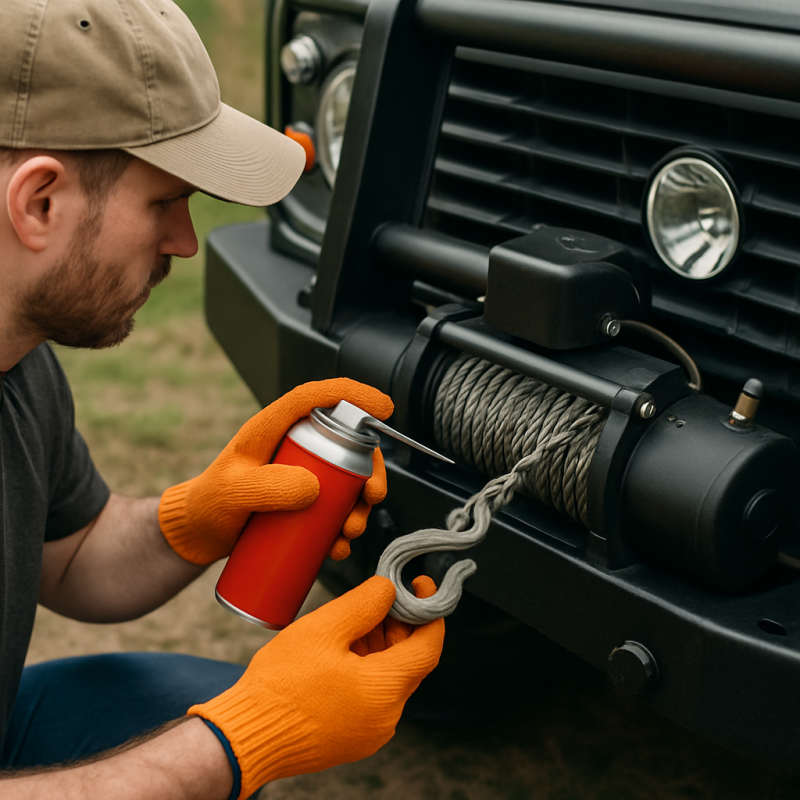
Every winch recovery should begin with a 5-minute safety inspection. A damaged rope, corroded hook, or loose mounting bolt can fail catastrophically under the 8,000–12,000 lbs of tension a recovery generates. Inspect every time — no exceptions.
- Rope condition: Run the full length of synthetic rope through your gloved hands. Feel for frays, cuts, abrasion spots, or heat damage. Any section with visible fiber damage weakens the entire line. Replace ropes showing wear on more than 10% of their diameter.
- Hook and shackle check: Inspect the hook for cracks, bends, or a worn safety latch. D-ring shackle pins should thread smoothly without cross-threading. Rust on load-bearing surfaces means replacement.
- Mounting plate and bolts: Verify all bolts securing the winch to your bumper or mounting plate are tight. Use a torque wrench if possible — WARN recommends checking mount bolt torque before every recovery season.
- Electrical connections: Check battery terminal connections and the winch solenoid for corrosion. Clean terminals with a wire brush if needed. A weak electrical connection causes the winch motor to draw excessive amperage and overheat.
- Remote control test: Power on the winch and test both spool-in and spool-out with no load. Confirm the wireless remote (if equipped) responds reliably from 30+ feet away.
If anything fails inspection, do not attempt the recovery with that equipment. A snapped line under tension stores enough energy to cause serious injury. Use a tow strap recovery or call for professional extraction instead.
How Do You Choose a Safe Anchor Point?
Your anchor point must be strong enough to withstand the full rated capacity of your winch without moving, breaking, or uprooting. A weak anchor is the most common cause of failed recoveries and the most dangerous — when an anchor gives way, the rope whips back with lethal force.
Trees are the most common natural anchor. Choose a live, healthy tree with a trunk diameter of at least 10 inches. Wrap a tree saver strap low around the base — never more than 2 feet above ground level. Higher attachment points create a lever that can uproot the tree.
- Good anchors: Live hardwood trees (10"+ diameter), large boulders half-buried in the ground, another vehicle with its parking brake set and wheels chocked, rated recovery points bolted to frame rails
- Bad anchors: Dead trees, fence posts, guard rails, utility poles, small saplings, stumps with root rot, or any object you can move by pushing
If no natural anchor exists, use a land anchor (also called a deadman anchor). Bury your spare tire 2–3 feet deep with the winch strap threaded through the wheel, or drive a ground anchor stake at a 45-degree angle away from the pull direction.
Always position your anchor as directly in line with the winch as possible. Pulling at a side angle exceeding 15 degrees puts extreme lateral stress on the fairlead and mounting plate, which can bend or break components. If you must pull at an angle, use a snatch block attached to an inline anchor to redirect the rope.
Double-check your anchor by applying light tension (500–1,000 lbs) before committing to a full pull. If the anchor shifts at all, stop and find a better one.
CALLIERT Winch 13000 lb Electric Winch Kit
Includes both wireless handheld and corded control remotes for redundancy in remote areas. The 13,000 lb capacity with synthetic rope covers most full-size truck recovery scenarios.
Check Price On AmazonIf you click this link and buy, we earn a commission at no additional cost to you.

How Do You Rig the Winch Line Correctly?
Proper rigging is the difference between a clean recovery and a dangerous failure. Take your time — rigging correctly adds 5 minutes but eliminates the most common causes of snapped ropes and broken equipment.
- Unspool enough rope: Pull the winch rope out by hand (disengage the clutch lever to freewheel) until you reach the anchor. Leave at least 5 wraps of rope on the drum — fewer wraps reduce the drum's grip and can cause slippage under load.
- Attach the tree saver strap: Wrap the strap around the anchor and connect both loops with a D-ring shackle. Thread the shackle pin finger-tight, then back off a quarter turn so it doesn't seize under load.
- Connect the winch hook: Clip your winch hook through the D-ring shackle. Make sure the hook's safety latch is closed and the hook is seated fully in the shackle.
- Place the winch line damper: Drape a damper blanket or heavy jacket over the rope roughly halfway between the winch and the anchor. This absorbs energy if the line snaps.
- Re-engage the clutch: Flip the winch clutch lever back to the engaged position. Tug the rope by hand to confirm the drum is locked.
For a double-line pull using a snatch block, attach the block to the anchor's shackle, run the winch line through the pulley, and hook the line back to your vehicle's recovery point. This halves the rope speed but doubles pulling force — ideal for deeply stuck vehicles.
Never hook the winch rope back onto itself. This creates a sharp bend that weakens synthetic fibers and can cause the rope to cut through under load. Always use rated shackles and connection hardware.
What Is the Step-by-Step Winching Technique?
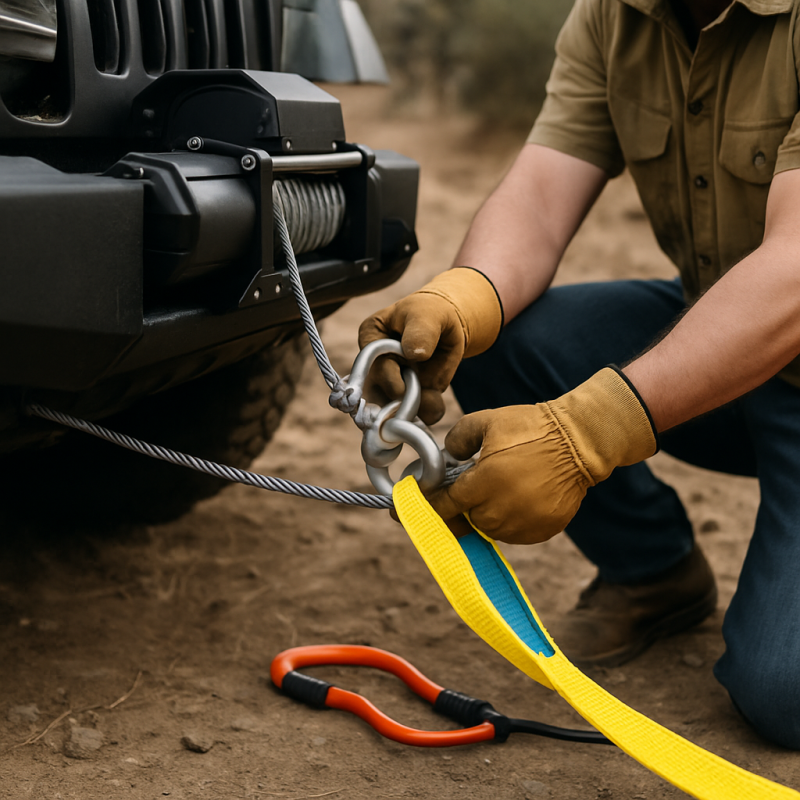
With your gear inspected, anchor secured, and line rigged, you're ready to pull. The actual winching process should be slow, controlled, and methodical. Rushing causes rope damage, overheated motors, and rollovers.
- Clear all bystanders: Everyone must stand at least 1.5x the rope length away from the line and outside the "snap zone" — the area on either side of the tensioned rope. One person operates the winch remote; everyone else stays far back.
- Take up slack: Spool in slowly until the rope is taut with light tension. Stop and visually inspect the anchor, hook connections, and rope path. Everything should be aligned and secure.
- Begin pulling in short bursts: Pull for 5–10 seconds, then pause for 5 seconds. Short bursts prevent the winch motor from overheating and let you monitor the situation. Watch for rope fraying, anchor movement, or the vehicle shifting sideways.
- Assist with the vehicle: If possible, have someone gently apply throttle in the stuck vehicle while the winch pulls. Low gear, light throttle — the winch does 80% of the work. Spinning tires only dig deeper.
- Monitor rope layering: As rope spools back onto the drum, guide it with a gloved hand (from a safe angle) to prevent bunching. Uneven rope stacking damages the line and reduces pulling capacity.
- Stop when free: The moment the vehicle breaks free and can move under its own power, stop the winch immediately. Do not drag the vehicle — disengage and drive out.
If the vehicle doesn't budge after 30 seconds of continuous pulling, stop. Reassess the situation: you may need a different angle, a double-line pull, or to dig out around the tires first. Forcing a pull overheats the motor and can drain your battery to the point where the winch stops entirely.
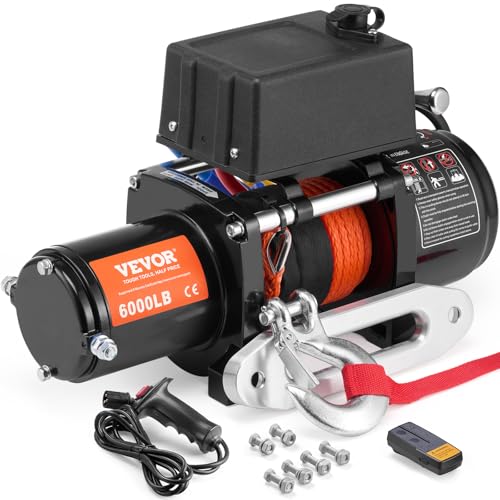
VEVOR Electric Winch 6000 lb
A budget-friendly 6,000 lb winch suited for midsize trucks, ATVs, and light-duty recovery. Great entry point for occasional off-road use where extreme pulling power isn't required.
Check Price On AmazonIf you click this link and buy, we earn a commission at no additional cost to you.
Which Winch Capacity Do You Need for Your Truck?
The general rule is that your winch should be rated at 1.5 times your vehicle's gross weight. This accounts for the added resistance of mud, sand, inclines, and friction that make real-world recovery loads far heavier than the vehicle's static weight.
| Vehicle Type | Gross Weight | Minimum Winch Rating | Recommended Rating |
|---|---|---|---|
| Midsize truck (Tacoma, Ranger) | 4,500–5,500 lbs | 8,000 lbs | 10,000–12,000 lbs |
| Full-size truck (F-150, Ram 1500) | 6,000–7,500 lbs | 10,000 lbs | 12,000–13,500 lbs |
| Heavy-duty truck (F-250, Ram 2500) | 8,000–10,000 lbs | 12,000 lbs | 15,000–17,000 lbs |
| Full-size SUV (Tahoe, Expedition) | 5,500–7,000 lbs | 9,000 lbs | 12,000–13,500 lbs |
For most full-size truck owners, a 13,000–13,500 lb winch is the sweet spot. It handles worst-case scenarios without being oversized or overpriced. The OPENROAD 13500 lb Recovery Winch with IP68 waterproofing and dual wireless remotes covers full-size trucks with margin to spare.
- Synthetic vs. steel rope: Synthetic rope is lighter, safer if it snaps (no stored kinetic energy like steel cable), and easier to handle. Steel cable lasts longer in abrasive environments but is heavier and far more dangerous on failure. For truck recovery, synthetic is the modern standard.
- Waterproof rating matters: IP67 handles submersion to 1 meter. IP68 handles deeper and longer submersion. If you cross water or recover in mud, IP68 is worth the upgrade.
- Wireless remotes: Let you operate from a safe distance. Models like the CALLIERT 13000 lb Electric Winch include both wireless and corded remotes for redundancy.
OPENROAD 13500 lb Recovery Winch - Panther Series 3S
IP68 waterproof rated for full submersion, this 13,500 lb winch pairs synthetic rope with two wireless remotes. Ideal for trucks that regularly encounter water crossings and deep mud.
Check Price On AmazonIf you click this link and buy, we earn a commission at no additional cost to you.

What Are the Most Common Winch Recovery Mistakes?
Most winch recovery accidents stem from a handful of avoidable mistakes. Understanding these pitfalls before you need your winch can prevent equipment damage, vehicle damage, and serious injuries.
- Using a tow ball as an anchor point: Tow balls are threaded onto a hitch receiver and designed for downward tongue weight — not horizontal pulling loads. Under winch tension, tow balls shear off and become high-speed projectiles. Always use a rated trailer hitch recovery point or a dedicated D-ring shackle mount.
- Wrapping the rope around the anchor: Never loop the winch rope directly around a tree, rock, or post. The sharp bend damages synthetic fibers and concentrates all force on a single point. Use a tree saver strap every time.
- Not using a line damper: A tensioned winch rope stores enormous energy. If it snaps without a damper, it recoils at speeds exceeding 100 mph. Draping a heavy blanket, purpose-built damper, or even a floor mat over the rope absorbs that energy.
- Running the winch continuously: Electric winches are rated for intermittent duty, not continuous operation. Most can run 30–60 seconds before needing a cool-down period. Running continuously overheats the motor, melts internal insulation, and can permanently damage the solenoid.
- Ignoring rope condition: Frayed synthetic rope loses up to 50% of its rated strength at the damaged section. Inspect before every use — a $50 rope replacement is cheaper than the consequences of a snap.
- Standing in the snap zone: Never stand beside, in front of, or directly behind a tensioned winch line. The safe zone is behind the vehicle being recovered and well off to the side of the rope's path.
Practice your rigging technique at home in low-stress conditions before you need it on the trail. Run through the full setup — unspool, rig, tension, recover — in your driveway with a light load so muscle memory takes over when conditions are bad.
How Do You Maintain Your Winch After a Recovery?
Post-recovery maintenance takes 15–20 minutes and dramatically extends your winch's lifespan. Mud, sand, and water are corrosive — leaving them on your winch after a recovery accelerates wear on every component.
- Unspool and clean the rope: Fully extend the synthetic rope and rinse it with clean water. Remove all mud, sand, and debris. Sand particles embedded in rope fibers act like sandpaper against the fairlead and drum, causing premature wear. Let the rope dry completely before re-spooling.
- Re-spool under light tension: Have someone hold the rope taut while you spool it back onto the drum. Loose spooling causes bunching under load, which damages the rope and reduces pulling capacity.
- Clean the fairlead: Wipe down the hawse fairlead (for synthetic rope) or roller fairlead (for steel cable) with a damp cloth. Check for burrs or rough spots that could abrade the rope. Smooth any rough edges with fine sandpaper.
- Inspect electrical connections: Check the winch terminals and battery connections for corrosion. Apply dielectric grease to terminals and connector plugs to prevent moisture intrusion.
- Lubricate the clutch lever: Apply a light spray lubricant to the clutch engagement mechanism. This prevents the lever from seizing in cold or wet conditions.
- Test the remote: Cycle both spool-in and spool-out to confirm everything works. Replace wireless remote batteries if response is sluggish.
If your recovery involved deep mud or water submersion, consider having your winch motor and gearbox professionally inspected. Water intrusion past the seals can cause internal rust that isn't visible externally. Winches with higher waterproof ratings like IP68 resist this better, but no seal is permanent. Keeping your winch and portable power station maintained ensures your truck is always trail-ready.
Store your recovery gear clean and dry. Wet tree saver straps develop mildew that weakens nylon fibers. Hang straps to dry before stowing them in your recovery bag.
Related Articles
- Best Tow Straps and Recovery Kits for Trucks — Complementary recovery gear that pairs with winch setups for complete off-road preparedness
- Best Trailer Hitches for Trucks — Referenced when discussing safe recovery anchor points and why tow balls should never be used
- Best Portable Power Stations for Truck Camping — Relevant for maintaining battery health and supplemental power for winch-equipped trucks
Conclusion
Recommended Products
RUGCEL WINCH 13500lb Waterproof Electric Truck Winch
A reliable 13,500 lb winch with synthetic rope, hawse fairlead, and dual wireless remotes. IP67 waterproofing handles mud and rain, making it a strong all-around choice for full-size truck recovery.
Check Price On AmazonIf you click this link and buy, we earn a commission at no additional cost to you.
OPENROAD 13500 lb Recovery Winch - Panther Series 3S
IP68 waterproof rated for full submersion, this 13,500 lb winch pairs synthetic rope with two wireless remotes. Ideal for trucks that regularly encounter water crossings and deep mud.
Check Price On AmazonIf you click this link and buy, we earn a commission at no additional cost to you.
VEVOR Electric Winch 6000 lb
A budget-friendly 6,000 lb winch suited for midsize trucks, ATVs, and light-duty recovery. Great entry point for occasional off-road use where extreme pulling power isn't required.
Check Price On AmazonIf you click this link and buy, we earn a commission at no additional cost to you.
CALLIERT Winch 13000 lb Electric Winch Kit
Includes both wireless handheld and corded control remotes for redundancy in remote areas. The 13,000 lb capacity with synthetic rope covers most full-size truck recovery scenarios.
Check Price On AmazonIf you click this link and buy, we earn a commission at no additional cost to you.
Frequently Asked Questions
Can you use a truck winch to pull another vehicle?
How long can you run a winch continuously?
Is synthetic rope better than steel cable for winching?
What size winch do I need for a full-size truck?
Do I need a winch bumper to mount a winch?
Can a winch recovery damage my truck's battery?
What should I do if my winch rope breaks during a recovery?
How do I use a snatch block to double my winch power?
Affiliate Disclosure: This article contains affiliate links. If you purchase through these links, we may earn a commission at no extra cost to you.