Towing Capacity Guide for Trucks
Key Takeaways
- Towing capacity depends on engine, axle ratio, transmission, and cab configuration — not just the truck model name.
- Always check your truck's door jamb sticker for the actual GVWR and payload capacity, since trim levels within the same model can vary by thousands of pounds.
- Your real-world towing limit is determined by the weakest link in the chain: payload, GCWR, hitch rating, or tire capacity.
- Half-ton trucks typically tow 5,000–14,000 lbs, three-quarter tons handle 14,000–22,000 lbs, and one-ton trucks can exceed 35,000 lbs with the right configuration.
- Tongue weight should be 10–15% of total trailer weight — exceeding this overloads your rear axle and creates dangerous sway.
What Towing Capacity Actually Means
Towing capacity is the maximum weight your truck can safely pull behind it. But that single number on a brochure hides a web of interdependent ratings that all affect how much you can actually tow.
Here are the key ratings you need to understand:
- GVWR (Gross Vehicle Weight Rating): the maximum allowable weight of your truck fully loaded — including passengers, cargo, fuel, and tongue weight from the trailer
- GCWR (Gross Combined Weight Rating): the maximum allowable weight of your truck plus the trailer combined
- Payload capacity: the maximum weight you can put in and on your truck — this includes passengers, gear in the bed, and the tongue weight pressing down on the hitch
- Tongue weight: the downward force the trailer exerts on the hitch, typically 10–15% of the total trailer weight
- Curb weight: the weight of your truck with no passengers or cargo, just a full tank of fuel
Here's the critical formula most people miss: your real towing capacity is limited by whichever rating you hit first. A truck might be rated to tow 12,000 lbs, but if you've got 800 lbs of passengers and gear, your payload might only leave room for 1,200 lbs of tongue weight — which limits you to an 8,000–12,000 lb trailer.
If you want a deeper dive into these calculations, the Understanding Towing Capacity book walks through real-world examples for matching RV weight to your specific truck configuration.
Always check the Federal Certification Label on your driver's side door jamb. That sticker shows your specific truck's GVWR and GAWR — not the marketing maximum for the model line.
Understanding Towing Capacity: How to Determine Your Truck's Towing Capacity Relative to Your RV's Size and Weight
A practical reference that walks you through calculating your truck's real towing limits for specific RV and trailer combinations. Ideal for first-time towers who want to understand the math behind the ratings.
Check Price On AmazonIf you click this link and buy, we earn a commission at no additional cost to you.

Truck Classes and Their Towing Ranges
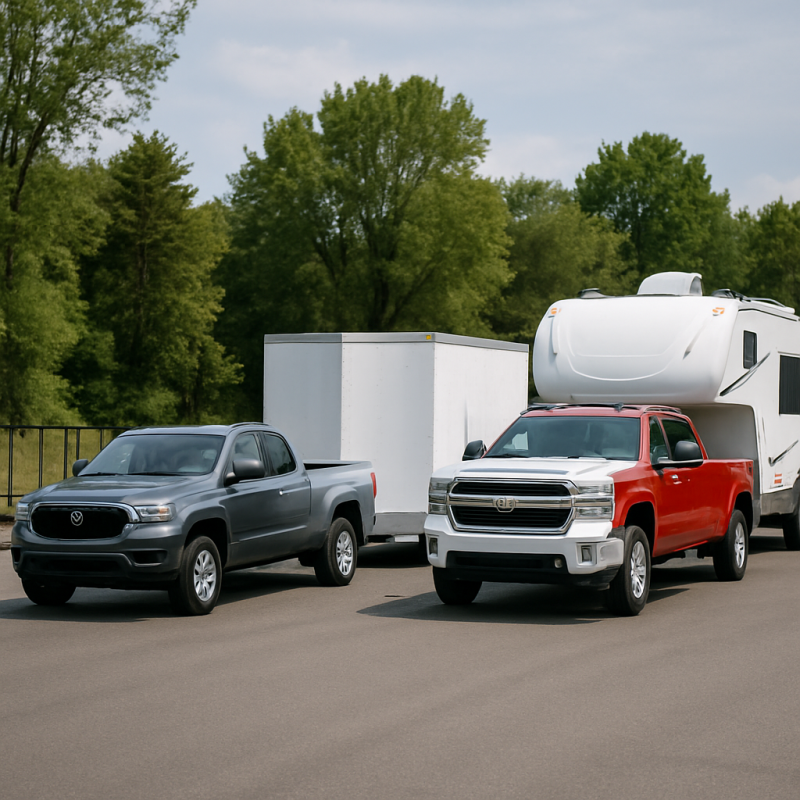
Trucks are grouped into classes based on their GVWR, and each class targets a different towing range. Understanding where your needs fall determines which class to shop.
| Truck Class | GVWR Range | Typical Towing Capacity | Common Models | Best For |
|---|---|---|---|---|
| Half-Ton (1500) | 6,000–7,500 lbs | 5,000–14,000 lbs | F-150, Ram 1500, Silverado 1500, Tundra | Boats, small campers, utility trailers |
| Three-Quarter Ton (2500) | 8,500–10,000 lbs | 14,000–22,000 lbs | F-250, Ram 2500, Silverado 2500HD | Travel trailers, car haulers, horse trailers |
| One-Ton (3500) | 10,000–14,000 lbs | 20,000–37,000 lbs | F-350, Ram 3500, Silverado 3500HD | Fifth-wheel RVs, gooseneck trailers, heavy equipment |
A few important notes on these numbers:
- Half-ton max ratings require the tow package, the right engine, the right axle ratio, and often a specific cab/bed configuration. A base V6 crew cab might only tow 7,000 lbs.
- Diesel vs. gas matters enormously in the 2500/3500 class. Diesel engines add 5,000–10,000 lbs of towing capacity thanks to superior low-end torque.
- The "max tow" number on advertisements usually applies to a regular cab, short bed, 2WD truck with the heaviest tow package — a configuration almost nobody buys.
For a quick reference on current half-ton capabilities across all major brands, the 2025 Half-Ton Truck Towing Capacity Guide compiles every configuration and rating in one place.
If you're consistently towing near a class's upper limit, move up to the next class. Towing at 90% capacity in a half-ton is far more stressful on the drivetrain than towing the same load at 60% in a three-quarter ton.
2025 Half-Ton Truck Towing Capacity Guide
Compiles every half-ton truck configuration and its exact towing rating in one quick-reference guide. Saves hours of digging through manufacturer spec sheets when comparing trucks.
Check Price On AmazonIf you click this link and buy, we earn a commission at no additional cost to you.

Key Factors That Affect Your Truck's Towing Capacity
Two trucks with the same badge on the tailgate can have wildly different towing capacities. Here's what creates those differences:
- Engine choice: a turbocharged V6 or V8 in a half-ton can add 3,000–5,000 lbs of towing capacity over the base engine. In heavy-duty trucks, diesel adds 5,000–10,000 lbs over gas.
- Axle ratio: a numerically higher axle ratio (like 3.73 vs. 3.21) multiplies torque to the wheels, increasing towing capacity but reducing fuel economy when unloaded.
- Transmission: a 10-speed automatic handles towing loads better than a 6-speed thanks to more gear options for maintaining power on grades.
- Cab configuration: regular cabs weigh less than crew cabs, leaving more payload headroom for tongue weight and cargo.
- Bed length: short beds weigh less, adding payload capacity. But long beds provide better stability for gooseneck and fifth-wheel hitches.
- 2WD vs. 4WD: four-wheel drive adds 200–400 lbs to curb weight, which directly reduces payload and therefore affects real towing capacity.
- Tow package: this isn't just a hitch. Factory tow packages typically include a heavier-duty radiator, transmission cooler, upgraded alternator, trailer brake controller wiring, and sometimes stiffer rear springs.
The tow package is non-negotiable for serious towing. A truck without one might be mechanically capable of pulling a trailer, but it will overheat the transmission on long grades and lack the electrical hookups for a proper brake controller.
When shopping, always build the specific truck configuration you want on the manufacturer's website and check the resulting tow rating — don't rely on the headline number.
Matching Your Truck to Your Trailer
This is where most buyers make their biggest mistake. They look at the trailer's dry weight, compare it to the truck's max tow rating, and assume they're fine. They're not.
Here's the right process:
- Find your trailer's actual loaded weight. Take it to a public scale (CAT scales are available at most truck stops for about $15). Weigh it fully loaded with everything you'd normally carry — water, food, clothes, gear, tools.
- Calculate tongue weight. This is typically 10–15% of total trailer weight for a bumper-pull trailer, or 15–25% for a fifth-wheel. You can measure it with a tongue weight scale at the hitch.
- Check your truck's remaining payload. Start with the payload capacity on the door sticker. Subtract driver weight, passenger weight, anything in the bed or cab, and the tongue weight. If the number goes negative, you're overloaded.
- Verify the GCWR. Add your loaded truck weight to your loaded trailer weight. This total must stay under the GCWR.
- Check your hitch rating. Your hitch receiver, ball mount, and hitch ball each have independent weight ratings. The lowest rating in the chain is your limit. If you need a new hitch, check our guide on the best trailer hitches for options rated across all weight classes.
A good rule of thumb: aim for 20% margin on all ratings. If your trailer weighs 8,000 lbs loaded, you want a truck rated for at least 10,000 lbs of towing capacity. This margin accounts for headwinds, mountain passes, and the inevitable extra gear you'll pack.
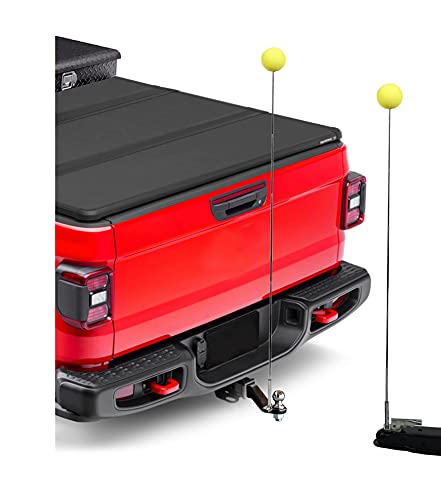
Don't forget about the hitch connection itself. Backing up to a trailer solo can be frustrating — a magnetic trailer hitch alignment kit makes solo hookups dramatically easier by giving you visual reference poles that extend above the truck bed.
JOUNJIP 52 inch Magnetic Trailer Hitch Alignment Kit
Makes solo trailer hookups fast and frustration-free with magnetic guide poles that extend above the truck bed for easy visual alignment. A must-have accessory if you hitch up without a spotter.
Check Price On AmazonIf you click this link and buy, we earn a commission at no additional cost to you.
Essential Towing Accessories You Need
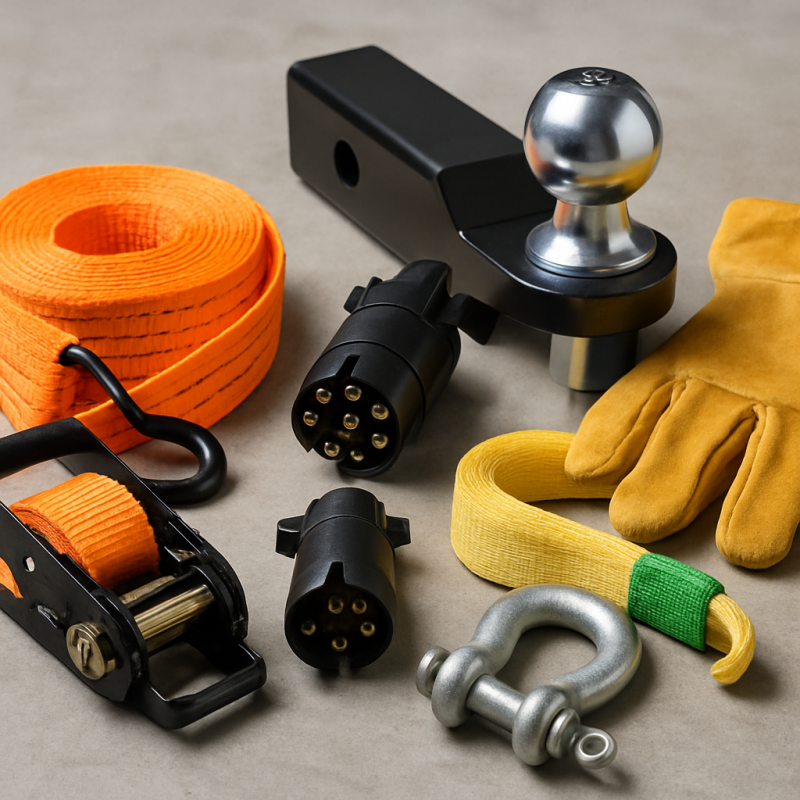
A truck and trailer aren't enough on their own. You need specific accessories to tow safely and legally. Here's what matters:
- Trailer brake controller: required by law in most states for trailers over 3,000 lbs. Proportional controllers provide smoother, more responsive braking than time-delayed units. See our trailer brake controller reviews for the top options.
- Weight distribution hitch: essential for bumper-pull trailers over 5,000 lbs. These redistribute tongue weight across all axles, leveling the truck and improving steering response.
- Sway control: built into many weight distribution hitches, or available as a standalone friction bar. Prevents dangerous lateral trailer movement in crosswinds or when passed by semi trucks.
- Towing mirrors: if your trailer is wider than your truck, you need extended mirrors for lane changes and backing up. Factory-integrated extendable mirrors are ideal, but quality aftermarket towing mirrors work well too.
- Trailer lights and wiring: all trailers need functioning brake lights, turn signals, and running lights. If you're wiring trailer lights yourself, use weatherproof connectors and test every function before hitting the road.
- Tire pressure monitoring: underinflated trailer tires are the number one cause of blowouts. A TPMS system that covers both truck and trailer tires can prevent expensive roadside emergencies.
- Recovery gear: carry a rated tow strap or recovery kit in case you or someone else gets stuck at a boat ramp or campsite.
Budget at least $500–$1,500 for accessories on top of your truck and trailer costs. Skimping on a brake controller or weight distribution hitch isn't saving money — it's creating a dangerous situation.
A portable air compressor is also worth keeping in the truck. Towing increases tire heat and pressure fluctuations, and maintaining correct PSI at every fuel stop dramatically extends tire life.
Common Towing Mistakes to Avoid
Even experienced truck owners make these errors. Avoid them and you'll tow safer, last longer on your drivetrain, and spend less on repairs.
- Trusting dry weight specs: manufacturer trailer weights are empty — no water, no gear, no options. A travel trailer listed at 5,500 lbs dry can easily weigh 7,500 lbs loaded. Always weigh loaded.
- Ignoring payload: this is the most commonly overlooked limit. A crew cab half-ton with four passengers might only have 800 lbs of payload left for tongue weight and bed cargo. That can cap your real towing capacity well below the advertised number.
- Wrong hitch height: your trailer should sit level when connected. If the tongue is angled up or down, you're putting uneven stress on the axles and creating instability. Use an adjustable ball mount to get it right.
- Skipping the brake controller: trailer brakes without a controller are trailer brakes that don't work. This isn't optional — it's critical safety equipment that can mean the difference between a controlled stop and a jackknife.
- Towing in overdrive on grades: use tow/haul mode on every tow. It changes shift points, locks out the highest gears on grades, and uses engine braking on descents to save your brake pads.
- Not checking tongue weight: too little tongue weight (under 10%) causes trailer sway. Too much (over 15%) overloads the rear axle and lifts the front end, reducing steering control. Both are dangerous.
- Forgetting tire pressure: check all tires — truck and trailer — before every trip. Towing at highway speeds on underinflated tires generates heat that leads to catastrophic blowouts.
The single best investment for new towers is practice. Find an empty parking lot and spend an hour backing up, turning, and parking. The cost is zero and the confidence payoff is enormous.
How to Read a Towing Capacity Chart
Manufacturer towing guides are dense multi-page documents. Here's how to decode them and find your specific truck's real towing number.
You need three pieces of information from your truck:
- Engine and transmission: found on the window sticker or by checking the 8th digit of your VIN
- Axle ratio: found on the door jamb sticker, in the glovebox, or on the differential cover tag (common ratios: 3.21, 3.55, 3.73, 4.10)
- Cab and bed configuration: regular/extended/crew cab, short/standard/long bed
Once you have those three details, find the towing chart for your model year on the manufacturer's website. Cross-reference your configuration to find your specific tow rating.
| Configuration | 2WD Towing | 4WD Towing | Payload |
|---|---|---|---|
| V6 / 3.21 / Crew Cab | 7,700 lbs | 7,500 lbs | 1,700 lbs |
| V8 / 3.73 / Crew Cab | 11,600 lbs | 11,100 lbs | 1,800 lbs |
| Turbo V6 / 3.55 / Regular Cab | 13,200 lbs | 12,700 lbs | 2,200 lbs |
| Turbo V6 / 3.73 / SuperCrew | 12,200 lbs | 11,500 lbs | 1,600 lbs |
Sample half-ton tow ratings — actual figures vary by model year and manufacturer.
Notice how the same truck with a different axle ratio or cab style can vary by 5,000+ lbs in towing capacity. This is why the headline "tows up to 14,000 lbs" is misleading — that's one specific build, not the truck you're likely buying.
Also pay attention to footnotes. Many charts note that maximum tow ratings require the factory tow package, a specific tire size, or even a specific wheel material. Missing one of these options and your official rating drops.
Budgeting for a Tow-Ready Truck
The sticker price is just the beginning. Here's what to budget across different towing tiers:
| Tier | Truck Cost (New) | Towing Capacity | Accessories Budget | Typical Use |
|---|---|---|---|---|
| Light Towing | $38,000–$50,000 | 5,000–8,000 lbs | $300–$600 | Utility trailers, small boats, jet skis |
| Mid-Range Towing | $50,000–$70,000 | 8,000–14,000 lbs | $600–$1,200 | Travel trailers, car haulers, horse trailers |
| Heavy Towing | $65,000–$90,000+ | 14,000–22,000 lbs | $1,000–$2,500 | Large RVs, gooseneck trailers, heavy equipment |
| Max Towing | $80,000–$110,000+ | 22,000–37,000 lbs | $1,500–$3,000 | Fifth-wheel RVs, hotshot hauling, commercial |
Key budget considerations beyond the truck itself:
- Factory tow package: $500–$1,500 when ordered new, but saves thousands over adding components aftermarket. Always get it at purchase.
- Aftermarket hitch: if your truck didn't come with a receiver, budget $200–$600 for the hitch plus $100–$300 for professional installation if you're not doing it yourself.
- Weight distribution hitch: $300–$800 for a quality unit with sway control.
- Brake controller: $80–$300 depending on features and brand.
- Fuel costs: expect fuel economy to drop 30–50% when towing. A truck that gets 20 MPG empty might get 10–12 MPG pulling a travel trailer.
- Maintenance increase: towing accelerates wear on brakes, transmission fluid, and tires. Budget for more frequent service intervals — every 30,000 miles instead of 50,000.
For light-duty towing under 5,000 lbs, a properly equipped half-ton with the base engine is perfectly capable and the most cost-effective choice. Don't let a salesperson upsell you to a diesel three-quarter ton for pulling a fishing boat.
Related Articles
- Best Trailer Brake Controllers for Safe Towing — Referenced when discussing essential towing accessories and brake controller requirements
- Best Trailer Hitches for Trucks — Referenced when explaining hitch ratings and matching truck to trailer
- Best Towing Mirrors for Chevy, GMC & Ford Trucks — Referenced when listing essential towing accessories
- How to Wire Trailer Lights — Referenced when discussing trailer lighting requirements
- Best Tow Straps and Recovery Kits for Trucks — Referenced when listing essential recovery gear for towing
- Best Portable Air Compressors for Trucks — Referenced when discussing tire pressure maintenance while towing
- How to Install a Trailer Hitch on Your Truck — Referenced when discussing aftermarket hitch installation costs
Conclusion
Recommended Products
Understanding Towing Capacity: How to Determine Your Truck's Towing Capacity Relative to Your RV's Size and Weight
A practical reference that walks you through calculating your truck's real towing limits for specific RV and trailer combinations. Ideal for first-time towers who want to understand the math behind the ratings.
Check Price On AmazonIf you click this link and buy, we earn a commission at no additional cost to you.
2025 Half-Ton Truck Towing Capacity Guide
Compiles every half-ton truck configuration and its exact towing rating in one quick-reference guide. Saves hours of digging through manufacturer spec sheets when comparing trucks.
Check Price On AmazonIf you click this link and buy, we earn a commission at no additional cost to you.
JOUNJIP 52 inch Magnetic Trailer Hitch Alignment Kit
Makes solo trailer hookups fast and frustration-free with magnetic guide poles that extend above the truck bed for easy visual alignment. A must-have accessory if you hitch up without a spotter.
Check Price On AmazonIf you click this link and buy, we earn a commission at no additional cost to you.
Frequently Asked Questions
What happens if you exceed your truck's towing capacity?
Does towing capacity change with altitude?
What is the 80% towing rule?
Do I need a diesel truck for towing?
What axle ratio is best for towing?
How much does a trailer tongue weigh?
Can I increase my truck's towing capacity?
What's the difference between conventional and fifth-wheel towing?
Affiliate Disclosure: This article contains affiliate links. If you purchase through these links, we may earn a commission at no extra cost to you.