Truck Camping Lighting Buying Guide
Key Takeaways
- Aim for 200-400 lumens for general campsite tasks and 50-100 lumens for inside-the-bed ambient lighting to avoid blinding yourself and neighbors.
- USB-rechargeable and solar-powered lights offer the best long-term value — disposable batteries cost more over a single camping season than a quality rechargeable lantern.
- LED strips mounted inside your truck bed or topper provide hands-free, even illumination that hanging lanterns simply cannot match.
- Always carry at least two independent light sources — a primary area light and a backup headlamp — so a single dead battery never leaves you in the dark.
- Color temperature matters more than most buyers realize — warm white (2700-3000K) attracts fewer bugs and preserves night vision better than cool white.
Why Does Truck Camping Lighting Require a Different Approach?
Truck camping lighting needs to balance portability, power efficiency, and versatility in ways that traditional camping setups don't. You're working with a confined space — your truck bed — while also needing to light an open campsite area, and your vehicle battery is often your only reliable power source.
- Space constraints: A truck bed or topper has limited mounting points and low ceilings, making large lanterns impractical. Slim LED strips and magnetic-mount lights work far better than bulky freestanding options.
- Power considerations: Every light you run draws from either your truck battery, a portable power station, or disposable batteries. Choosing efficient LEDs over incandescent or fluorescent lights can extend your runtime by 5-10x.
- Dual-zone needs: You typically need interior lighting inside the bed or topper for cooking and organizing, plus exterior lighting for the campsite area around your truck.
- Weather exposure: Truck camping lights face rain, dust, humidity, and temperature swings. An IPX4 rating or higher is essential — anything less will fail in real camping conditions.
Unlike backpacking where every gram counts, truck camping lets you carry heavier, more powerful lights. The tradeoff is that you need to think about how those lights integrate with your truck — mounting options, wiring paths, and power draw from your electrical system all matter.
Understanding these constraints upfront saves you from the most common mistake: buying lights designed for tent camping or home use that simply don't work well in a truck setup. If you're just getting started, our guide on setting up campsite lighting from your truck walks through the full installation process.
What Types of Truck Camping Lights Should You Consider?
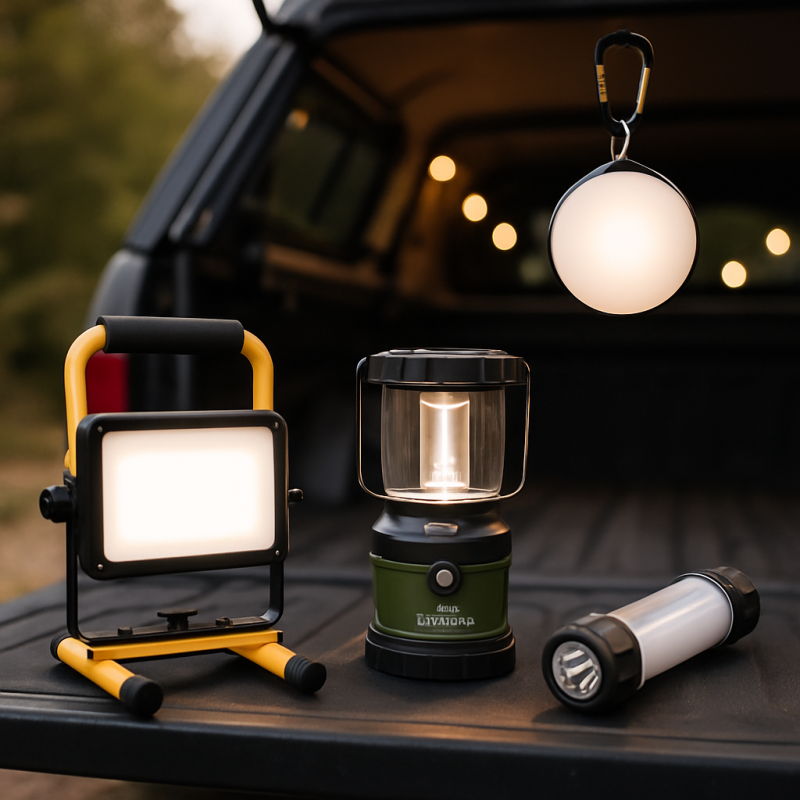
There are five main categories of truck camping lights, and most well-equipped setups use a combination of at least two or three types. Each serves a different purpose, and understanding these categories prevents you from buying redundant gear.
| Light Type | Best For | Lumens Range | Price Range | Power Source |
|---|---|---|---|---|
| LED Strip Lights | Truck bed interior | 200-600 | $15-$60 | 12V truck battery |
| Camping Lanterns | Campsite area lighting | 100-1000 | $15-$80 | Rechargeable / Battery |
| Headlamps | Hands-free task lighting | 50-300 | $10-$50 | Rechargeable / AAA |
| Solar Lights | Extended off-grid trips | 50-400 | $20-$100 | Solar panel |
| Light Bars / Pods | Exterior flood lighting | 1000-5000+ | $30-$200 | 12V truck battery |
- LED strip lights: The most popular choice for inside-the-bed illumination. They mount along bed rails or topper ceilings, run off your 12V system, and provide even, shadow-free light. Check our best truck bed lights roundup for top-rated options.
- Camping lanterns: Ideal for lighting the area around your truck — picnic tables, cooking areas, and general campsite ambiance. Modern LED lanterns are lightweight and last 20-100+ hours on a single charge.
- Headlamps: Non-negotiable for any camping trip. You need hands-free light for cooking, setting up gear, and nighttime bathroom trips.
- Solar-powered lights: Perfect for extended boondocking where you can't recharge from your truck or a power station. They charge during the day and provide reliable light each evening.
- Light bars and pods: Overkill for most campsite use but valuable if you need to illuminate a large area for group camping or nighttime truck maintenance.
How Many Lumens Do You Actually Need?
Most buyers drastically overbuy on lumens, ending up with lights that blind everyone at camp and drain batteries fast. The right brightness depends entirely on where and how you're using each light.
- Inside the truck bed (ambient): 50-150 lumens. This is enough to find gear, organize your sleeping setup, and read comfortably without harsh glare bouncing off the bed walls.
- Inside the truck bed (task work): 200-400 lumens. Cooking, gear repairs, and detailed tasks need more focused light. A dimmable option that covers both ranges is ideal.
- Campsite area lighting: 200-600 lumens. This lights up a picnic table or cooking area without disturbing neighbors at established campgrounds.
- Walking paths and bathroom trips: 50-100 lumens from a headlamp. Anything brighter destroys your night vision and annoys other campers.
- Emergency or vehicle repair: 500-1000+ lumens. You rarely need this, but when you do — changing a tire on a dark road, for example — you'll want it available.
The key spec most buyers ignore is color temperature, measured in Kelvin (K). Our detailed breakdown of lumens and truck lighting specs covers this thoroughly, but the short version is:
- Warm white (2700-3000K): Attracts fewer insects, easier on the eyes, preserves night vision. Best for campsite use.
- Neutral white (4000-4500K): Good balance of visibility and comfort. Best all-around choice.
- Cool white (5000-6500K): Brightest perceived output but attracts more bugs and causes eye strain at night. Best reserved for task-specific work lights.
A dimmable light with multiple brightness modes is worth more than a single-brightness light with higher peak lumens. You'll use the lowest setting 80% of the time.
What Power Sources Work Best for Truck Camping?
Your power source determines how long your lights last, how much ongoing cost you'll face, and how your lighting setup integrates with the rest of your truck camping gear. There are four main options, each with clear trade-offs.
| Power Source | Runtime | Ongoing Cost | Best For | Drawback |
|---|---|---|---|---|
| 12V Truck Battery | 8-20+ hours | $0 (fuel cost) | Permanent bed lights | Risk of draining starter battery |
| USB Rechargeable | 4-40 hours | $0 (electricity) | Lanterns, headlamps | Requires charging access |
| Solar | 4-10 hours/charge | $0 | Off-grid boondocking | Weather dependent |
| Disposable Batteries | 10-50 hours | $5-15/trip | Emergency backup | Expensive over time, wasteful |
- 12V direct wiring: The most reliable option for permanent LED strip installations. Wire directly to your truck battery with an inline fuse and you'll never run out of light. The risk is draining your starting battery — a battery isolator or secondary battery eliminates this concern entirely.
- USB rechargeable: The sweet spot for most truck campers. Modern lithium-ion lanterns charge via USB-C, and you can top them off from your truck's USB port while driving. A quality rechargeable lantern pays for itself in 2-3 trips versus buying disposable batteries.
- Solar powered: Excellent for multi-day boondocking trips where you won't be driving daily. Pair a solar-powered camping light with a small solar panel and you're completely self-sufficient.
- Disposable batteries: Keep a headlamp with fresh AAAs as your emergency backup. Don't rely on disposable batteries as your primary power source — a weekend trip with multiple lights can easily burn through $10-15 in batteries.
The smartest strategy is layering power sources: 12V LED strips as your primary bed lighting, a USB-rechargeable lantern for the campsite, and a battery-powered headlamp as backup.
How Much Should You Spend on Truck Camping Lights?
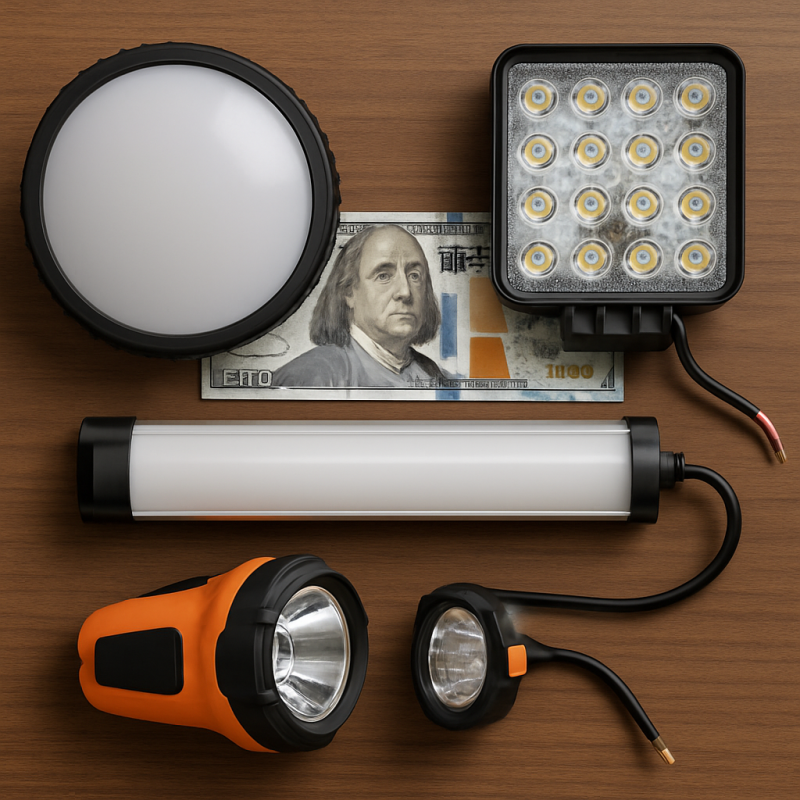
Truck camping lighting falls into three distinct price tiers, and the good news is that even budget options have gotten remarkably good thanks to LED technology. Here's what to expect at each level.
Budget tier ($15-$40 total setup):
- A basic 12V LED strip for the bed ($10-20) plus a budget USB-rechargeable lantern ($15-25)
- Adequate for occasional weekend camping
- Expect shorter battery life, fewer dimming options, and lower water resistance (IPX3-4)
- Common brands: Nilight, AOWISH, generic Amazon options
Mid-range tier ($50-$120 total setup):
- Quality LED strip kit with switch and wiring harness ($25-45), a good rechargeable lantern ($30-50), and a reliable headlamp ($20-35)
- Noticeable improvements in build quality, dimming controls, and weather resistance (IPX5-6)
- This is the sweet spot for most truck campers — good enough for weekly use and harsh conditions
- Common brands: BioLite, Goal Zero, Black Diamond, Truck Bed LED Pro
Premium tier ($150-$300+ total setup):
- Hardwired LED system with relay and switch panel ($60-100), premium rechargeable lantern with power bank function ($50-80), name-brand headlamp ($40-60), plus supplemental solar lights ($30-80)
- Worth it if you camp frequently, boondock in remote areas, or have a dedicated truck camper build
- Features like app-controlled dimming, RGB color options, integrated solar panels, and USB-C PD charging
- Common brands: Goal Zero, BioLite, MPOWERD, Rigid Industries
Our recommendation for most buyers is to start at the mid-range tier. Budget lights are fine for testing whether truck camping is for you, but they'll need replacing within a season or two. Review our top-rated truck camping lanterns and lights for specific product picks at every price point.
What Features Actually Matter When Comparing Lights?
Marketing specs can be misleading. Here are the features that genuinely impact your camping experience versus the ones that are mostly marketing fluff.
Features worth paying for:
- Multiple brightness modes: At minimum, you want high, low, and off. Better lights offer a smooth dimmer or 4-5 preset levels. You'll use low mode 80% of the time.
- IPX5+ water resistance: Truck beds get wet — from rain, condensation, snow, and spilled drinks. IPX4 handles splashes, but IPX5 or higher handles driving rain and washdowns. According to the IEC's IP rating standards, IPX5 protects against water jets from any direction.
- Magnetic or clip mounting: Versatile mounting lets you move lights between your truck bed, tailgate, and campsite without permanent installation.
- Red light mode: Preserves night vision and doesn't attract insects. Essential for headlamps, a nice bonus on lanterns.
- USB-C charging: Faster charge times and compatibility with modern devices. Avoid lights that still use micro-USB — it's a sign of outdated internals.
- Runtime at lowest setting: This matters more than peak brightness. A light that runs 40 hours on low is more useful than one that runs 4 hours on high.
Features that rarely matter:
- SOS/strobe modes: You'll never use these while camping. They're carry-overs from flashlight designs.
- RGB color changing: Fun for exactly one evening, then you'll never touch it again.
- Extreme lumen counts (2000+): Overkill for camping. You'll blind yourself and everyone else.
- Bluetooth speakers built in: Jack-of-all-trades, master of none. Buy a separate speaker.
The Outdoor Gear Lab consistently ranks water resistance and battery life as the two most important factors in real-world camping light performance.
What Are the Most Common Truck Camping Lighting Mistakes?
After reviewing hundreds of truck camping setups, these are the seven most common mistakes buyers make — and they're all easily avoidable.
- Buying only one light source: A single lantern or LED strip is a single point of failure. When it dies — and eventually it will — you're in complete darkness. Always carry at least two independent light sources.
- Ignoring color temperature: Cool white (6000K+) lights turn your campsite into a hospital parking lot and attract every moth within a quarter mile. Stick to warm or neutral white for camping.
- Draining the truck battery: Wiring LED strips directly to your starting battery without an inline switch or timer is the number one way people strand themselves. A battery cutoff switch or voltage-sensitive relay costs $15-30 and prevents a dead battery.
- Skipping the dimmer: Full-brightness-only lights are miserable inside a truck bed at night. The reflected glare off truck bed liner or aluminum surfaces is painful. Always choose dimmable options.
- Overbuying lumens: A 1000-lumen lantern sounds impressive on Amazon. In practice, you'll never run it above 30% power at a campsite. That money would be better spent on a 400-lumen lantern with longer runtime.
- Forgetting about mounting: Lights that need flat surfaces don't work in truck beds with corrugated floors and curved walls. Magnetic mounts, clamp mounts, and adhesive LED strips are purpose-built for truck use.
- Neglecting backup batteries: Rechargeable is great until you're four days into a boondocking trip with overcast skies. Keep a pack of lithium AAA batteries (they perform better in cold weather than alkaline) as your emergency backup.
Most of these mistakes stem from applying tent camping logic to a truck camping setup. The Expedition Portal forums are full of real-world reports from truck campers who learned these lessons the hard way.
How Should You Build Your Complete Lighting Setup?
The best truck camping lighting setups use a layered approach with three zones: inside the truck bed, the immediate campsite area, and personal task lighting. Here's how to build a complete setup at different experience levels.
Starter setup (weekend warrior):
- One USB-rechargeable camping lantern (200-400 lumens) for campsite area
- One basic headlamp for hands-free tasks
- Total cost: $30-60
- Best for: Occasional camping, testing whether you enjoy truck camping
Intermediate setup (regular camper):
- 12V LED strip kit installed along truck bed rails
- One quality rechargeable lantern with dimming
- One reliable headlamp with red light mode
- One solar-powered hanging light for extended trips
- Total cost: $80-150
- Best for: Monthly camping, weekend boondocking, seasonal use
Advanced setup (dedicated truck camper):
- Hardwired LED system with relay, fuse panel, and dimmer switch
- Under-canopy or awning LED strip
- Premium rechargeable lantern doubling as a power bank
- High-quality headlamp (300+ lumens, USB-C rechargeable)
- Solar panel paired with small power station for all lighting needs
- Total cost: $200-400
- Best for: Full-time truck camping, extended boondocking, dedicated builds
Regardless of which tier you choose, follow these universal rules:
- Mount interior lights high — along the top of bed rails or ceiling of your topper — to minimize shadows
- Use warm white inside the bed and neutral white for exterior campsite lights
- Keep your backup headlamp in a consistent, easy-to-find location
- Test your full setup in your driveway before your first trip
For step-by-step wiring and mounting instructions, follow our campsite lighting setup guide which covers every installation method from basic clip-ons to hardwired systems.
Related Articles
- How to Set Up Campsite Lighting From Your Truck — Step-by-step guide for installing and configuring campsite lighting from a truck
- Best Truck Bed Lights for Nighttime Loading — Product reviews of top-rated LED strip lights and bed-mounted lighting options
- Lumens Explained for Truck Lighting — Detailed explanation of lumens, color temperature, and lighting specs for trucks
- Best Solar Powered Lights for Truck Camping — Reviews of solar-powered lighting options for off-grid truck camping
- Best Truck Camping Lanterns and Lights — Comprehensive reviews of the best lanterns and lights for truck camping at every price point
Conclusion
Frequently Asked Questions
How many lumens do I need for truck camping?
Can truck camping lights drain my vehicle battery?
Are solar-powered camping lights reliable enough?
What color temperature is best for camping lights?
Should I get rechargeable or battery-powered camping lights?
What IP rating should truck camping lights have?
How do I mount lights inside a truck bed or topper?
Can I use regular household LED bulbs for truck camping?
Affiliate Disclosure: This article contains affiliate links. If you purchase through these links, we may earn a commission at no extra cost to you.