Lumens Explained for Truck Lighting
Key Takeaways
- Lumens measure total light output — not beam distance, intensity, or brightness you perceive from the driver's seat.
- Truck bed lights typically need 500-2,500 lumens total, while off-road driving lights range from 3,000 to 20,000+ lumens.
- Higher lumens don't automatically mean better — beam pattern, color temperature, and optics matter just as much.
- Watts measure power draw, not brightness — modern LEDs produce 80-150 lumens per watt, far more than halogen's 10-15.
- Overly bright auxiliary lights can blind oncoming drivers and are illegal on public roads in most states when used improperly.
What Exactly Is a Lumen?
A lumen is the standard unit for measuring total visible light output from a source. One lumen is roughly the light produced by a single birthday candle seen from one meter away — tiny on its own, but they add up fast.
Lumens tell you how much total light a bulb or LED emits in every direction combined. They do not tell you:
- How far the beam reaches: that's measured in lux or candela at distance
- How concentrated the light is: a spot beam and a flood beam can share identical lumen ratings
- Perceived brightness at the target: a narrow 2,000-lumen spot can look brighter at 500 feet than a 10,000-lumen flood
The U.S. Department of Energy standardized lumen labeling on consumer bulbs in 2011, but truck lighting remains the wild west — many off-brand products use "theoretical" or "raw" lumens instead of tested output.
When you see a pod light advertised at 18,000 lumens for $30, that's almost always a raw-chip number. Effective lumens — what actually leaves the housing after optics, heat loss, and driver efficiency — are usually 50-70% of the raw figure.
Lumens vs. Lux vs. Candela — What's the Difference?
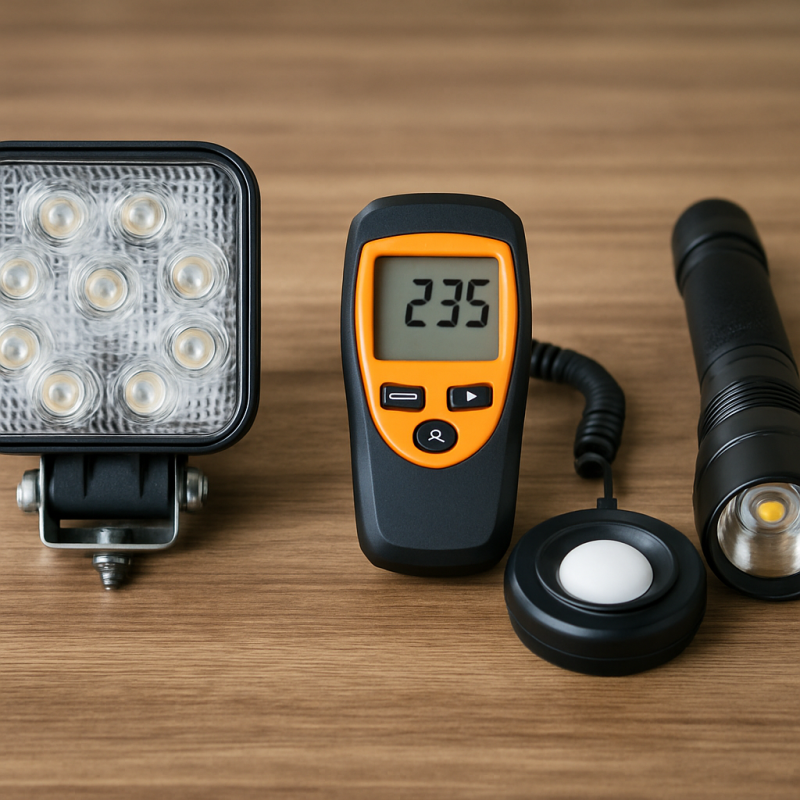
Manufacturers mix these three units constantly, and they measure completely different things. Understanding the distinction is the single biggest upgrade you can make to your buying decisions.
| Unit | What It Measures | Best For Comparing |
|---|---|---|
| Lumen (lm) | Total light output from the source | Overall brightness of bulbs or fixtures |
| Lux (lx) | Light hitting a surface at a specific distance | Usable brightness on the road ahead |
| Candela (cd) | Light intensity in a single direction | Beam throw distance (spotlights) |
Here's why it matters: a 5,000-lumen flood light spread over a wide angle might produce only 20 lux at 100 meters. A 3,000-lumen pencil-beam spot can deliver 80 lux at the same distance. Less total light, but far more usable reach.
- Buying headlights: focus on lumens and beam pattern compliance
- Buying off-road spots: candela and lux at distance matter most
- Buying bed or work lights: lumens with a wide flood angle
Reputable brands like Baja Designs, KC HiLiTES, and Rigid publish full photometric data — you'll see lux at 1m, beam patterns, and candela curves. If a product only lists a big lumen number, that's a yellow flag.
How Many Lumens Do Truck Headlights Need?
Factory halogen headlights produce roughly 700-1,200 lumens per low beam and 1,200-1,800 per high beam. Modern LED and HID replacements typically triple that output — but raw lumens aren't the whole story when it comes to legal, safe headlights.
Typical output ranges by bulb type:
- Halogen 9005/9006/H11: 1,000-1,700 lumens per bulb
- HID 35W kits: 3,000-3,500 lumens per bulb
- LED replacement bulbs: 2,500-6,000 lumens claimed (real-world: 1,800-4,000)
- OEM LED projectors: 2,000-4,000 lumens with precise cutoff
The problem: jamming 6,000 lumens into a halogen-designed reflector housing creates glare without adding usable road illumination. The IIHS headlight rating program has shown that beam pattern and aim matter more than raw output — some 1,500-lumen projectors outperform 5,000-lumen "super LED" bulbs.
If your headlights are weak, start by checking bulb age, lens oxidation, and aim before chasing lumen upgrades. For a deep dive on bulb selection and fitment, see our guide to the best truck headlight bulbs, which covers DOT-compliant options that actually improve night vision without blinding oncoming drivers.
Lumen Ranges for Truck Bed and Cargo Lighting
Truck bed lights exist to illuminate a small, defined area — typically 5-6 feet wide and 6-8 feet long. You don't need headlight-level brightness. You need even, shadow-free flood coverage with enough lumens to work comfortably.
Realistic lumen targets for bed lighting:
- Casual use (finding gear): 300-800 total lumens
- Regular loading/unloading: 1,000-2,000 total lumens
- Work truck / contractor use: 2,000-4,000 total lumens
- Camping and overlanding: 1,500-3,000 lumens with dimmable control
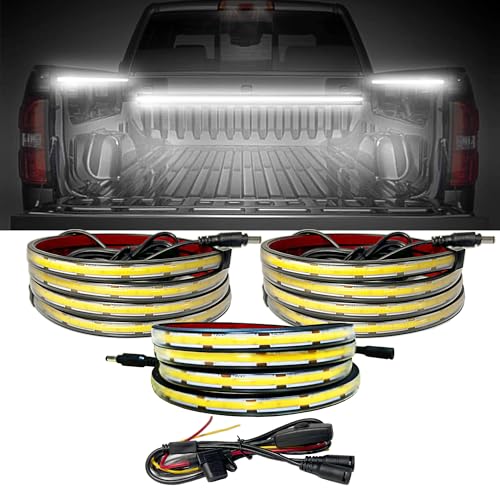
LED strip kits dominate this category because they distribute light evenly without hotspots. The CANRIA 60-inch COB strip kit puts out roughly 2,376 LEDs across three strips at 41 watts — enough brightness for most work tasks without overwhelming nearby campsites.
For lighter-duty needs, the LivTee 60-inch waterproof strip is a solid mid-range option, and battery-powered picks like the SUNPIE rechargeable bed light skip the wiring entirely.
Don't overlook rock lights for secondary coverage — kits like the Ampper 60-LED rock light set add 300-500 usable lumens in foot wells and under-bed spots. For full recommendations across price tiers, browse our best truck bed lights roundup.
CANRIA 60-Inch Truck Bed LED Strip Kit (3-Pack)
High-density COB LED strips deliver even 6500K flood coverage across the full bed at 41 watts — ideal real-world lumens without overkill.
Check Price On AmazonIf you click this link and buy, we earn a commission at no additional cost to you.
Ampper White LED Rock Lights (20-Pack)
Low-lumen accent lighting for foot wells, rails, and under-body use — perfect example of when lumens don't need to be high.
Check Price On AmazonIf you click this link and buy, we earn a commission at no additional cost to you.

How Many Lumens for Off-Road Driving and Fog Lights?
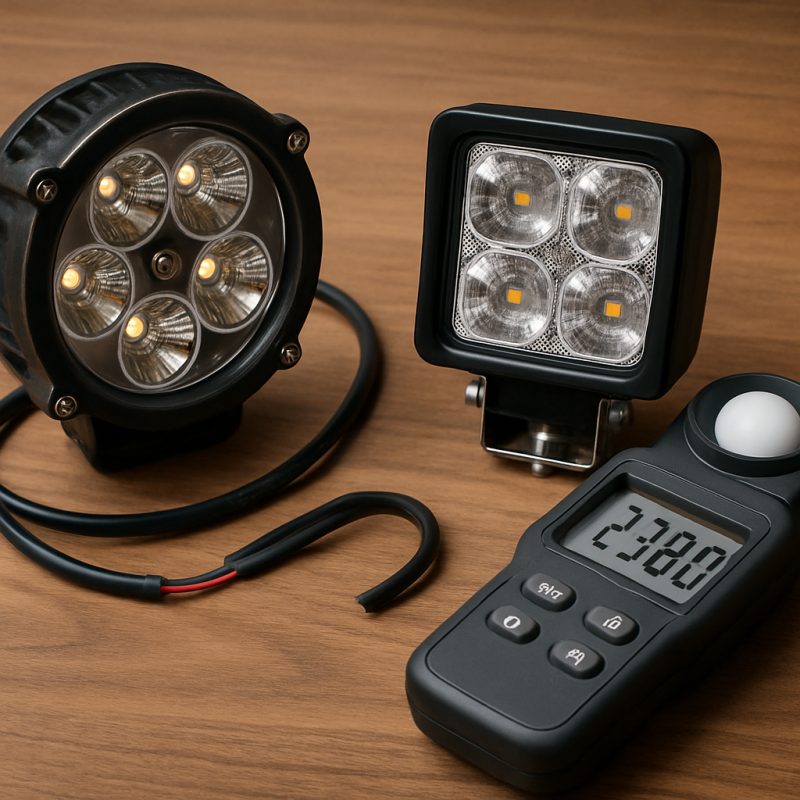
Off-road lighting is where lumen wars get absurd — you'll see claims of 50,000+ lumens on $40 light bars. The reality is that effective off-road driving lights deliver 3,000-20,000 real-world lumens with beam patterns matched to your use case.
Recommended lumen targets by beam type:
- Fog lights: 1,200-2,500 lumens per pod, wide flood pattern, low mounting
- Ditch lights: 2,000-4,000 lumens per pod, combo beam
- Driving lights (long-range): 3,000-6,000 lumens per pod, spot beam
- Full light bar (20-50 inch): 8,000-25,000 effective lumens combo beam
Beam pattern is more important than lumen count at highway and off-road speeds. A spot beam throws a narrow, intense column useful for long-range visibility at 40+ mph. A flood beam washes a wide area with even light — ideal for slow crawling or work tasks.
Budget pods like the Nilight 18W spot pods deliver about 1,260 lumens each and work well as ditch lights or auxiliary markers. Stepping up, the Nilight 60W combo pods push roughly 4,000+ lumens each with a mixed flood/spot pattern.
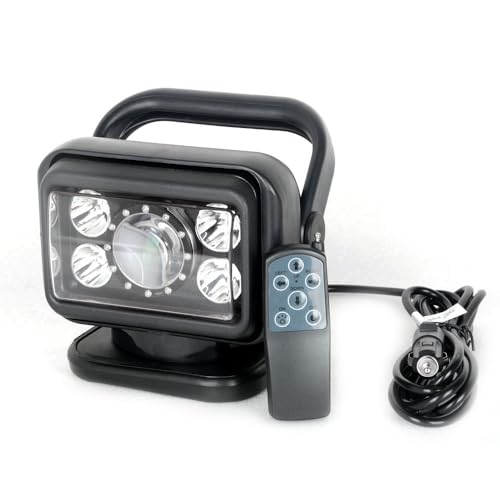
For serious long-range work, the 7-inch 70W remote search light offers magnetic mounting and 360-degree rotation. See our complete picks in best off-road driving lights and best LED light bars.
Nilight 60W Flush Mount Combo LED Pods (2-Pack)
Combo flood/spot beam pattern demonstrates how lumens and optics work together — useful for ditch light or backup applications.
Check Price On AmazonIf you click this link and buy, we earn a commission at no additional cost to you.

7-Inch 70W LED Search Light with Remote
High-intensity spotlight showing how candela and beam focus deliver distance — not just total lumen output.
Check Price On AmazonIf you click this link and buy, we earn a commission at no additional cost to you.
Why Watts Don't Tell You Brightness Anymore
Before LEDs took over, watts were a reasonable shorthand for brightness because most truck lights were halogen and produced predictable light-per-watt. That era is over.
Typical efficiency by technology:
- Incandescent/halogen: 10-17 lumens per watt
- HID xenon: 70-90 lumens per watt
- Standard LED: 80-120 lumens per watt
- Premium LED (CREE XHP, Osram Oslon): 130-180 lumens per watt
This is why a modern 30-watt LED pod can outperform a 100-watt halogen driving light. The ENERGY STAR efficiency data for LEDs shows dramatic gains — the same wattage now delivers 8-10x more light than it did a decade ago.
But watts still matter for two reasons:
- Electrical load: total watts determine wire gauge, fuse size, and alternator draw. A 240-watt light bar pulls 20 amps at 12V — your stock accessory circuit can't handle that.
- Heat management: higher-wattage LEDs need larger heat sinks. Cheap high-wattage pods often thermal-throttle within 10-15 minutes, dropping output by 30-50%.
When comparing two lights, check lumens per watt as an efficiency proxy. Anything below 80 lm/W suggests older or lower-binned LEDs. Premium units from brands like Maxxima (800-lumen 15-LED work light) publish honest specs and use aluminum housings that sustain output over long runs.
Maxxima Round 15 LED 800-Lumen Work Light
Honest-spec work light from a reputable brand — a great example of truthfully rated lumens versus inflated aftermarket claims.
Check Price On AmazonIf you click this link and buy, we earn a commission at no additional cost to you.

Color Temperature and Beam Pattern Matter as Much as Lumens
Two lights with identical lumen ratings can perform dramatically differently based on color temperature (measured in Kelvin) and beam pattern. Smart buyers weigh all three together.
Color temperature impacts visibility in different conditions:
- 3,000K (warm white/amber): best in fog, rain, and snow — cuts through moisture without glare bounce-back
- 4,300K (neutral white): OEM headlight standard — balanced color rendering
- 5,000-6,000K (daylight white): brightest perceived output, best for dry-night driving
- 6,500K+ (cool blue): looks aggressive but actually reduces visibility in weather
Beam pattern affects how lumens translate to real visibility. A driving beam is a mixed spot/flood pattern good for highway speeds. A fog beam has a sharp horizontal cutoff that keeps light below eye level of oncoming drivers. A work beam is a 120-180 degree flood for close-range tasks.
For weather-specific visibility, amber fog lights outperform even 2x-brighter white lights. Check our best truck fog lights guide for DOT-compliant picks with proper cutoff patterns.
For interior and courtesy lighting, where color rendering matters less, options like the Ziciner wireless RGB festoon bulbs or the SHINIGHT RGB rock light kit add color-customizable accent lighting where pure output isn't critical.
Avoiding the Lumen Inflation Trap
Amazon listings for off-brand lighting routinely exaggerate lumens by 200-400%. A pod sold as "10,000 lumens" often tests at 2,000-3,500 real lumens. Here's how to spot and avoid the trap.
Red flags for inflated specs:
- Lumens-per-watt above 200: physically impossible with current LED tech
- No beam pattern specified: reputable brands publish combo, spot, or flood
- No photometric chart: legit manufacturers show lux-at-distance curves
- "Raw" or "theoretical" lumens disclaimer: hidden in fine print
- Identical listings with different lumen claims: same factory, relabeled
Tests by The Fast Lane Truck and independent reviewers consistently show that name-brand lights (Baja Designs, Rigid, KC, Diode Dynamics) deliver 90-100% of claimed output, while generic brands deliver 30-60%.
A practical approach when shopping:
- Take the advertised lumen number and multiply by 0.5 for unknown brands — that's your realistic estimate
- Compare lumens per watt across products — suspicious if it's above 150 lm/W
- Look for third-party lux or candela measurements at a stated distance
- Read 3-star reviews, not just 5-star ones, for thermal throttling complaints
- Stick with brands that publish full photometric data if beam performance matters
For high-stakes applications like towing or long highway drives, undercutting on lighting quality is false economy. Quality reverse and tail lighting is equally critical — see our best truck tail lights guide for trailer-ready picks.
Related Articles
- Best Truck Headlight Bulbs — DOT-compliant headlight bulb recommendations that improve night visibility without excessive glare.
- Best Truck Bed Lights for Nighttime Loading — Curated bed lighting picks across price tiers for loading, camping, and work use.
- Best Off-Road Driving Lights for Trucks — Long-range and combo beam pods and bars tested for real-world off-road use.
- Best LED Light Bars for Trucks — Full light bar comparisons for trail, overland, and work truck setups.
- Best Truck Fog Lights for Safe Driving — Amber and white fog lights with proper cutoff patterns for weather visibility.
- Best Truck Tail Lights for Safe Towing — Tail light upgrades with proper brightness and visibility for towing applications.
Conclusion
Recommended Products
CANRIA 60-Inch Truck Bed LED Strip Kit (3-Pack)
High-density COB LED strips deliver even 6500K flood coverage across the full bed at 41 watts — ideal real-world lumens without overkill.
Check Price On AmazonIf you click this link and buy, we earn a commission at no additional cost to you.
Ampper White LED Rock Lights (20-Pack)
Low-lumen accent lighting for foot wells, rails, and under-body use — perfect example of when lumens don't need to be high.
Check Price On AmazonIf you click this link and buy, we earn a commission at no additional cost to you.
Nilight 60W Flush Mount Combo LED Pods (2-Pack)
Combo flood/spot beam pattern demonstrates how lumens and optics work together — useful for ditch light or backup applications.
Check Price On AmazonIf you click this link and buy, we earn a commission at no additional cost to you.
7-Inch 70W LED Search Light with Remote
High-intensity spotlight showing how candela and beam focus deliver distance — not just total lumen output.
Check Price On AmazonIf you click this link and buy, we earn a commission at no additional cost to you.
Maxxima Round 15 LED 800-Lumen Work Light
Honest-spec work light from a reputable brand — a great example of truthfully rated lumens versus inflated aftermarket claims.
Check Price On AmazonIf you click this link and buy, we earn a commission at no additional cost to you.
Frequently Asked Questions
How many lumens do I need for truck bed lights?
Are more lumens always better for off-road lights?
What's the difference between lumens and lux?
Why do cheap LED pods claim 50,000 lumens?
Do higher lumens drain my truck battery faster?
What color temperature is best for truck lights?
How many lumens are factory truck headlights?
Are super-bright auxiliary lights legal on public roads?
Affiliate Disclosure: This article contains affiliate links. If you purchase through these links, we may earn a commission at no extra cost to you.