How to Set Up a Camp Kitchen From Your Truck
Key Takeaways
- A truck camp kitchen can be fully set up in 15-30 minutes with the right gear and a planned layout.
- Your tailgate is the most versatile work surface — position your kitchen on the leeward side to block wind while cooking.
- Invest in a dedicated camp kitchen station with a prep area and storage to keep food off the ground and organized.
- A reliable power source is essential for lighting, charging devices, and running small appliances like electric coolers.
- Pack a wash station with a collapsible basin and biodegradable soap to follow Leave No Trace cleanup principles.
What Do You Need Before Setting Up a Truck Camp Kitchen?
Before you start unpacking gear, you need a clear plan and the right equipment. A well-prepared truck camp kitchen requires three categories of gear: cooking equipment, organization tools, and a power source. Budget roughly $150-$500 depending on whether you go minimalist or fully outfitted.
Here's your essential checklist:
- Cooking gear: Two-burner propane stove, cast iron skillet or camp pan, pot with lid, utensil set, and a cutting board
- Prep and storage: Folding camp kitchen station, collapsible bins, cooler with ice packs, and a dry goods container
- Water and cleanup: 5-gallon water jug with spigot, collapsible wash basin, biodegradable soap, and microfiber towels
- Power: Portable power station or battery bank for lights and device charging
- Safety: Fire extinguisher, first aid kit, and heat-resistant gloves
You'll also want a flat, level campsite with enough room to work on at least one side of your truck. Gravel or packed dirt is ideal — avoid setting up on slopes or loose sand where your stove could tip.
Time-wise, plan for 15-30 minutes for your first setup. Once you've practiced the routine two or three times, you'll cut that in half. The key is consistency — always pack your gear the same way so everything has a home and you're not digging through bins at dinnertime.
How Should You Plan Your Truck Kitchen Layout?
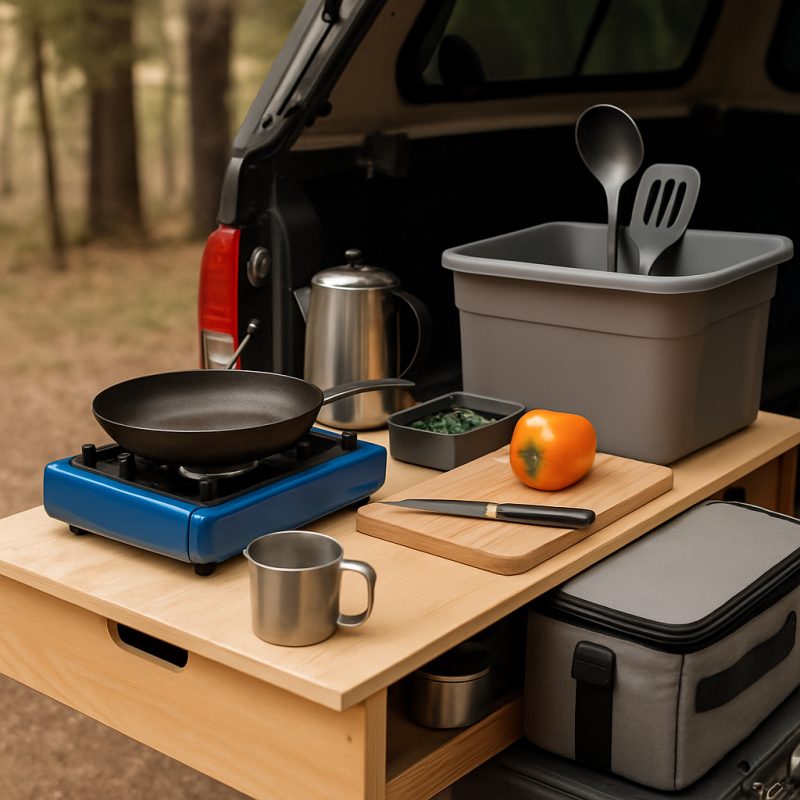
The best truck camp kitchen layout uses a three-zone system: prep zone, cooking zone, and cleanup zone. Arranging these in a logical flow — left to right or tailgate to ground — prevents cross-contamination and keeps you from tripping over gear.
Here's how to think about each zone:
- Prep zone (tailgate or folding table): This is where you chop, season, and stage ingredients. Your tailgate is the perfect height for most people, but a dedicated camp kitchen station adds shelving and a windscreen
- Cooking zone (beside the truck): Place your stove on a stable surface at waist height, downwind from your prep area. Never cook inside the truck bed — propane fumes are dangerous in enclosed spaces
- Cleanup zone (opposite side): Set your wash basin and water jug away from raw food to avoid splashing dirty water on your prep surface
Wind direction matters more than most people realize. Always position your stove on the leeward side of the truck so the vehicle blocks gusts. A crosswind can double your cook time and waste propane. Check wind direction before you unpack — a wet finger or a light piece of grass tossed in the air works fine.
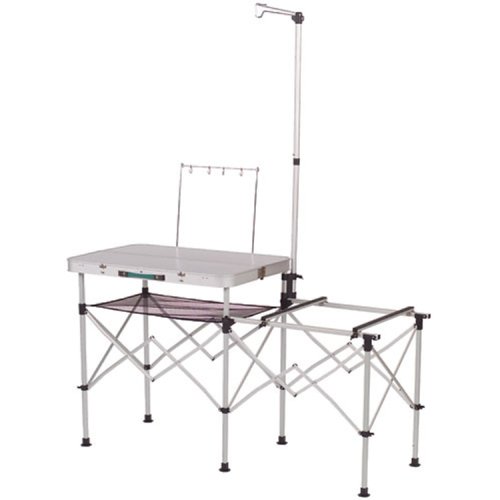
If you're camping for multiple days, consider semi-permanent placement. Use your truck bed as cold storage (cooler) and pantry (dry bins), and set up a ground-level kitchen station that stays assembled between meals. The Coleman Pack-Away Camp Kitchen folds flat for travel but provides a full prep area with side tables and a lantern hanger when deployed.
Coleman Pack-Away Portable Camp Kitchen
A reliable folding kitchen station with a prep surface, side tables, and storage shelf. Folds flat for easy truck bed storage and sets up in under two minutes.
Check Price On AmazonIf you click this link and buy, we earn a commission at no additional cost to you.
What Gear Makes the Biggest Difference?
The single most impactful piece of gear is a dedicated camp kitchen station. A folding kitchen with a prep surface, storage shelf, and windscreen transforms chaotic tailgate cooking into an organized operation. Without one, you end up stacking cutting boards on cooler lids and balancing spice jars on your stove.
Here's what separates good gear from wasted money:
- Camp kitchen station: Look for aluminum frames (rust-proof), a heat-resistant prep surface, and integrated storage. The SylvanSport Dine-o-Max is a premium option with a full sink basin and dish-drying rack built in
- Two-burner stove: Don't bother with single-burner backpacking stoves for truck camping. You need the ability to boil water and cook a main dish simultaneously
- Cast iron skillet: Heavier than camp pans but retains heat better and works over any flame. A 10-inch skillet handles most meals for 1-3 people
- Collapsible water container: A 5-gallon jug with a spigot eliminates the need to walk to water sources repeatedly. Mount it on your tailgate or hang it from a roof rack
- LED lantern or string lights: You'll lose daylight faster than you think. Hands-free overhead lighting is essential for safe food prep after dark
Avoid buying specialized camp cookware sets with 15+ pieces. Most truck camp meals require a skillet, a pot, a spatula, tongs, and a sharp knife. Pack what you'd actually use at home for a simple dinner, and leave the rest behind.
For keeping devices and lights charged on multi-day trips, a reliable charging setup is just as important as your cooking gear — especially if you're running an electric cooler or a fan.
SylvanSport Dine-o-Max Camp Kitchen System
Premium camp kitchen with an integrated sink basin and dish-drying rack. Ideal for truck campers who want a fully self-contained cooking and cleanup station.
Check Price On AmazonIf you click this link and buy, we earn a commission at no additional cost to you.

How Do You Set Up the Kitchen Step by Step?
Follow this 10-step process and you'll go from packed truck to cooking-ready in under 20 minutes. The order matters — setting up in the wrong sequence means moving heavy gear twice.
- Park strategically: Position your truck so the tailgate faces away from prevailing wind. Leave at least 8 feet of clear space behind the truck
- Lower the tailgate: This becomes your primary work surface and staging area. Wipe it down with a damp cloth
- Unload the cooler: Place it on the ground beside the truck, shaded if possible. Don't open it until you need ingredients
- Set up the kitchen station: Unfold your camp kitchen next to the tailgate. Lock all joints and make sure it's level — use flat rocks under the legs if needed
- Position the stove: Place your two-burner stove on the kitchen station's heat-resistant surface or on a separate stable platform. Connect propane and test the igniter
- Hang water and lighting: Mount your water jug where it's accessible but won't get knocked over. Hang your lantern above the prep area
- Set out cooking tools: Lay out your knife, cutting board, spatula, tongs, and seasonings on the prep surface. Keep them in a roll-up organizer for fast deployment
- Arrange your wash station: Place the collapsible basin on the opposite side of the truck. Fill it halfway with warm water and a drop of biodegradable soap
- Stage dry goods: Pull non-perishable items from your truck bed storage bins and set them on the kitchen station's lower shelf
- Do a safety check: Confirm the fire extinguisher is accessible, propane connections are tight, and nothing flammable is near the stove
The most common mistake is skipping the test ignition on your stove. Nothing kills the mood like discovering a dead igniter when you're hungry and losing daylight. Always test before you start prepping food.
How Do You Access Your Truck Bed Efficiently?
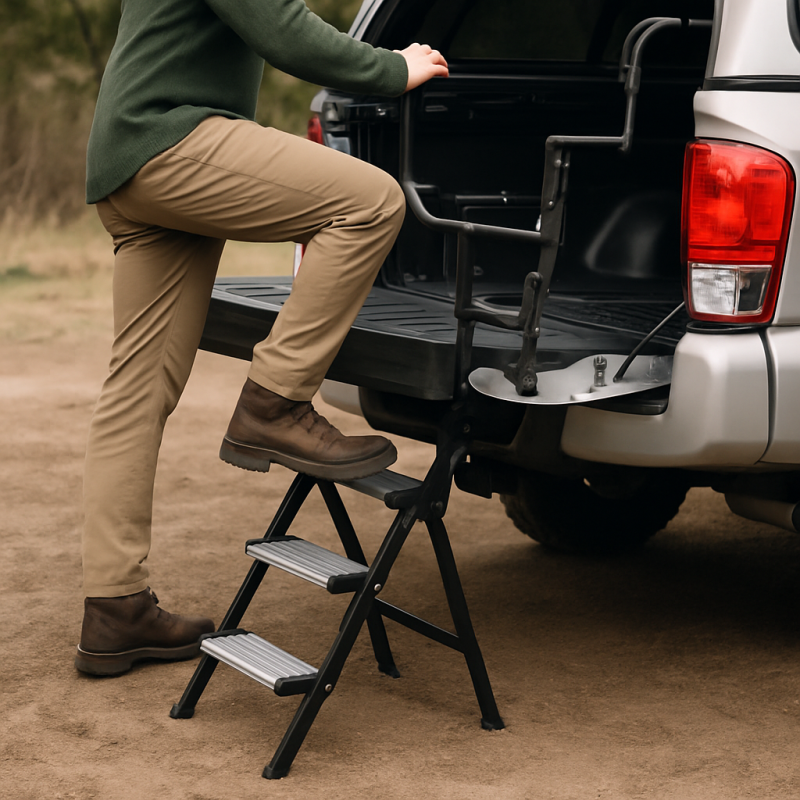
If you're storing coolers, bins, and gear in your truck bed, you need easy access without climbing or straining. Constantly hoisting yourself onto the tailgate wastes energy and risks back injuries, especially after a long day of driving or hiking.
- Tailgate step: Many newer trucks have a built-in tailgate step (Ford's is the most well-known), but aftermarket options like the Homeon Wheels Foldable RV Steps work with any truck and support up to 1,000 lbs
- Sliding cargo trays: A bed-mounted slide tray lets you pull heavy coolers and bins toward you instead of reaching into the bed
- Cargo nets and dividers: Use cargo nets to keep bins from sliding during transit so everything stays where you packed it
- Pack in reverse order: Load the gear you'll need last (sleeping gear, tent) first, and the gear you'll need first (kitchen bins, cooler) on top or nearest the tailgate
Organization inside the bed is critical. Use color-coded bins — one for cooking gear, one for dry food, one for cleaning supplies. Label them if you're camping with a group so everyone knows where things go when it's time to pack up.
For trucks with tonneau covers or camper shells, ventilation matters. Never store propane canisters inside an enclosed truck bed. The NHTSA and most fire safety guidelines recommend storing compressed gas in ventilated areas only. Keep propane in an exterior-mounted holder or in an open milk crate that rides behind the cab.
Homeon Wheels Foldable RV Steps
Anti-slip aluminum platform with handles that supports up to 1,000 lbs. Makes accessing truck bed gear effortless without climbing or straining your back.
Check Price On AmazonIf you click this link and buy, we earn a commission at no additional cost to you.

What Are the Best Meals to Cook From a Truck Kitchen?
The best truck camp meals use one or two pans, minimal ingredients, and cook in under 20 minutes. Elaborate recipes aren't practical when you're working with limited counter space and a two-burner stove. Focus on meals that are filling, easy to prep, and don't generate a mountain of dirty dishes.
Here are proven truck camp meal categories:
- One-skillet meals: Fajitas, stir-fry, breakfast hash with eggs, or sausage and peppers. Prep all ingredients before heating the skillet
- Foil packet dinners: Wrap seasoned meat and vegetables in heavy-duty foil and cook directly on the grate or stove. Zero cleanup
- Pasta and sauce: Boil water in your pot, cook pasta, and heat jarred sauce in the skillet. Add pre-cooked sausage or canned protein for substance
- Tacos and wraps: Brown ground meat, warm tortillas on the skillet, and set out toppings buffet-style on the tailgate. Feeds groups easily
- Coffee and breakfast: A percolator or pour-over setup plus pre-mixed pancake batter covers most mornings in 10 minutes
Prep at home whenever possible. Chop vegetables, pre-season meats, and portion ingredients into zip-lock bags before you leave. This cuts your campsite prep time by 50% and reduces the amount of cutting board work you need to do in the field.
Keep a basic spice kit with salt, pepper, garlic powder, paprika, and red pepper flakes. These five seasonings cover 90% of camp cooking. Store them in small, labeled containers — not full-size bottles that waste space.
For clean drinking water at remote sites, a portable water filter ensures your cooking and drinking water is safe without relying on store-bought jugs.
How Do You Clean Up Without Running Water?
Cleanup is the step most people dread, but a three-basin system makes it fast and hygienic — even without a faucet. The key is cleaning as you go rather than letting dishes pile up after the meal.
- Basin 1 (scrape and pre-rinse): Use a spatula to scrape food scraps into a trash bag, then rinse with a small splash of water. This removes 80% of the mess
- Basin 2 (hot soapy wash): Fill a collapsible basin with warm water heated on your stove and a few drops of biodegradable camp soap. Wash all dishes, pots, and utensils here
- Basin 3 (sanitize rinse): A quick dip in clean water with a splash of white vinegar kills remaining bacteria. Air dry on a mesh drying rack or clean towel
Follow these Leave No Trace principles for your wash water:
- Scatter strained dishwater at least 200 feet from any water source
- Pack out all food scraps — never dump them on the ground or bury them
- Use only biodegradable soap, and even then, don't pour it directly into streams or lakes
- The Leave No Trace Center recommends using a fine mesh strainer to capture food particles from wash water before scattering
Clean cast iron differently. Don't use soap on seasoned cast iron. Instead, scrub with coarse salt and a paper towel while the pan is still warm, then wipe with a thin layer of cooking oil. This maintains the seasoning and prevents rust during storage.
Budget 10-15 minutes for full cleanup after a meal. If you cleaned your prep tools while the food was cooking, you'll only have the serving dishes and cookware left.
What Mistakes Should You Avoid?
Most truck camp kitchen failures come from poor planning, not poor gear. Avoiding these common mistakes will save you frustration, wasted food, and potentially dangerous situations.
- Cooking in or under the truck bed: Propane stoves produce carbon monoxide. Never cook inside an enclosed truck bed, camper shell, or under a tonneau cover. Always cook in open air with adequate ventilation
- Forgetting wind protection: Wind kills stove efficiency and can blow flames sideways. Use your truck as a windbreak and carry a portable windscreen for your stove
- Overloading the cooler: An overpacked cooler loses cold air every time you open it. Use two coolers — one for drinks (opened frequently) and one for food (opened only during meal prep)
- Ignoring food storage at night: In bear country, food must be stored in bear canisters or hung from a bear pole. Even in non-bear areas, raccoons and rodents will find unsecured food. Lock it in your cab overnight
- No backup fire-starting method: Piezo igniters fail in cold weather. Carry a long-reach lighter and waterproof matches as backups
- Skipping the test run: Set up your entire kitchen in your driveway before your first trip. You'll discover missing items and layout problems without the pressure of being miles from a store
Another overlooked mistake is not securing your kitchen in wind. Lightweight folding tables and kitchen stations can blow over in a gust. Use guy lines, stakes, or bungee cords to anchor them, especially at exposed campsites.
Finally, always carry a basic tool set and emergency kit in your truck. Kitchen mishaps like burns, cuts, or propane leaks happen, and you may be far from help. A first aid kit, fire extinguisher, and basic tools should be within arm's reach at all times.
Related Articles
- Best Portable Power Stations for Truck Camping — Power stations are essential for running lights, charging devices, and powering electric coolers at camp
- How to Charge Devices While Truck Camping — Covers charging setups for multi-day trips where kitchen electronics need reliable power
- Best Portable Water Filters for Truck Camping — Portable water filters ensure safe cooking and drinking water at remote campsites
- Best Truck Bed Cargo Nets — Cargo nets keep kitchen bins and coolers from sliding during transit
- Truck Emergency Kit Essentials — Emergency kits are critical for handling kitchen mishaps like burns and cuts in remote locations
- Best Truck Camping Stoves and Cooking Gear — The article recommends a two-burner propane stove as essential cooking gear — linking to the stoves and cooking gear review helps readers choose the right one
- Best Truck Tool Sets for Roadside Repairs — The safety section advises carrying basic tools for kitchen mishaps and emergencies at remote campsites — a truck tool set review is directly relevant
- Best Truck Bed Air Mattresses for Camping — The packing order tip mentions sleeping gear loaded into the truck bed — a natural spot for readers planning overnight truck camping to discover air mattress options
Conclusion
Recommended Products
Coleman Pack-Away Portable Camp Kitchen
A reliable folding kitchen station with a prep surface, side tables, and storage shelf. Folds flat for easy truck bed storage and sets up in under two minutes.
Check Price On AmazonIf you click this link and buy, we earn a commission at no additional cost to you.
SylvanSport Dine-o-Max Camp Kitchen System
Premium camp kitchen with an integrated sink basin and dish-drying rack. Ideal for truck campers who want a fully self-contained cooking and cleanup station.
Check Price On AmazonIf you click this link and buy, we earn a commission at no additional cost to you.
Homeon Wheels Foldable RV Steps
Anti-slip aluminum platform with handles that supports up to 1,000 lbs. Makes accessing truck bed gear effortless without climbing or straining your back.
Check Price On AmazonIf you click this link and buy, we earn a commission at no additional cost to you.
Frequently Asked Questions
How much does it cost to set up a truck camp kitchen?
Can you cook on a truck tailgate?
What is the best stove for truck camping?
How do you keep food cold while truck camping?
Is it safe to cook near your truck?
How do you store a camp kitchen in a truck bed?
Do you need electricity for a truck camp kitchen?
How do you wash dishes while truck camping?
Affiliate Disclosure: This article contains affiliate links. If you purchase through these links, we may earn a commission at no extra cost to you.