Truck Emergency Kit Essentials
Key Takeaways
- Every truck emergency kit needs five core categories: power/electrical, tire repair, first aid, visibility/signaling, and weather protection.
- A quality set of jumper cables (10-gauge or thicker, 12+ feet) is the single most important item — dead batteries account for nearly 30% of roadside breakdowns.
- Seasonal additions like a snow shovel, extra blankets, and tire chains can be lifesaving if you drive in cold or remote areas.
- Pre-assembled kits save time but often lack truck-specific tools — supplement with a dedicated tool set and portable air compressor.
- Inspect and rotate perishable items like batteries, medications, and water every six months to ensure everything works when you need it.
Why Every Truck Needs a Dedicated Emergency Kit
According to AAA, the organization responds to roughly 32 million roadside assistance calls per year in the United States. The most common reasons? Dead batteries, flat tires, lockouts, and running out of fuel. Trucks are especially vulnerable because they often travel farther from urban service centers, carry heavier loads that stress tires and drivetrains, and operate in rougher conditions than sedans.
A dedicated emergency kit does three things for you:
- Reduces wait time: Many common issues — jump-starting a battery, inflating a low tire, or patching a small puncture — can be handled roadside in under 15 minutes with the right gear.
- Improves safety: Reflective triangles, a high-visibility vest, and a quality flashlight keep you visible to passing traffic, especially at night or in bad weather.
- Provides peace of mind: Knowing you have supplies for a 24-hour wait in extreme temperatures removes the panic factor from unexpected breakdowns.
The key difference between a car emergency kit and a truck emergency kit is scale. Trucks have larger batteries that demand heavier-gauge jumper cables, bigger tires that need more air volume, and more cabin space to store gear properly. A compact sedan kit simply won't cut it.
If you already keep a truck bed tool box, that's the perfect spot to store an organized emergency kit — protected from weather and always within reach.
The Five Core Categories of a Truck Emergency Kit
Rather than thinking in terms of individual items, organize your truck emergency kit essentials into five categories. This makes it easier to audit your gear and spot gaps.
- Power and electrical: Jumper cables (minimum 10-gauge, 12 feet), a portable jump starter, flashlight with extra batteries, and a USB power bank for your phone.
- Tire repair and inflation: A portable air compressor, tire pressure gauge, plug kit, and a full-size spare if your truck has one. A quality floor jack rated for your truck's weight makes tire changes far safer than the factory scissor jack.
- First aid and medical: A waterproof first aid kit with bandages, antiseptic, pain relievers, medical tape, and any personal medications. A 150-piece kit covers most scenarios without taking up excessive space.
- Visibility and signaling: Reflective warning triangles (set of three), a high-visibility safety vest, road flares or LED flares, and a whistle.
- Weather and survival: Emergency blankets, bottled water, non-perishable snacks, rain gear, work gloves, and duct tape.
Each category addresses a different failure scenario. Electrical items handle the most common breakdown cause. Tire tools address the second most common. First aid covers injuries. Visibility prevents secondary accidents. And weather gear keeps you alive if help takes hours to arrive.
The goal is redundancy without bulk. You don't need a full mechanic's shop — just enough to handle the top 90% of roadside situations safely.
LIANXIN 142-Piece Roadside Emergency Kit
A well-rounded mid-range kit with upgraded jumper cables, reflective warning triangles, tow strap, and comprehensive safety gear. An excellent foundation kit to build upon with truck-specific upgrades.
Check Price On AmazonIf you click this link and buy, we earn a commission at no additional cost to you.

Jumper Cables, Jump Starters, and Electrical Essentials
Dead batteries are the number one reason drivers call for roadside assistance. For truck owners, this category deserves extra attention because truck batteries are larger and demand more cranking amps.
Here's what to carry:
- Jumper cables: Get 10-gauge or thicker, at least 12 feet long. Cheap 16-gauge cables can't handle the amperage a truck battery needs and may overheat. Look for heavy-duty clamps with strong springs.
- Portable jump starter: A lithium-ion jump starter with at least 1,500 peak amps can start most truck engines without needing another vehicle. The VCANENERGY Jump Starter with Air Compressor combines a 12V battery jump starter with a built-in tire inflator — two critical tools in one compact unit.
- Flashlight: A bright LED flashlight (300+ lumens) with extra batteries or a rechargeable option. Headlamps are even better since they free up both hands.
- USB power bank: A 10,000mAh power bank keeps your phone alive for GPS navigation and emergency calls when your truck's electrical system is down.
One common mistake is storing jumper cables loosely in the bed where they tangle, corrode, and become a hassle to untangle in an emergency. Keep them in a zippered bag inside your tool box or behind the rear seat.
Test your portable jump starter every three months by checking its charge level. Most lithium units hold a charge for 6-12 months, but extreme heat or cold can drain them faster than expected.
VCANENERGY Jump Starter with Air Compressor
Combines a 12V portable battery jump starter with a built-in tire inflator, covering the two most common roadside emergencies in a single compact unit. Ideal for truck owners who want to minimize the number of separate devices they carry.
Check Price On AmazonIf you click this link and buy, we earn a commission at no additional cost to you.

Tire Repair Tools and Portable Air Compressors
Flat tires are the second most common roadside emergency, and trucks are more susceptible due to heavier loads and rougher terrain. Your emergency kit should handle everything from a slow leak to a full tire change.
- Portable air compressor: A 12V compressor that plugs into your truck's power outlet can reinflate a low tire in minutes. Look for one rated to at least 150 PSI with an auto-shutoff feature. Check our roundup of the best portable air compressors for trucks for top-rated options.
- Tire pressure gauge: Digital gauges are more accurate than pencil-style ones. Check pressure monthly and before long trips.
- Tire plug kit: A basic plug kit with reamer, insertion tool, and rubber plugs can seal most tread punctures in under 10 minutes — enough to get you to a tire shop safely.
- Full-size spare and jack: If your truck came with a spare, verify it's properly inflated (spares lose pressure over time). The factory scissor jack works in a pinch, but a small hydraulic bottle jack rated for your truck's weight is far more stable.
The Car Emergency Roadside Kit with Air Compressor bundles a compressor with jumper cables, a first aid kit, and winter essentials — a solid option if you want one package that covers multiple categories.
Pro tip: practice changing a tire at home before you need to do it on the shoulder of a highway at night. Familiarize yourself with where your truck's jack points are — using the wrong spot can damage the frame or cause the jack to slip.
First Aid and Medical Supplies
A roadside emergency can involve minor injuries — cuts from broken glass, burns from a hot engine, or sprains from changing a tire on uneven ground. A well-stocked first aid kit handles these situations before professional help arrives.
Your truck emergency kit first aid supplies should include:
- Adhesive bandages: Various sizes for cuts and scrapes
- Sterile gauze pads and medical tape: For larger wounds
- Antiseptic wipes and antibiotic ointment: To clean wounds and prevent infection
- Pain relievers: Ibuprofen and acetaminophen
- Tweezers and small scissors: For splinter removal and cutting tape
- Disposable gloves: At least 2-3 pairs
- Emergency blanket: Mylar blankets retain 90% of body heat and pack flat
- Personal medications: A 48-hour supply of any prescription medications you take regularly
The Mini First Aid Kit (150-piece) comes in a waterproof hard shell case that fits easily in a glove box or center console. It covers all the basics without taking up much room.
Two important maintenance notes:
- Check expiration dates every six months. Medications, antiseptic wipes, and ointments all expire. Replace them before they lose effectiveness.
- Restock after every use. It's easy to use a few bandages and forget to replace them. Keep a checklist inside the kit lid so you know exactly what should be there.
If you frequently travel with passengers or pets, scale up your kit accordingly. A family of four needs more supplies than a solo driver.
Mini First Aid Kit - 150 Piece Waterproof Hard Shell
A compact, waterproof hard-shell first aid kit with 150 pieces including bandages, antiseptic, and essential medical supplies. Fits easily in a glove box or center console for immediate access.
Check Price On AmazonIf you click this link and buy, we earn a commission at no additional cost to you.

Tools Every Truck Owner Should Carry
Beyond the emergency-specific items, a basic truck tool set lets you handle minor mechanical issues that would otherwise leave you stranded. You don't need a full workshop — just the essentials.
- Socket wrench set: 10mm, 13mm, and 15mm sockets cover most truck fasteners
- Adjustable wrench: One 8-inch and one 12-inch handle most bolt sizes
- Pliers: Standard and needle-nose for gripping, pulling, and bending
- Screwdrivers: Phillips and flathead in at least two sizes each
- Utility knife: For cutting rope, zip ties, hoses, or tape
- Zip ties and duct tape: The ultimate temporary fix for loose wiring, hoses, and panels
- Tow strap: A 20-foot strap rated for at least 10,000 lbs — essential for truck recovery
- Work gloves: Protect your hands from sharp edges, hot surfaces, and road grime
The Apollo Tools 56-Piece Compact Auto Tool Set is built specifically for vehicle repairs and comes in a zippered case that's easy to store. It includes sockets, wrenches, pliers, and screwdrivers — everything listed above in a single kit.
For securing your emergency gear in the truck bed, a cargo net or quality tie-down system prevents items from sliding around and becoming damaged or inaccessible when you need them most.
Store tools in a hard-sided case or tool roll to prevent rust and keep everything organized. Loose tools rattling around the bed or under the seat are frustrating to dig through during an actual emergency.
Apollo Tools 56-Piece Compact Auto Tool Set
Purpose-built for vehicle repairs with sockets, wrenches, pliers, and screwdrivers in a compact zippered case. Covers the essential hand tools every truck emergency kit needs without taking up much space.
Check Price On AmazonIf you click this link and buy, we earn a commission at no additional cost to you.

Pre-Assembled Kits vs. Building Your Own
You have two options for putting together your truck emergency kit essentials: buy a pre-assembled kit or build a custom one. Both approaches have trade-offs.
Pre-assembled kits offer convenience. Everything arrives organized in one bag or case, and reputable kits include items that work well together. Here are three solid options:
- Budget pick: The General Medi 127-Piece Roadside Kit includes a first aid kit, jumper cables, tow rope, safety vest, and reflective triangles at an entry-level price point.
- Mid-range pick: The LIANXIN 142-Piece Emergency Kit upgrades the jumper cables and includes a more comprehensive tool selection alongside the standard safety gear.
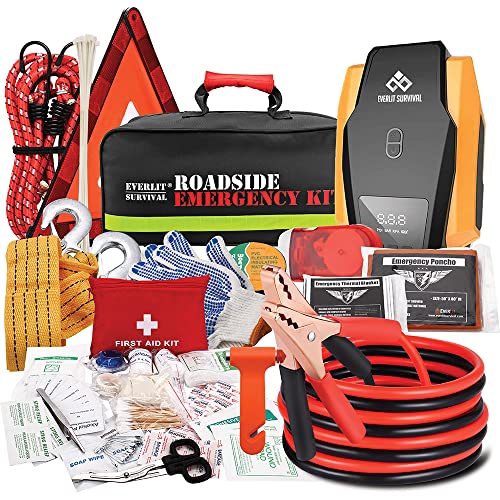
- Premium pick: The Everlit Survival Car Emergency Kit includes a digital air compressor, higher-quality jumper cables, and a more thorough first aid selection.
Building your own lets you customize for your specific truck, climate, and driving habits. The downside is higher total cost and more time spent sourcing individual items.
Our recommendation: start with a mid-range pre-assembled kit, then supplement it with truck-specific upgrades. Most kits include lightweight jumper cables and basic tools that work fine for sedans but fall short for trucks. Add heavier-gauge cables, a portable jump starter, a quality air compressor, and a dedicated tool set to round out the kit.
This hybrid approach gives you a solid foundation without overpaying for premium items in every category.
Everlit Survival Car Emergency Kit
A comprehensive premium kit that includes a digital air compressor, 12-foot jumper cables, first aid supplies, a flashlight, and a tow strap. One of the most complete all-in-one options available for truck owners.
Check Price On AmazonIf you click this link and buy, we earn a commission at no additional cost to you.
Seasonal Additions and Maintenance Schedule
A static emergency kit isn't enough. Your truck faces different hazards in July versus January, and gear degrades over time. Adjust your kit seasonally and inspect it on a regular schedule.
Winter additions (November–March):
- Folding snow shovel: Essential for digging out of snowdrifts
- Ice scraper and snow brush: Keep visibility clear
- Tire chains or traction mats: For getting unstuck on ice or packed snow
- Extra blankets and hand warmers: Hypothermia risk rises quickly in a stalled truck
- Bag of sand or cat litter: Provides traction under stuck tires
Summer additions (April–October):
- Extra water: At least one gallon per person for both drinking and radiator top-off
- Sunscreen and hat: If you're working roadside in direct sun
- Coolant: A small jug of premixed coolant for overheating emergencies
- Bug spray: Roadside repairs in mosquito territory are miserable without it
Maintenance schedule:
- Monthly: Check tire pressure on your spare, verify your flashlight works, and confirm your phone charger is functional
- Every six months: Rotate water and snacks, check medication expiration dates, test your portable jump starter, and inspect jumper cable clamps for corrosion
- Annually: Replace batteries in all devices, inspect tow straps and bungee cords for fraying, and refresh your first aid kit supplies
Set a calendar reminder for these checks. The worst time to discover your flashlight batteries are dead or your jumper cables are corroded is the moment you actually need them.
Related Articles
- Best Truck Bed Tool Boxes for Pickups — Recommended as the ideal storage location for an organized emergency kit in your truck bed
- Best Truck Floor Jacks for Heavy Lifting — Referenced when discussing safer alternatives to factory scissor jacks for tire changes
- Best Portable Air Compressors for Trucks — Linked as a resource for choosing the right portable air compressor for tire inflation
- Best Truck Tool Sets for Roadside Repairs — Referenced when discussing essential tools every truck owner should carry
- Best Truck Bed Cargo Nets — Mentioned for securing emergency gear in the truck bed
- Best Truck Bed Tie Downs for Secure Hauling — Mentioned alongside cargo nets for keeping emergency kit items secure
Conclusion
Recommended Products
VCANENERGY Jump Starter with Air Compressor
Combines a 12V portable battery jump starter with a built-in tire inflator, covering the two most common roadside emergencies in a single compact unit. Ideal for truck owners who want to minimize the number of separate devices they carry.
Check Price On AmazonIf you click this link and buy, we earn a commission at no additional cost to you.
Everlit Survival Car Emergency Kit
A comprehensive premium kit that includes a digital air compressor, 12-foot jumper cables, first aid supplies, a flashlight, and a tow strap. One of the most complete all-in-one options available for truck owners.
Check Price On AmazonIf you click this link and buy, we earn a commission at no additional cost to you.
Apollo Tools 56-Piece Compact Auto Tool Set
Purpose-built for vehicle repairs with sockets, wrenches, pliers, and screwdrivers in a compact zippered case. Covers the essential hand tools every truck emergency kit needs without taking up much space.
Check Price On AmazonIf you click this link and buy, we earn a commission at no additional cost to you.
Mini First Aid Kit - 150 Piece Waterproof Hard Shell
A compact, waterproof hard-shell first aid kit with 150 pieces including bandages, antiseptic, and essential medical supplies. Fits easily in a glove box or center console for immediate access.
Check Price On AmazonIf you click this link and buy, we earn a commission at no additional cost to you.
LIANXIN 142-Piece Roadside Emergency Kit
A well-rounded mid-range kit with upgraded jumper cables, reflective warning triangles, tow strap, and comprehensive safety gear. An excellent foundation kit to build upon with truck-specific upgrades.
Check Price On AmazonIf you click this link and buy, we earn a commission at no additional cost to you.
Frequently Asked Questions
What should be in a truck emergency kit?
How much should I spend on a truck emergency kit?
Where should I store my emergency kit in my truck?
Do I need a portable jump starter or just jumper cables?
How often should I check and update my emergency kit?
What gauge jumper cables do I need for a truck?
Are pre-assembled emergency kits worth buying?
What emergency items should I add in winter?
Affiliate Disclosure: This article contains affiliate links. If you purchase through these links, we may earn a commission at no extra cost to you.