Spot vs Flood LED Light Bars for Off-Road
Key Takeaways
- Spot beam patterns throw light 800–1,500 feet ahead in a narrow cone, making them ideal for high-speed desert running and highway driving.
- Flood beam patterns spread light 60–120 degrees wide but only reach 100–300 feet, which is perfect for slow-speed trail crawling and campsite illumination.
- Combo light bars that mix spot and flood LEDs in one unit offer the best versatility for drivers who encounter varied off-road conditions.
- Mounting position matters as much as beam pattern — roof-mounted spots maximize distance while bumper-mounted floods reduce close-range blind spots.
- Most serious off-road setups use a combo bar on the roof plus dedicated flood pods on the bumper for complete coverage at all speeds.
What Is the Difference Between Spot and Flood Beam Patterns?
The core difference is beam angle. Spot beams concentrate light into a narrow cone of 10–30 degrees, projecting it far down the trail. Flood beams spread light across a wide arc of 60–120 degrees, illuminating everything nearby but not reaching nearly as far. This single distinction drives every other difference between the two.
- Spot beam angle: 10–30 degrees, pencil-like projection
- Flood beam angle: 60–120 degrees, wide wash of light
- Spot effective range: 800–1,500 feet depending on wattage
- Flood effective range: 100–300 feet at usable brightness
- Spot best use: seeing obstacles, animals, or turns far ahead at speed
- Flood best use: peripheral vision, close-range trail visibility, and work lighting
Think of it like a flashlight versus a lantern. A flashlight (spot) lets you see one thing far away. A lantern (flood) lets you see everything nearby. Neither replaces the other — they solve different problems.
The beam pattern is determined by the reflector design and lens shape behind each LED. Spot reflectors are deep and parabolic, focusing photons into a tight column. Flood reflectors are shallow and textured, scattering light outward. Some manufacturers use interchangeable lenses, but most light bars have fixed beam patterns set at the factory.
If you're shopping for your first light bar, our top-rated LED light bars guide covers the best options across all beam patterns and price points.
How Do Spot and Flood Beams Compare Side by Side?
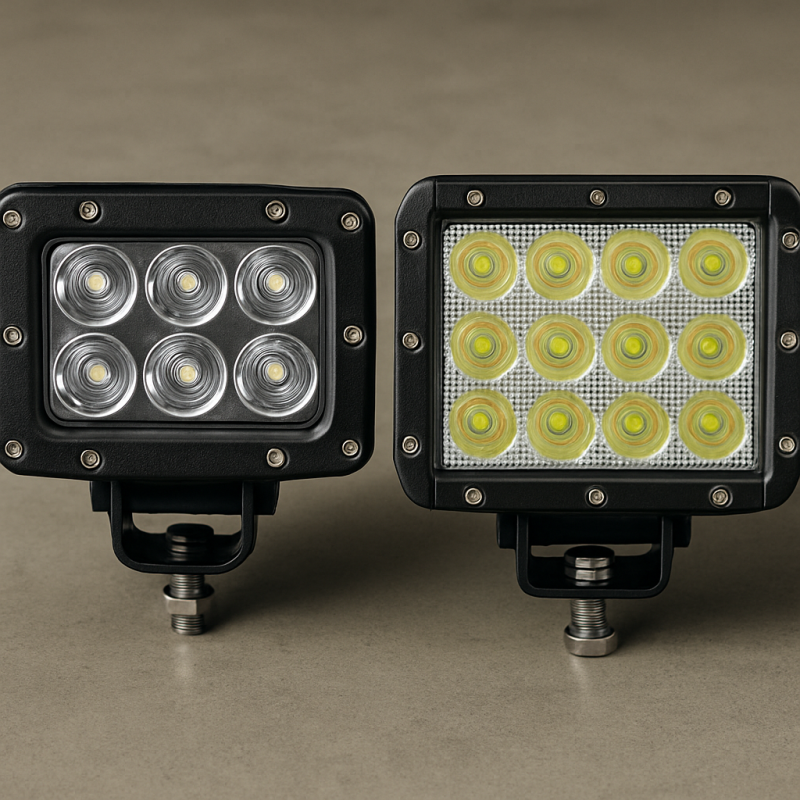
Numbers tell the story better than descriptions. Here's a direct comparison of spot versus flood beam performance across the metrics that matter most for off-road driving.
| Metric | Spot Beam | Flood Beam |
|---|---|---|
| Beam Angle | 10–30° | 60–120° |
| Effective Range | 800–1,500 ft | 100–300 ft |
| Peripheral Coverage | Poor | Excellent |
| Best Speed Range | 30+ mph | Under 15 mph |
| Glare to Oncoming Traffic | High (focused beam) | Moderate (dispersed) |
| Close-Range Visibility | Narrow strip only | Full width coverage |
| Energy Efficiency | Higher (focused output) | Lower (spread losses) |
| Ideal Mounting | Roof rack, windshield pillar | Bumper, grille, A-pillar |
The key takeaway from this comparison: spot beams outperform at distance, flood beams outperform at width. A 120W spot bar and a 120W flood bar draw the same power, but the spot concentrates all of it into a smaller area, creating higher lux at range.
This is why you'll see MotorTrend recommending that off-roaders think about speed first when choosing beam patterns. If you're moving fast, you need to see far. If you're moving slow, you need to see wide.
- Lux at 100 feet (spot): 2,000–5,000 lux depending on wattage
- Lux at 100 feet (flood): 400–1,200 lux — much dimmer at the same distance
- Total lumens: similar at equivalent wattage, just distributed differently
When Should You Choose a Spot Beam Light Bar?
Choose a spot beam when your primary driving involves sustained speeds above 25–30 mph on open terrain where seeing far ahead is critical for safety. Spot beams are the right call for desert running, fast fire roads, and rural highway supplemental lighting.
- Desert and open terrain: You need to see dips, washes, and animals 1,000+ feet ahead when running at 40–60 mph. A flood beam simply can't reach that far.
- Pre-running race courses: Rally and Ultra4 racers rely on spot patterns for course reconnaissance at speed.
- Long-distance overlanding highways: Supplementing headlights on dark rural roads where wildlife is a concern.
- Single-light-bar budgets: If you can only mount one bar and you drive mostly open terrain, a spot gives you the most safety per dollar.
Spot beams excel when mounted high — roof racks and windshield pillar mounts keep the beam above hood glare and maximize the distance advantage. A roof-mounted 20-inch spot bar can illuminate reflective trail markers over a quarter mile away.
The trade-off is real, though. On tight, twisty trails, a spot bar creates tunnel vision. You'll see 1,000 feet down the trail but miss the rock ledge three feet to your right. That's why serious off-road setups pair spots with supplemental floods — but if you're picking just one pattern, match it to where you drive most.
For dedicated off-road driving lights, spot patterns paired with proper aiming give you the longest reach per watt of any beam configuration.
When Should You Choose a Flood Beam Light Bar?
Choose a flood beam when you drive primarily at low speeds on technical trails where seeing the full width of the path — including shoulders, ditches, and obstacles on both sides — matters more than seeing far ahead.
- Rock crawling: At 2–5 mph, you need to see tire placement and obstacles within 20 feet on all sides. Distance is irrelevant.
- Tight wooded trails: Overhanging branches, narrow passages, and sharp switchbacks demand wide peripheral lighting.
- Campsite and work lighting: Setting up camp, loading gear, or working on your truck at night. Floods turn night into day in a 60-foot radius.
- Fog and dust: Wide, low-mounted floods cut under fog and dust better than focused spots, which reflect back and blind you. This is the same principle behind dedicated fog lights.
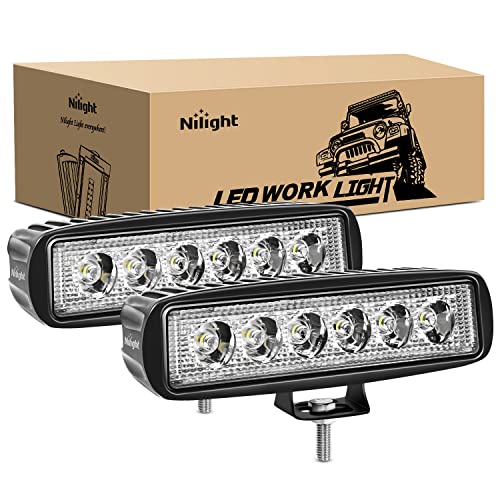
The Nilight 18W Flood LED Pods are a popular entry point — a pair of these mounted on the bumper provides excellent close-range coverage for under $30.
Mounting position is critical for floods. Bumper-level or grille-level mounting keeps flood beams low, reducing the backscatter effect in dust and rain. Roof-mounting a flood bar is generally a mistake — it creates a dome of light above the truck that washes out your windshield and blinds you in any particulate conditions.
| Flood Use Case | Recommended Mount Position | Suggested Wattage |
|---|---|---|
| Rock crawling | Bumper, lower A-pillar | 36–72W (pair) |
| Trail riding | Grille, bumper | 72–120W |
| Campsite lighting | Rear bumper, bed rack | 18–36W |
| Fog/dust supplement | Below headlight line | 36–60W |
Nilight 18W Flood LED Pods (2-Pack)
The best budget entry point for flood lighting. This pair of 18W pods delivers excellent close-range coverage for trail riding and campsite use at an unbeatable price.
Check Price On AmazonIf you click this link and buy, we earn a commission at no additional cost to you.
Are Combo Beam Light Bars the Best of Both Worlds?
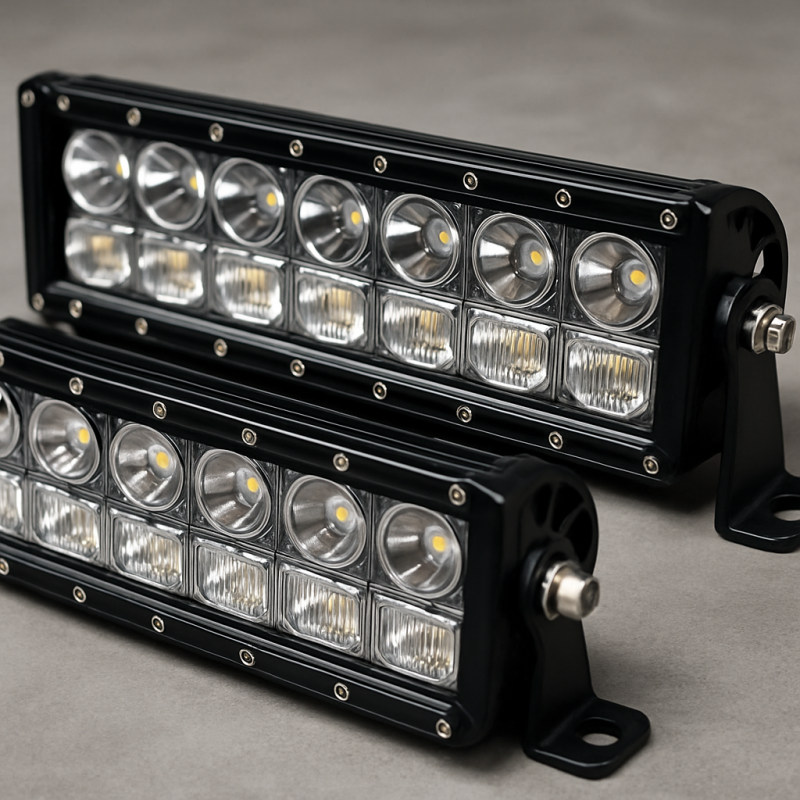
For most off-roaders, yes — combo bars are the best single-purchase option. A combo light bar places spot LEDs in the center for distance throw and flood LEDs on the outer edges for peripheral coverage, giving you a balanced beam pattern in one unit.
- Center spot LEDs: Typically 8–10 degree beam for long-range projection
- Outer flood LEDs: 60–90 degree beam for side coverage
- Combined effect: Usable light from 10 feet to 800+ feet, covering close, mid, and long range
- Trade-off: Not as far-reaching as a pure spot or as wide as a pure flood — a jack-of-all-trades compromise
The Nilight 20-Inch Combo Light Bar with LED Pod Kit is one of the most popular setups for good reason — you get a 126W combo bar for distance plus two 18W flood pods for close-range fill, all with a wiring harness included. It's a complete lighting solution in one box.
Combo bars work best when you can't predict what terrain you'll encounter. If your weekend involves highway driving to the trailhead, moderate-speed fire roads, and then technical single-track, a combo covers all three scenarios adequately. It won't match a dedicated spot bar at 60 mph or a dedicated flood at 3 mph crawling, but it handles both acceptably.
According to The Drive, combo bars account for the majority of off-road light bar sales precisely because of this versatility. If you're building your first off-road lighting setup, a combo bar is almost always the right starting point.
For a deeper breakdown of the top options, check our LED light bar rankings which includes combo models at every price point.
Nilight 20" Combo Light Bar + Pod Kit with Wiring Harness
Complete spot-and-flood lighting kit in one box. The 126W combo bar handles distance while the included 18W flood pods fill close-range gaps — plus a wiring harness with relay and switch.
Check Price On AmazonIf you click this link and buy, we earn a commission at no additional cost to you.

How Should You Mount Spot and Flood Light Bars for Best Results?
Mounting position affects beam performance almost as much as the beam pattern itself. Mount spots high for maximum range and floods low for maximum coverage — getting this wrong negates the advantages of either pattern.
- Roof rack (spot or combo): Maximum range projection, clears hood glare, but creates wind noise and can reflect off the hood. Best for 20"+ bars.
- Windshield pillar (spot pods): Great for aimed spot lights — popular in rally setups. Allows independent aiming left/right of center.
- Bumper/grille (flood or combo): Low mounting reduces dust/rain backscatter. Ideal position for floods and smaller combo bars.
- A-pillar (flood pods): Excellent for trail width illumination. Pair with a roof-mounted spot bar for complete coverage.
- Rear-facing (flood): Essential for reversing on trails at night. Mount on bed rack, rear bumper, or chase rack.
If you haven't installed a light bar before, the process is straightforward for most clamp-on systems. Our LED light bar installation guide walks through the full process including wiring, relay setup, and switch placement.
Wiring matters too. Always use a relay and fuse between the battery and light bar — never wire directly to a switch. Most quality kits like the Nilight 12-Inch Combo Kit include a wiring harness with relay, fuse, and rocker switch. For multi-bar setups, use separate circuits so you can toggle spots and floods independently.
Independent switching is important because you'll want floods only in camp and on tight trails, spots only on open roads, and both for fast trail sections. A single switch for everything limits your flexibility.
What's the Best Spot-and-Flood Setup for Each Off-Road Style?
The ideal lighting configuration depends entirely on your primary off-road activity. Here's what works best for each driving style, based on real-world setups from experienced off-roaders on forums like F150Forum and dedicated off-road communities.
| Off-Road Style | Primary Light | Secondary Light | Budget Range |
|---|---|---|---|
| Desert/High-Speed | 40"+ spot bar (roof) | Flood pods (bumper) | $200–$600 |
| Trail Riding | 20" combo bar (roof/bumper) | Flood pods (A-pillar) | $100–$300 |
| Rock Crawling | Flood pods (bumper + A-pillar) | Small combo bar (optional) | $60–$200 |
| Overlanding | 20–30" combo bar (roof rack) | Rear flood (bed rack) | $120–$400 |
| Farm/Ranch | Flood bar (bumper) | Rear flood (toolbox/rack) | $50–$150 |
For trail riders — the largest segment — a combo bar plus flood pods is the sweet spot. The NAOEVO 12-Inch LED Light Bar with 4 Pod Kit delivers 54,000 lumens with a combo main bar and four flood pods, covering virtually every angle around your truck.
For budget builds, start with a single combo bar in the 12–20 inch range. You can always add flood pods later as your needs evolve. A $50–80 combo bar handles 90% of recreational off-road scenarios.
- Start with: one combo bar, properly mounted and wired
- Add next: a pair of bumper-mounted flood pods for close-range fill
- Then consider: rear-facing floods for reversing and campsite use
- Advanced: dedicated spot bar on roof + independent flood pods on A-pillars
NAOEVO 12" LED Light Bar + 4 Pod Kit (54,000LM)
Maximum coverage setup with a triple-row combo bar and four LED pods delivering 54,000 lumens total. Ideal for trucks that need light in every direction on technical trails.
Check Price On AmazonIf you click this link and buy, we earn a commission at no additional cost to you.

What Wattage and LED Count Do You Actually Need?
More watts and LEDs don't always mean better off-road lighting. A focused 72W spot bar often outperforms a poorly designed 300W flood bar for distance driving. What matters is matching wattage to your beam pattern, mounting position, and driving speed.
- 18–36W pods: Auxiliary lighting, fog light replacement, campsite use. Ideal as flood supplements.
- 72–126W bars (12–20 inches): Primary off-road lighting for most trucks. This range covers trail riding, moderate-speed dirt roads, and campsite illumination.
- 180–300W bars (30–50 inches): High-speed desert running, pre-running, competitive off-road. Overkill for casual trail use.
The Nilight 60W Combo LED Pods pack impressive output into a compact 4-inch form factor — proof that you don't need a massive bar to get serious lighting performance.
LED chip quality matters more than raw count. Premium CREE or Osram LEDs produce more usable light per watt than generic chips. A 120W bar with quality LEDs can match a 200W bar with cheap ones. Look for these specs when comparing:
- Lumens per watt: Quality LEDs produce 100–130 lm/W; cheap ones produce 60–80 lm/W
- Color temperature: 6000–6500K is standard for off-road — bright white without excessive blue tint
- IP rating: IP67 minimum for off-road; IP68 for water crossings and heavy rain
- Operating temperature: Quality housings manage heat better, preventing LED degradation over time
Don't forget that your truck's electrical system has limits. A 300W light bar draws 25 amps at 12V. Running multiple high-wattage bars may require a dual-battery setup or auxiliary fuse block to avoid overtaxing your alternator. As a reference, NHTSA guidelines recommend ensuring aftermarket electrical accessories don't exceed your vehicle's charging system capacity.
Nilight 60W 4" Combo LED Work Light Pods with Wiring Harness
Compact but powerful 60W combo pods that pack serious output into a 4-inch form factor. Perfect as supplemental lights or primary pods for smaller trucks and UTVs.
Check Price On AmazonIf you click this link and buy, we earn a commission at no additional cost to you.

Related Articles
- Best LED Light Bars for Trucks — Comprehensive review of top-rated LED light bars across all beam patterns and price points
- Best Off-Road Driving Lights for Trucks — Reviews dedicated off-road driving lights including spot-pattern options for maximum range
- Best Truck Fog Lights for Safe Driving — Covers fog light options which use flood-pattern principles for low-visibility conditions
- How to Install an LED Light Bar on Your Truck — Step-by-step installation guide for mounting and wiring LED light bars
Conclusion
Recommended Products
Nilight 18W Flood LED Pods (2-Pack)
The best budget entry point for flood lighting. This pair of 18W pods delivers excellent close-range coverage for trail riding and campsite use at an unbeatable price.
Check Price On AmazonIf you click this link and buy, we earn a commission at no additional cost to you.
Nilight 20" Combo Light Bar + Pod Kit with Wiring Harness
Complete spot-and-flood lighting kit in one box. The 126W combo bar handles distance while the included 18W flood pods fill close-range gaps — plus a wiring harness with relay and switch.
Check Price On AmazonIf you click this link and buy, we earn a commission at no additional cost to you.
NAOEVO 12" LED Light Bar + 4 Pod Kit (54,000LM)
Maximum coverage setup with a triple-row combo bar and four LED pods delivering 54,000 lumens total. Ideal for trucks that need light in every direction on technical trails.
Check Price On AmazonIf you click this link and buy, we earn a commission at no additional cost to you.
Nilight 60W 4" Combo LED Work Light Pods with Wiring Harness
Compact but powerful 60W combo pods that pack serious output into a 4-inch form factor. Perfect as supplemental lights or primary pods for smaller trucks and UTVs.
Check Price On AmazonIf you click this link and buy, we earn a commission at no additional cost to you.
Frequently Asked Questions
Can I use a spot light bar as my only off-road light?
Are flood light bars legal on the highway?
What does combo beam mean on a light bar?
How many lumens do I need for off-road driving at night?
Should I get one big light bar or multiple small pods?
Do spot or flood LEDs drain the battery faster?
What IP rating do off-road light bars need?
Can I mix spot and flood light bars from different brands?
Affiliate Disclosure: This article contains affiliate links. If you purchase through these links, we may earn a commission at no extra cost to you.