LED vs Halogen Headlights for Trucks
Key Takeaways
- LED headlights produce 2-4x more lumens than halogen bulbs while consuming 50-70% less power from your truck's electrical system.
- Halogen headlights cost $10-$30 per bulb compared to $30-$150 for quality LED replacements, but LEDs last 5-10x longer.
- LED headlights offer a whiter 5,000-6,500K color temperature that improves nighttime visibility, while halogen bulbs emit a warmer 3,000-3,500K yellow tone.
- Some states have specific regulations around LED headlight conversions — always verify your truck's LED retrofit meets DOT and SAE standards before installing.
- For trucks used primarily for highway driving and towing, LED headlights provide a significant safety advantage with better throw distance and peripheral illumination.
How LED and Halogen Headlights Work
Understanding the fundamental technology behind each headlight type helps explain their performance differences. These aren't just different bulbs — they generate light through entirely different mechanisms.
Halogen headlights work like traditional incandescent bulbs. An electrical current passes through a tungsten filament inside a glass envelope filled with halogen gas (usually iodine or bromine). The filament heats to around 2,500°C, producing visible light. The halogen gas creates a chemical cycle that redeposits evaporated tungsten back onto the filament, extending its life beyond a standard incandescent bulb.
LED headlights use semiconductor diodes that emit light when electrical current passes through them. There's no filament, no gas, and no fragile glass envelope. Instead, electrons moving through the semiconductor material release energy as photons — a process called electroluminescence.
This core difference drives every performance gap between the two technologies:
- Energy conversion: Halogen bulbs convert roughly 10% of energy into light (the rest becomes heat), while LEDs convert 40-50% into usable light
- Heat generation: Halogen bulbs produce heat at the bulb face, LEDs generate heat at the base/driver — requiring different cooling strategies
- Startup time: LEDs reach full brightness in nanoseconds, halogen bulbs need a fraction of a second to warm up
- Durability: No filament means LEDs are far more resistant to vibration — a real advantage on trucks that see rough roads and heavy loads
If you're exploring other lighting upgrades for your truck, our guide to the best truck headlight bulbs covers top-rated options across both technologies.
Brightness and Visibility Compared
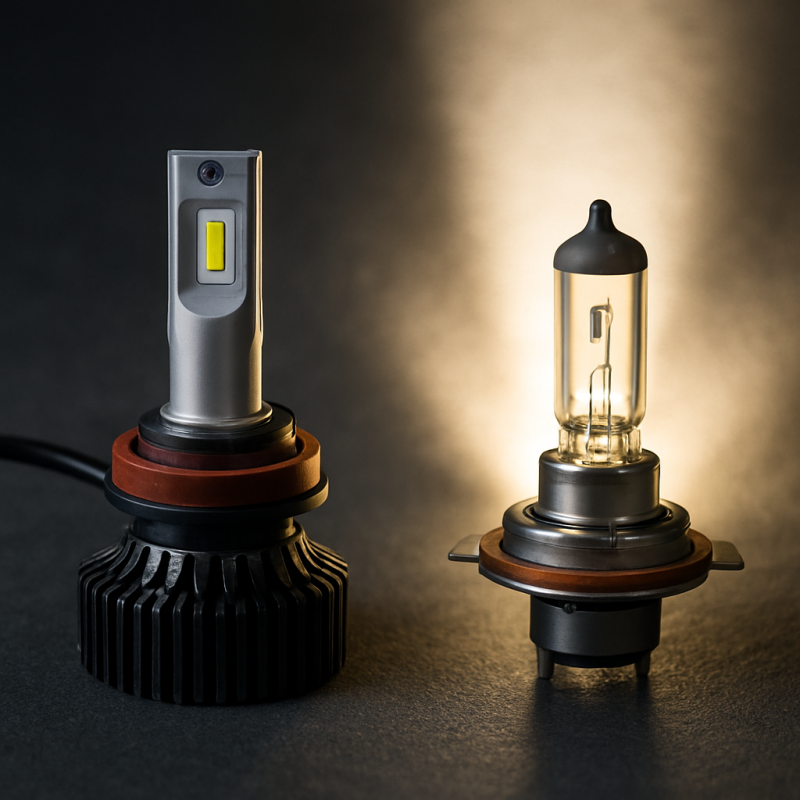
Brightness is the primary reason most truck owners consider switching from halogen to LED headlights. The difference is dramatic — but raw lumen counts don't tell the whole story.
| Metric | Halogen | LED |
|---|---|---|
| Lumen Output (per bulb) | 700-1,200 lumens | 2,000-6,000 lumens |
| Color Temperature | 3,000-3,500K (warm yellow) | 5,000-6,500K (cool white) |
| Beam Distance | 150-250 feet | 300-500 feet |
| Peripheral Spread | Good (wide, even glow) | Varies (depends on optics) |
| Fog Performance | Better (warm light cuts fog) | Moderate (cool light reflects off moisture) |
LED headlights typically deliver 2-4x more lumens than their halogen counterparts. On a dark highway, this translates to seeing road signs, animals, and obstacles significantly earlier — a critical safety factor when you're hauling a trailer at highway speeds.
However, brightness isn't just about lumens. Beam pattern matters equally:
- Well-designed LEDs: Produce a crisp cutoff line that illuminates the road without blinding oncoming traffic
- Cheap LED retrofits: Often scatter light everywhere, creating glare that's dangerous and illegal
- Halogen reflector housings: Were designed for a specific filament position — LED chips that don't match this position produce poor beam patterns
For truck owners who frequently drive in fog or heavy rain, halogen's warmer color temperature actually penetrates moisture better than LED's cool white light. Consider pairing LED headlights with quality fog lights to cover all conditions.
Lifespan and Durability
Truck headlights take a beating — engine vibration, temperature swings, road debris, and thousands of hours of use. Longevity is a practical concern, not just a spec-sheet number.
| Factor | Halogen | LED |
|---|---|---|
| Rated Lifespan | 500-1,000 hours | 15,000-50,000 hours |
| Real-World Lifespan | 1-3 years | 5-15 years |
| Vibration Resistance | Low (filament can break) | High (solid-state) |
| Heat Sensitivity | Moderate | Low (with proper heat sink) |
| UV Degradation of Housing | Higher (UV output yellows lenses) | Lower (minimal UV emission) |
The lifespan gap is massive. A quality LED headlight can outlast 10 or more halogen bulbs before needing replacement. For daily drivers, this means LED headlights could potentially last the life of the truck.
Durability factors that matter for truck owners specifically:
- Off-road vibration: Halogen filaments are fragile — hard impacts can break the tungsten wire instantly. LEDs have no moving parts to fail
- Temperature extremes: Both types handle cold well, but LED drivers can struggle in extreme heat if the heat sink design is poor
- Voltage spikes: Truck electrical systems fluctuate under load. Quality LEDs include voltage regulators; cheap ones don't and burn out prematurely
- Moisture intrusion: Both types fail when water enters the housing. Proper gasket maintenance matters more than bulb type here
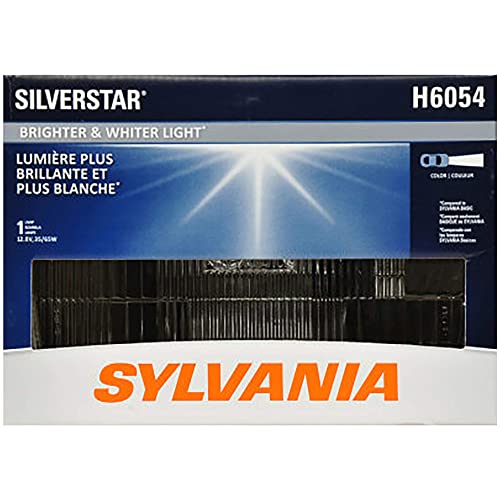
One hidden benefit of halogen longevity limits: the SYLVANIA SilverStar H6054 and similar high-performance halogen bulbs trade some lifespan for increased brightness, typically lasting 200-400 hours. Budget that into your cost comparison.
SYLVANIA H6054 SilverStar Sealed Beam Headlight
A top-performing halogen upgrade that delivers brighter, whiter light than standard halogen bulbs. Ideal for truck owners who want improved visibility without the complexity of an LED conversion.
Check Price On AmazonIf you click this link and buy, we earn a commission at no additional cost to you.
Cost Breakdown: Upfront vs Long-Term
Price is where most truck owners get stuck. Halogen wins on sticker price. LED wins on total cost of ownership. Here's how the math actually works out.
| Cost Factor | Halogen | LED |
|---|---|---|
| Per Bulb Cost | $10-$30 | $30-$150 |
| Pair (both headlights) | $20-$60 | $60-$300 |
| Replacements Over 5 Years | 3-5 sets (~$100-$300) | 0-1 sets (~$0-$150) |
| Installation Cost (if shop) | $20-$40 per swap | $30-$100 one-time |
| 5-Year Total Cost | $160-$500 | $60-$400 |
When you factor in replacement frequency and shop labor, LED headlights often cost less over 5 years than repeatedly buying halogen bulbs.
Budget considerations by tier:
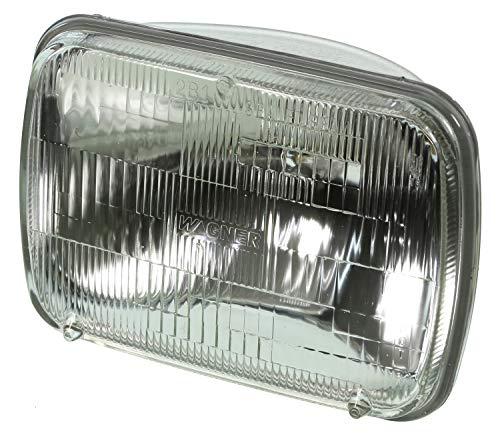
- Economy halogen ($10-$15/bulb): Basic output, standard lifespan. The Wagner Lighting H6054 is a reliable standard replacement at this price point
- Performance halogen ($20-$35/bulb): Brighter output, shorter lifespan. Worth it as a budget upgrade
- Budget LED ($30-$60/pair): Caution here — many produce poor beam patterns and fail early. You often get what you pay for
- Quality LED ($80-$150/pair): Proper heat management, CAN bus compatibility, and correct chip placement. This is the sweet spot
- Premium LED ($150-$300/pair): Projector-style with built-in optics. Best beam pattern but may require housing modifications
There's also an energy cost factor. LEDs draw 20-40 watts per bulb versus halogen's 55-65 watts. On a truck, this reduces alternator load — meaningful if you're running multiple accessories like LED light bars, winches, or aftermarket audio systems.
Wagner Lighting H6054 Standard Multi-Purpose Light Bulb
A reliable, budget-friendly halogen replacement that meets factory specs. Perfect for truck owners who want a straightforward, no-hassle bulb swap at the lowest cost.
Check Price On AmazonIf you click this link and buy, we earn a commission at no additional cost to you.
Installation and Compatibility
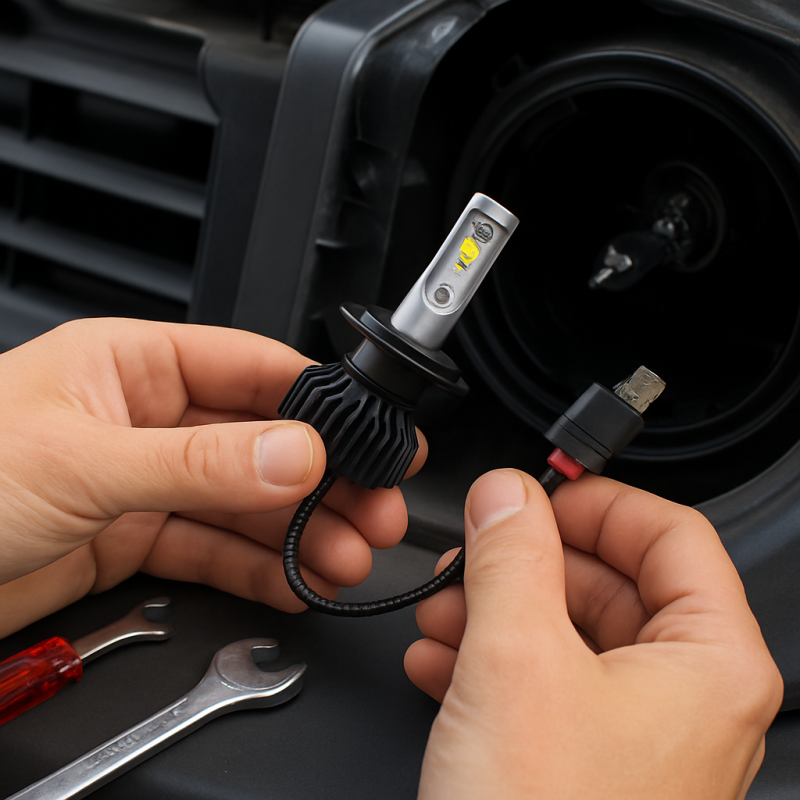
Swapping halogen bulbs is straightforward — twist out, plug in, done. LED retrofits range from equally simple to surprisingly complicated depending on your truck.
Halogen replacement is genuinely plug-and-play:
- Time required: 5-15 minutes per bulb
- Tools needed: Usually none — hand removal only
- Skill level: Beginner
- Modifications: Zero — same socket, same wiring, same housing
LED retrofit varies significantly by vehicle and product:
- Direct drop-in LEDs: Same form factor as halogen. 10-20 minute swap. May need a CAN bus decoder to prevent dashboard error codes
- LED conversion kits: Include external driver/ballast. 20-45 minutes. Require mounting the driver somewhere in the engine bay
- Projector LED assemblies: Complete housing replacement. 1-3 hours. Best beam pattern but highest cost and complexity
Common compatibility issues with LED retrofits on trucks:
- CAN bus errors: Modern trucks detect the lower power draw and throw a "bulb out" warning. A decoder or resistor pack fixes this but adds heat and complexity
- Dust cap clearance: LED bulbs with heat sinks or fans may not fit behind the factory dust cap. Some kits include replacement caps
- Beam pattern issues: If the LED chip doesn't sit in the exact position of the halogen filament, the reflector housing sends light in wrong directions
- Polarity sensitivity: Unlike halogen, some LEDs won't light if plugged in backward. Simply rotate the connector 180°
For trucks that need supplemental lighting beyond headlights, check our walkthrough on how to install an LED light bar — it covers wiring, relay setup, and switch placement.
Heat Management and Safety
Heat is the silent killer of headlight bulbs — and LED and halogen manage it in fundamentally different ways. Understanding this helps you avoid premature failures.
Halogen bulbs radiate heat forward from the bulb face. This is actually beneficial in one specific way:
- Snow and ice melting: The forward-facing heat keeps the headlight lens clear in winter conditions
- No external cooling needed: The halogen gas cycle handles heat internally
- Housing compatibility: Truck headlight housings were designed to handle halogen heat levels
LED bulbs generate heat at the base, behind the bulb. This heat must be actively managed:
- Passive heat sinks: Aluminum fins dissipate heat through airflow. Reliable but bulky
- Active fan cooling: Small fans pull air across heat sinks. More compact but fans can fail over time
- Braided heat sinks: Flexible copper braids that route heat away. Low-profile but less effective
For truck owners in cold climates, the LED snow problem is real. Because LEDs don't project heat forward, snow and ice can accumulate on the lens, reducing visibility exactly when you need it most. Some truck owners solve this with heated lens kits or simply keep a rag handy during winter storms.
Safety considerations for both types:
- Halogen glare risk: Low — factory-calibrated beam patterns work as designed
- LED glare risk: Moderate to high — poorly designed LED retrofits scatter light and blind oncoming drivers, which is especially dangerous with a truck's elevated headlight position
- Fire risk: Both are low when properly installed. Halogen bulbs should never be touched with bare hands — skin oils create hot spots that can shatter the glass
Legal Considerations for Trucks
Upgrading your truck's headlights isn't just a performance decision — it's a legal one. Federal and state regulations govern what you can and can't install, and enforcement is increasing.
Federal regulations (FMVSS 108) set the baseline:
- Factory-installed LEDs: Legal everywhere — they're DOT certified from the manufacturer
- LED retrofit bulbs: Exist in a gray area. The FMVSS 108 standard technically applies to the complete headlight assembly, not individual bulbs
- Aftermarket LED assemblies: Must be DOT/SAE certified to be street legal. Many cheap imports are not
What this means practically:
- State inspections: States with vehicle inspections (Texas, Pennsylvania, New York, etc.) may fail trucks with non-DOT-compliant LED headlights
- Traffic stops: Officers can cite you for excessively bright or improperly aimed headlights, regardless of bulb type
- Insurance implications: If a non-compliant headlight modification contributes to an accident, your insurance company may dispute the claim
To stay legal with an LED upgrade, follow these guidelines:
- Buy DOT/SAE compliant kits: Look for markings on the lens or documentation in the product listing
- Aim your headlights after any swap: Even a slight misalignment with brighter LEDs creates dangerous glare. Most auto parts stores will check alignment free
- Keep factory housings: If your truck has halogen reflector housings, use LED bulbs designed specifically for reflector housings — not projector-style LEDs
- Document your purchase: Keep receipts showing DOT compliance in case you're questioned
Halogen replacements like the TIRARP H11 Halogen Bulbs sidestep all legal concerns entirely — they're direct factory-spec replacements that meet every regulation by default.
TIRARP H11 Halogen Bulbs (2-Pack)
Affordable H11 halogen replacement bulbs with a warm 3800K amber tone. A solid choice for trucks that need DOT-compliant, plug-and-play headlight replacements with zero legal concerns.
Check Price On AmazonIf you click this link and buy, we earn a commission at no additional cost to you.

Which Should You Choose for Your Truck?
After comparing every factor — brightness, cost, lifespan, installation, heat, and legality — here's the bottom line for different truck owners.
Choose LED headlights if you:
- Drive frequently at night or on unlit rural roads
- Want a "set it and forget it" upgrade that lasts years
- Tow trailers and need maximum forward visibility
- Are willing to spend $80-$150 upfront for a quality kit
- Have a truck with projector-style headlight housings (LEDs work best here)
Stick with halogen headlights if you:
- Primarily drive in well-lit urban or suburban areas
- Want zero-hassle plug-and-play replacement
- Live in a state with strict vehicle inspections
- Drive in heavy snow or ice frequently (halogen keeps lenses clear)
- Need the lowest possible upfront cost
Consider a hybrid approach if you:
- Want LED low beams for daily driving and halogen high beams for oncoming traffic courtesy
- Are unsure about full LED conversion — try a performance halogen first to see if the brightness improvement is enough
- Use your truck for both on-road and off-road — LED headlights plus halogen fog lights covers all conditions
| Use Case | Best Choice | Why |
|---|---|---|
| Daily commuter truck | LED | Long lifespan, better visibility, lower energy draw |
| Work truck (rural/farm) | LED | Maximum visibility on dark roads, vibration resistance |
| Weekend/hobby truck | Halogen | Low usage doesn't justify LED cost premium |
| Snow belt driver | Halogen or hybrid | Forward heat keeps lenses clear |
| Towing-heavy use | LED | Better throw distance, reduced electrical load |
| Budget-conscious | Performance halogen | Big brightness jump at minimal cost |
Whatever you choose, make sure you're running quality bulbs. Our roundup of the best truck headlight bulbs covers top-rated options for every budget and technology type.
Related Articles
- Best Truck Headlight Bulbs — Comprehensive review of top-rated headlight bulbs across LED and halogen technologies
- Best Truck Fog Lights for Safe Driving — Fog light recommendations that complement headlight upgrades for all-weather visibility
- Best LED Light Bars for Trucks — Supplemental LED lighting options for trucks running multiple electrical accessories
- How to Install an LED Light Bar on Your Truck — Step-by-step installation guide for LED light bars including wiring and relay setup
Conclusion
Recommended Products
SYLVANIA H6054 SilverStar Sealed Beam Headlight
A top-performing halogen upgrade that delivers brighter, whiter light than standard halogen bulbs. Ideal for truck owners who want improved visibility without the complexity of an LED conversion.
Check Price On AmazonIf you click this link and buy, we earn a commission at no additional cost to you.
Wagner Lighting H6054 Standard Multi-Purpose Light Bulb
A reliable, budget-friendly halogen replacement that meets factory specs. Perfect for truck owners who want a straightforward, no-hassle bulb swap at the lowest cost.
Check Price On AmazonIf you click this link and buy, we earn a commission at no additional cost to you.
TIRARP H11 Halogen Bulbs (2-Pack)
Affordable H11 halogen replacement bulbs with a warm 3800K amber tone. A solid choice for trucks that need DOT-compliant, plug-and-play headlight replacements with zero legal concerns.
Check Price On AmazonIf you click this link and buy, we earn a commission at no additional cost to you.
Frequently Asked Questions
Are LED headlights legal on trucks?
Do LED headlights really last longer than halogen?
Will LED headlights drain my truck battery faster?
Can I just swap halogen bulbs for LED bulbs in my truck?
Why do LED headlights blind oncoming drivers?
Are LED headlights worth it for older trucks?
Do LED headlights work well in snow and rain?
What color temperature is best for truck headlights?
Affiliate Disclosure: This article contains affiliate links. If you purchase through these links, we may earn a commission at no extra cost to you.