Truck Cab Sleeping vs Bed Sleeping
Key Takeaways
- Truck bed sleeping offers significantly more room — roughly 30-40 square feet versus 10-15 square feet in most extended or crew cab setups.
- Cab sleeping wins for weather protection and security since you're inside a locked, climate-controlled vehicle with no extra setup required.
- Bed sleeping requires more gear investment upfront — a tonneau cover or camper shell, mattress pad, and weatherproofing — but delivers far superior comfort for extended trips.
- For solo overnight stops on road trips, cab sleeping is faster and more convenient; for multi-night camping, bed sleeping is the clear winner.
- Your truck's cab size matters enormously — a crew cab with folding rear seats is viable for sleeping, while a regular cab is nearly impossible.
What's the Difference Between Cab and Bed Sleeping?
Truck cab sleeping means sleeping inside the vehicle's cabin — either reclined in the front seat or stretched across folded rear seats. Bed sleeping means setting up a sleep surface in the truck's open or covered cargo bed. These two approaches differ dramatically in space, comfort, convenience, and required gear.
Here's a quick snapshot of how they stack up:
| Factor | Cab Sleeping | Bed Sleeping |
|---|---|---|
| Available Space | 10-15 sq ft (crew cab) | 30-40 sq ft |
| Setup Time | Under 2 minutes | 10-30 minutes |
| Weather Protection | Excellent (enclosed) | Varies (needs cover) |
| Security | High (locked doors) | Moderate |
| Comfort Level | Fair to poor | Good to excellent |
| Gear Required | Minimal | Moderate to high |
| Best For | Quick overnights, solo trips | Multi-night camping, couples |
Think of cab sleeping as the fast-food option — quick, easy, and gets the job done. Bed sleeping is the home-cooked meal — more effort, but the payoff in comfort is significant.
- Cab sleeping: works best in crew cabs and extended cabs with fold-flat rear seats
- Bed sleeping: works in any truck with a 5.5-foot or longer bed, ideally with a tonneau cover or shell
- Hybrid approach: some campers store gear in the cab and sleep in the bed, getting the best of both worlds
How Does Sleeping Space Compare Between Cab and Bed?
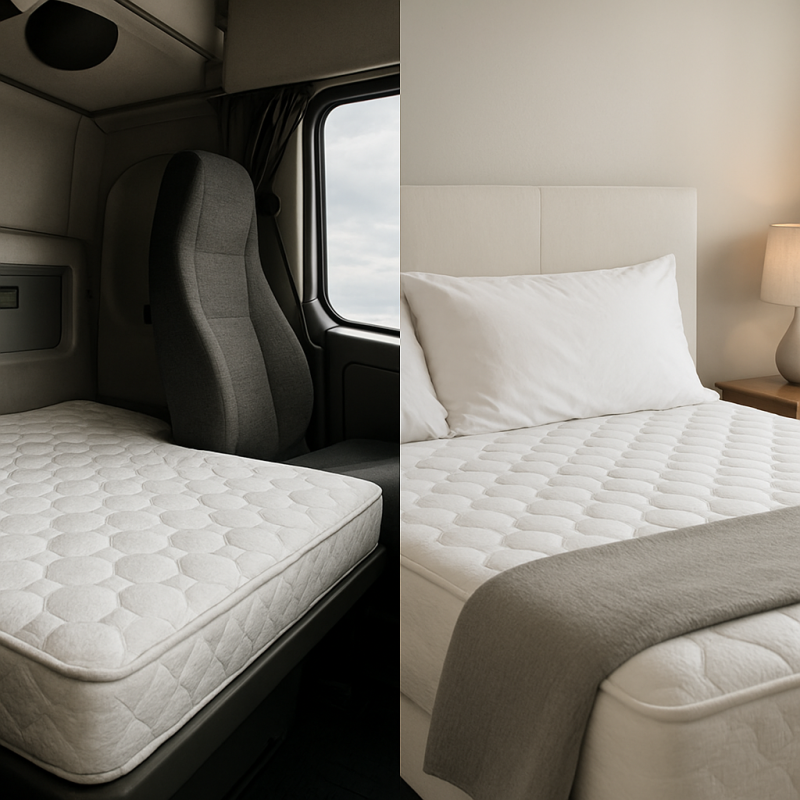
Truck bed sleeping wins the space battle by a wide margin. A standard short bed (5.5-6.5 feet) gives you a flat surface roughly 55-65 inches long and 50-60 inches wide, enough for most adults to stretch out fully. A crew cab's rear seat area, even folded flat, typically offers only 40-50 inches of usable length — forcing most people to sleep curled up.
- Regular cab: virtually no sleeping space — front seats only, extremely cramped
- Extended cab: small rear area adds 6-12 inches but still tight for anyone over 5'8"
- Crew cab: best cab option with fold-flat rear seats providing 45-55 inches of length
- Short bed (5.5 ft): 66 inches — fits most adults diagonally or with tailgate down
- Standard bed (6.5 ft): 78 inches — comfortable for nearly everyone
- Long bed (8 ft): 96 inches — room for two adults plus gear
Height clearance is another factor. Inside the cab, you're limited to 24-30 inches of vertical space above the seat surface. In the bed, you have open sky — or if you add a camper shell, typically 26-34 inches of headroom. A dedicated sleeping platform can maximize this space by creating a flat, elevated surface with storage underneath.
For couples or anyone who moves around at night, the bed is the only realistic option. Two adults simply cannot sleep comfortably in a truck cab, no matter how large the crew cab is. According to Sleep Foundation guidelines, each sleeper needs at least 27 inches of width for adequate comfort.
Which Option Offers Better Weather Protection?
Cab sleeping offers superior weather protection out of the box. You're inside an insulated, sealed vehicle with functioning climate control. No rain leaks, no wind gusts, no insects. Bed sleeping, by contrast, requires additional equipment to match that level of protection — and even then, it rarely equals the cab's sealed environment.
Here's how weather factors break down:
| Weather Factor | Cab Sleeping | Bed Sleeping (Open) | Bed Sleeping (Covered) |
|---|---|---|---|
| Rain Protection | Excellent | None | Good to Excellent |
| Wind Protection | Excellent | None | Good |
| Insect Protection | Excellent | None | Good (with screens) |
| Cold Weather (below 40°F) | Good (run heater) | Poor | Fair (needs insulation) |
| Hot Weather (above 85°F) | Good (run A/C briefly) | Fair (airflow) | Poor (greenhouse effect) |
| Condensation | High (small space) | Low (open air) | Moderate |
Condensation is the cab sleeper's biggest enemy. A single person exhales roughly a pint of moisture overnight, and in a sealed cab, that moisture coats every window and surface. Cracking windows helps but reduces security and lets in cold air or bugs.
- Winter camping: cab sleeping with periodic heater runs is safer and warmer, though idling raises carbon monoxide concerns — the NHTSA warns against sleeping in idling vehicles in enclosed areas
- Summer camping: bed sleeping with an open or vented cover provides better airflow and cooler temperatures
- Shoulder seasons (spring/fall): either option works — a good cold-weather sleeping bag rated to 30°F handles most conditions regardless of where you sleep
What Gear Do You Need for Each Setup?
Cab sleeping requires minimal gear — a pillow and blanket can get you through a single night. Bed sleeping demands a more intentional gear list but rewards you with dramatically better comfort. Your total investment can range from under $50 for basic cab sleeping to $200-$500+ for a proper bed setup.
Cab sleeping essentials:
- Sleeping bag or blanket: a compact bag rated to your expected temperatures
- Pillow: compressible camping pillow or standard pillow from home
- Window covers: sunshades or cut reflectix panels for privacy and insulation
- Seat gap filler: rolled towels or foam to level the sleeping surface
Bed sleeping essentials:
- Tonneau cover or camper shell: protects from weather and provides security
- Mattress or sleeping pad: the single biggest comfort upgrade — a CertiPUR-US memory foam camping mattress provides excellent cushioning without the hassle of inflation
- Sleeping bag: matched to your temperature range
- Bed liner or tarp: protects your mattress from bed surface roughness
For those who want the most comfortable bed setup, a purpose-built truck bed air mattress like the Umbrauto inflatable truck bed mattress is designed to fit the contours of short beds (5.5-5.8 ft) and includes wheel well cutouts. Pair it with a quality camping mattress pad for insulation underneath.
Don't overlook organization. Keeping your cab sleeping gear tidy means less hassle transitioning between driving and sleeping. A good cab organizer keeps essentials within arm's reach without cluttering your sleep space.
CYMULA CertiPUR-US Memory Foam Camping Mattress
No-inflate memory foam pad that rolls up for storage. CertiPUR-US certified and works in truck beds, tents, or SUVs. Ideal for campers who hate air mattress hassles.
Check Price On AmazonIf you click this link and buy, we earn a commission at no additional cost to you.

How Do Comfort Levels Compare for Longer Trips?
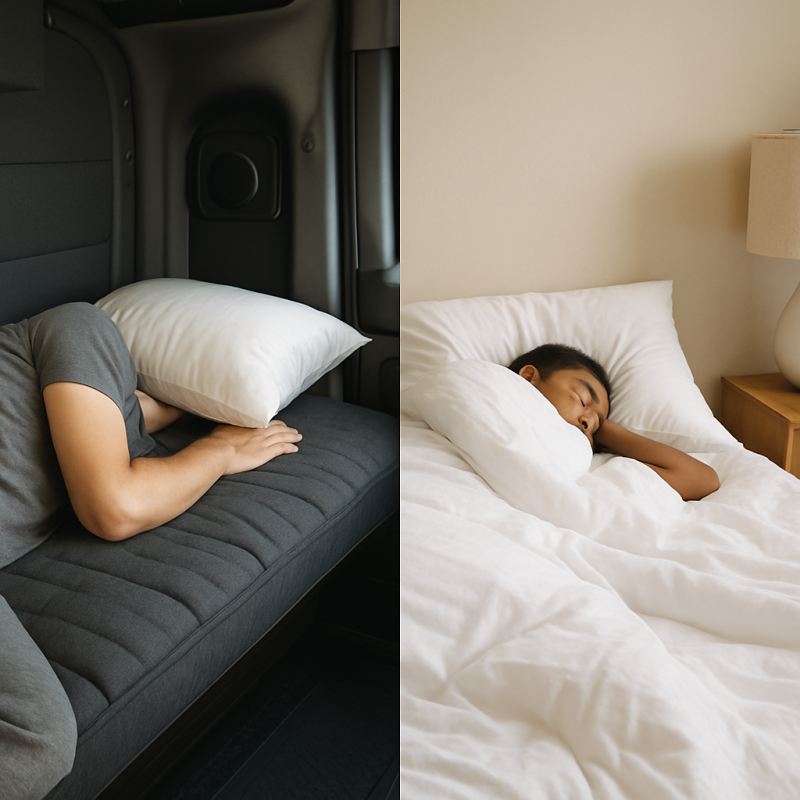
For anything beyond a single emergency overnight, bed sleeping is dramatically more comfortable. The difference is comparable to sleeping on a hotel couch versus a hotel bed — both technically work, but only one leaves you functional the next morning.
The core comfort issue with cab sleeping is body position. Even in a crew cab with seats folded flat, you're dealing with:
- Uneven surfaces: seat hinges, belt buckle housings, and center console edges create pressure points
- Limited length: most people can't fully extend their legs, leading to hip and knee stiffness
- Restricted movement: rolling over means hitting the door panel or center console
- Noise and vibration: road noise from passing vehicles is amplified in the cab
Bed sleeping comfort depends almost entirely on your mattress choice. A bare truck bed with a sleeping bag is only marginally better than the cab. But add a proper mattress and the experience transforms.
| Mattress Type | Comfort Rating | Price Range | Best For |
|---|---|---|---|
| Foam sleeping pad | ★★★☆☆ | $30-$80 | Occasional use, backpackers |
| Self-inflating pad | ★★★★☆ | $50-$150 | Regular campers |
| Memory foam mattress | ★★★★★ | $80-$200 | Extended trips, comfort priority |
| Air mattress (truck-specific) | ★★★★☆ | $60-$150 | Custom fit, easy storage |
| Sleeping platform + mattress | ★★★★★ | $200-$600 | Dedicated truck campers |
According to the Sleep Judge, sleeping on a firm, flat surface can actually benefit spinal alignment — but only with adequate cushioning. A 3-4 inch memory foam pad on a flat truck bed hits this sweet spot. For side sleepers, thicker is better — aim for at least 4 inches to prevent hip pressure.
Umbrauto Inflatable Truck Bed Air Mattress
Purpose-built for short truck beds (5.5-5.8 ft) with wheel well cutouts for maximum sleeping surface. Includes pump and carry bag for easy setup and breakdown.
Check Price On AmazonIf you click this link and buy, we earn a commission at no additional cost to you.

Which Is More Secure and Private?
Cab sleeping is the clear winner for security. You're inside a locked vehicle with shatter-resistant glass, and most modern trucks have alarm systems. Bed sleeping — even under a tonneau cover — leaves you more exposed and visible, especially at rest stops or urban parking areas.
- Cab advantages: locked doors, alarm system, ability to drive away instantly, tinted windows for privacy
- Bed advantages: less visible from outside (people assume the bed is cargo), harder for passersby to see inside a covered bed
Privacy is more nuanced. A truck cab with bare windows is a fishbowl at night — any interior light makes you fully visible. Window covers or reflectix panels solve this, but they require setup. A tonneau cover or camper shell on the bed provides excellent privacy by default, since no one can see through the solid panels.
Stealth camping considerations:
- Walmart parking lots: cab sleeping is more discreet — your truck looks like any other parked vehicle
- Rest stops: cab sleeping lets you lock up and start driving immediately if uncomfortable
- Campgrounds: bed sleeping is perfectly normal and expected
- Urban areas: cab sleeping with window covers is the safest option by far
For nighttime security while bed sleeping, consider adding a locking tailgate handle and a quality dash cam that records while parked. Motion-activated cameras provide peace of mind at isolated campsites. If you're sleeping in the cab on longer road trips, a 12V cooler keeps drinks and snacks accessible without needing to leave the vehicle.
What Are the Cost Differences?
Cab sleeping is virtually free if you already own bedding. Bed sleeping can range from $50 for a basic pad to $2,000+ for a full camper shell setup. However, the cost-per-night calculation favors bed sleeping for frequent campers — the gear pays for itself quickly compared to hotel rooms.
Cab sleeping budget breakdown:
- Bare minimum ($0-$20): blankets and pillow from home
- Comfortable ($30-$80): compact sleeping bag, camping pillow, window covers
- Optimized ($80-$150): seat-gap fillers, quality sleeping pad, blackout covers, seat recline kit
Bed sleeping budget breakdown:
- Budget ($50-$100): foam pad, tarp, sleeping bag — open-air only
- Mid-range ($150-$400): tonneau cover + truck bed air mattress + sleeping bag
- Premium ($500-$1,500): camper shell + memory foam mattress + sleeping platform + lighting
- Full build ($1,500-$3,000+): custom sleeping platform with storage, insulation, power system
The biggest single expense for bed sleeping is the cover. Tonneau covers range from $200-$800, while camper shells run $1,000-$2,500. If your truck already has a tonneau cover, your entry cost drops significantly. A portable folding camping cot is another budget-friendly option that elevates you off the cold bed surface while keeping costs under $100.
For perspective, average hotel rates across the U.S. run $120-$180 per night. A $400 bed sleeping setup pays for itself in 3-4 nights of avoided hotel stays.
ABORON Camping Cot 28" Extra Wide
Heavy-duty folding cot that elevates you off the cold truck bed surface. Includes mattress pad and carry bag. Excellent budget option for solo truck bed campers.
Check Price On AmazonIf you click this link and buy, we earn a commission at no additional cost to you.

Which Should You Choose Based on Your Situation?
The best option depends on your truck, trip type, and priorities. Neither approach is universally better — cab sleeping and bed sleeping each dominate in specific scenarios. Here's a definitive breakdown by situation.
Choose cab sleeping if:
- You're on a road trip and need quick overnight stops between long driving days
- You're solo and prioritize security over comfort
- Weather is extreme (deep cold or heavy rain) and you lack a camper shell
- You have a crew cab with fold-flat rear seats
- You're stealth camping in urban areas or parking lots
- Budget is tight and you don't want to invest in bed sleeping gear
Choose bed sleeping if:
- You're camping for 2+ nights and comfort matters
- You're with a partner — two people cannot sleep comfortably in a cab
- You have a tonneau cover or shell already installed
- You're a regular truck camper and want to build a dedicated setup
- You value sleep quality and wake up stiff from poor sleeping surfaces
- Your bed is 6.5 feet or longer — the extra length makes a huge difference
The hybrid approach works best for many truck campers: sleep in the cab for quick roadside stops, then set up the bed for planned camping destinations. Keep a compact ultralight sleeping pad in the cab for emergencies, and a full mattress setup in the bed for proper camping nights. This way, you're always prepared regardless of where the trip takes you.
FUN PAC Ultralight Camping Sleeping Pad
Compact, self-inflating pad with built-in pillow and foot pump. Packs small enough to keep in the cab as an emergency sleep option on any trip.
Check Price On AmazonIf you click this link and buy, we earn a commission at no additional cost to you.

Related Articles
- Best Truck Bed Sleeping Platforms for Camping — Detailed reviews of sleeping platforms that maximize truck bed comfort and storage
- Best Truck Camping Mattress Pads — Reviews of mattress pads specifically designed for truck camping setups
- Best Truck Cab Organizers for Road Trips — Organizer options to keep cab sleeping gear tidy and accessible
- Best Truck Dash Cams for Road Protection — Dash cams that record while parked for overnight security
- Best 12V Truck Coolers for Camping — Powered coolers that keep food and drinks cold during overnight truck camping
Conclusion
Recommended Products
Umbrauto Inflatable Truck Bed Air Mattress
Purpose-built for short truck beds (5.5-5.8 ft) with wheel well cutouts for maximum sleeping surface. Includes pump and carry bag for easy setup and breakdown.
Check Price On AmazonIf you click this link and buy, we earn a commission at no additional cost to you.
CYMULA CertiPUR-US Memory Foam Camping Mattress
No-inflate memory foam pad that rolls up for storage. CertiPUR-US certified and works in truck beds, tents, or SUVs. Ideal for campers who hate air mattress hassles.
Check Price On AmazonIf you click this link and buy, we earn a commission at no additional cost to you.
ABORON Camping Cot 28" Extra Wide
Heavy-duty folding cot that elevates you off the cold truck bed surface. Includes mattress pad and carry bag. Excellent budget option for solo truck bed campers.
Check Price On AmazonIf you click this link and buy, we earn a commission at no additional cost to you.
FUN PAC Ultralight Camping Sleeping Pad
Compact, self-inflating pad with built-in pillow and foot pump. Packs small enough to keep in the cab as an emergency sleep option on any trip.
Check Price On AmazonIf you click this link and buy, we earn a commission at no additional cost to you.
Frequently Asked Questions
Is it legal to sleep in your truck cab overnight?
Can two people sleep comfortably in a truck cab?
What size truck bed do you need for comfortable sleeping?
How do you stay warm sleeping in a truck bed in cold weather?
Is sleeping in a truck cab bad for your back?
Do you need a tonneau cover to sleep in a truck bed?
How do you deal with condensation when sleeping in a truck cab?
What's the best air mattress for sleeping in a truck bed?
Affiliate Disclosure: This article contains affiliate links. If you purchase through these links, we may earn a commission at no extra cost to you.