Leather vs Neoprene Seat Covers
Key Takeaways
- Neoprene seat covers offer superior water and stain resistance, making them ideal for trucks used in outdoor work or recreation.
- Leather seat covers provide a premium look and feel but require regular conditioning to prevent cracking and fading.
- Neoprene costs 40-60% less than genuine leather and is significantly easier to maintain long-term.
- Leather outperforms neoprene in breathability during moderate temperatures but gets uncomfortably hot or cold in extreme weather.
- For most truck owners who haul gear, tow, or spend time outdoors, neoprene is the more practical and cost-effective choice.
Material Breakdown: What Are You Actually Getting?
Before comparing performance, you need to understand what each material actually is. The term "leather" in seat covers can mean several things, and neoprene isn't just wetsuit rubber.
Leather seat covers come in three main grades:
- Genuine leather: Real cowhide that's been tanned and treated. Most durable and expensive option, with a natural grain pattern that develops character over time.
- Top-grain leather: The highest quality layer of the hide, sanded and refinished for a uniform look. This is what premium automakers use in factory seats.
- Bonded leather: Leather scraps mixed with polyurethane. Looks like leather initially but peels and cracks within 1-2 years. Avoid this for seat covers.
Neoprene seat covers use the same synthetic rubber found in wetsuits and diving gear. For automotive use, manufacturers typically sandwich a neoprene layer between fabric linings.
- Standard neoprene: 2-3mm thick, good water resistance, moderate cushioning. Most aftermarket covers use this grade.
- CR-grade neoprene: Higher-density formulation with better UV resistance and longevity. Found in premium brands.
- Neoprene-blend: Mixed with polyester or nylon for added durability. Slightly less water-resistant but more breathable.
The key difference at the molecular level is that neoprene is inherently waterproof — water cannot penetrate the material itself. Leather, on the other hand, is a natural skin that absorbs moisture unless treated with a protective coating. This fundamental property drives most of the performance differences you'll see below.
Durability and Longevity Compared
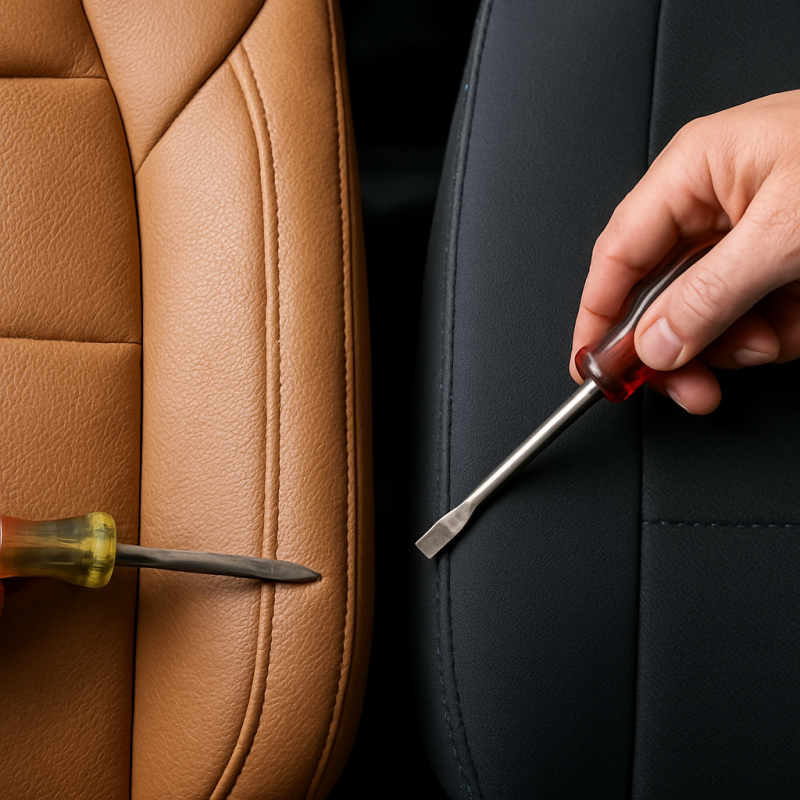
Both materials can last years, but their durability profiles are very different. Here's how they hold up under real-world truck use.
Leather durability:
- Lifespan: 5-10 years with proper care, 2-3 years without conditioning
- UV resistance: Poor — direct sunlight causes fading and cracking within months without protection
- Abrasion resistance: Excellent for top-grain, poor for bonded leather
- Tear strength: High initially, decreases as leather dries out over time
Neoprene durability:
- Lifespan: 3-7 years depending on quality and UV exposure
- UV resistance: Moderate — better than untreated leather, but prolonged exposure degrades the rubber
- Abrasion resistance: Good, though fabric lining can pill after heavy use
- Tear strength: Consistent throughout its lifespan, doesn't degrade like leather
The critical factor is maintenance dependency. Leather's longevity is directly tied to how well you care for it. Skip conditioning for six months in a hot climate, and you'll see cracking. Neoprene, by contrast, is essentially maintenance-free — its durability stays consistent whether you baby it or ignore it.
For truck owners who park outdoors, haul dirty gear, or live in extreme climates, neoprene's set-it-and-forget-it durability is a major advantage. If you garage your truck and enjoy detailing, leather will reward that effort with a patina that improves over time.
Water Resistance and Stain Protection
This is where the comparison gets lopsided. If spill protection is your priority, there's a clear winner.
Neoprene is fully waterproof. Coffee, mud, dog drool, rain-soaked clothing — nothing penetrates the material. Spills bead on the surface and wipe away with a cloth. This is the same reason neoprene is used in wetsuits: it creates a complete moisture barrier.
- Liquid spills: Wipe clean in seconds, zero absorption
- Mud and dirt: Rinse with a hose or damp cloth
- Pet hair: Doesn't embed in the material, vacuums off easily
- Sweat: Won't stain or develop odors when cleaned periodically
The CAR PASS Neoprene Waterproof Seat Covers are a solid budget option that demonstrates this waterproof advantage across a universal-fit design for trucks, SUVs, and sedans.
Leather is water-resistant at best. Treated leather repels light splashes, but any significant moisture soaks in and can cause:
- Staining: Water marks are visible on lighter leather colors
- Warping: Repeated moisture exposure distorts the hide's shape
- Mold risk: Absorbed moisture in humid climates creates mold and mildew
- Dye transfer: Wet denim on light leather is a permanent stain
If you regularly deal with wet gear, sweaty work clothes, or kids with sippy cups, neoprene eliminates the anxiety that comes with leather ownership. For truck owners who also protect their bed with quality tonneau covers, pairing that exterior protection with neoprene interior covers creates a fully weather-resistant setup.
Comfort and Temperature Performance
Comfort is where leather fights back. It's a genuinely more pleasant material to sit on — with one major caveat.
Leather comfort advantages:
- Breathability: Natural pores allow air circulation, reducing sweat buildup during moderate weather
- Smooth surface: Feels premium against skin and clothing
- Break-in period: Softens and conforms to your body over time, creating a custom feel
- Noise: Minimal squeaking once broken in
Leather comfort drawbacks:
- Extreme heat: Surface temperatures can exceed 150°F in direct sunlight — painful on bare skin
- Extreme cold: Leather becomes rigid and ice-cold in winter, takes 10-15 minutes to warm up
- Sliding: Smooth surface can feel slippery, especially in athletic or synthetic clothing
Neoprene comfort profile:
- Temperature neutral: Doesn't get scorching hot or freezing cold — the foam core insulates against extremes
- Cushioning: 2-3mm foam padding adds comfort on long drives
- Grip: Textured surface keeps you planted during turns and off-road driving
- Breathability: Significantly worse than leather — traps heat against your body in summer
The comfort verdict depends entirely on your climate. In regions with mild weather (50-85°F year-round), leather is more comfortable. In areas with extreme summers or harsh winters, neoprene's temperature stability is a significant advantage. Truck owners in the Sun Belt or northern states will appreciate that neoprene never burns your legs in July or feels like an ice sheet in January.
Installation and Fit
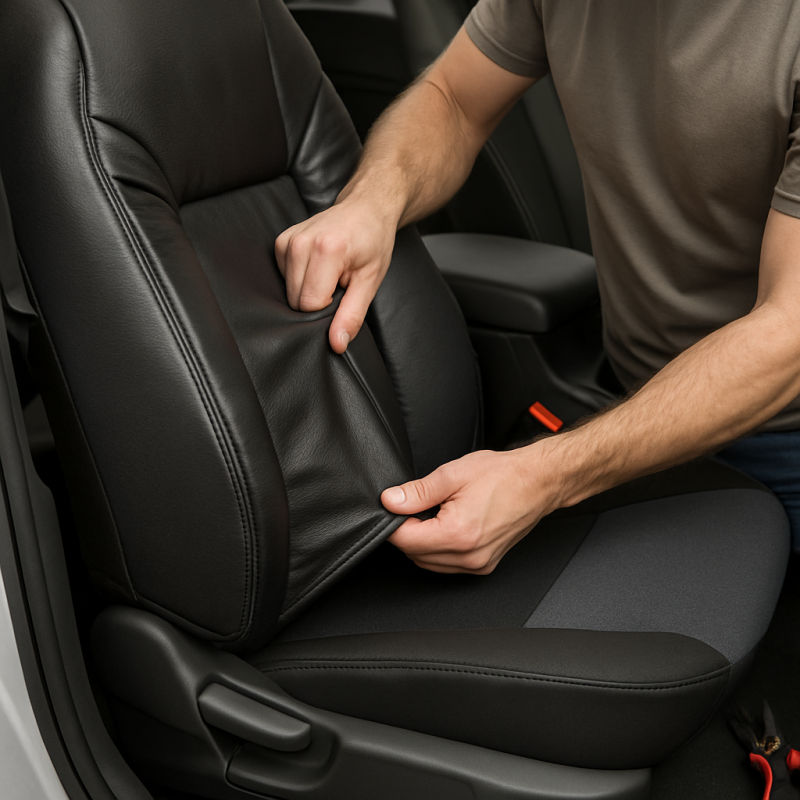
How seat covers fit and install affects both appearance and function. A poor-fitting cover bunches up, slides around, and looks worse than bare factory seats.
Custom-fit vs. universal-fit matters more than the material itself:
- Custom-fit covers: Made for your exact vehicle's seat dimensions. Snug, tailored look with proper cutouts for headrests, armrests, and seat controls. Available in both leather and neoprene.
- Universal-fit covers: One-size-fits-most approach. Cheaper but often baggy, especially around bolsters and headrests. More common in neoprene.
For truck owners wanting a custom fit, the Rough Country Neoprene Seat Covers for Ford F-150 are designed specifically for 2015-2026 Crew Cab models with front bucket seats and rear 60/40 split configurations. Chevy and GMC owners can get the same vehicle-specific fit from the Rough Country Neoprene Covers for Silverado and Sierra 1500.
Installation difficulty by material:
- Neoprene: Stretchy material makes installation easier. Most covers slip on like a fitted sheet and secure with straps or hooks underneath. Typical install time is 30-60 minutes for a full set.
- Leather: Less forgiving during installation because the material doesn't stretch. Requires more precision to align seams and avoid wrinkles. Professional installation is common and adds $100-200 to the cost.
One often-overlooked factor is airbag compatibility. Quality covers from both materials include side-airbag-compatible stitching that tears open on deployment. Cheap covers may block airbags — always verify compatibility before buying, regardless of material.
Rough Country Neoprene Seat Covers for Ford F-150 (2015-2026)
Vehicle-specific neoprene covers designed for F-150 Crew Cab with front bucket seats and rear 60/40 split. Foam-padded, waterproof, and built with proper seat cutouts for a factory-like fit.
Check Price On AmazonIf you click this link and buy, we earn a commission at no additional cost to you.

Rough Country Neoprene Seat Covers for Chevy Silverado & GMC Sierra 1500 (2019-2026)
Custom-fit neoprene covers for Silverado and Sierra owners, featuring waterproof construction, UV resistance, and foam padding for all-day comfort on the job site or trail.
Check Price On AmazonIf you click this link and buy, we earn a commission at no additional cost to you.

Maintenance and Cleaning
The ongoing maintenance commitment is dramatically different between these two materials. This is where many buyers make their decision.
Neoprene maintenance — minimal effort:
- Regular cleaning: Wipe with a damp cloth or use mild soap and water
- Deep cleaning: Remove covers, hand wash or machine wash on gentle cycle, air dry
- Conditioning: Not required — neoprene doesn't dry out or crack
- Frequency: Clean every 2-4 weeks, or as needed after messy trips
- Annual cost: Essentially $0 beyond soap and water
Leather maintenance — consistent commitment:
- Regular cleaning: Vacuum debris, then wipe with leather-specific cleaner (not household cleaners)
- Conditioning: Apply leather conditioner every 4-6 weeks to prevent drying and cracking
- UV protection: Apply UV protectant spray monthly if parked outdoors
- Stain treatment: Address spills immediately — most stains become permanent after 30 minutes
- Annual cost: $50-100 for quality cleaning and conditioning products
Over a 5-year ownership period, leather maintenance costs add $250-500 to the total cost of ownership. More importantly, it adds time — roughly 20-30 minutes per month of active care. If you already enjoy detailing your truck interior, this isn't a burden. If you want to install covers and forget about them, neoprene is the obvious choice.
Just like protecting your truck bed with the right cover can save thousands in liner repairs, protecting your seats with the right material saves money on reupholstery down the road. The key is matching the maintenance level to your actual habits — not your aspirations.
Price Comparison and Value
Cost is a major differentiator. Here's what you'll actually spend across both materials at different quality tiers.
Neoprene seat cover pricing:
- Budget universal-fit: $50-100 for a full set (front and rear)
- Mid-range vehicle-specific: $150-300 for a full set with proper cutouts
- Premium custom-fit: $300-500 for high-density neoprene with reinforced stitching
Leather seat cover pricing:
- Bonded leather (avoid): $80-150, peels within 1-2 years
- Genuine leather mid-range: $300-600 for a full set
- Top-grain custom-fit: $600-1,200+ for premium hides with professional installation
- Professional installation: Add $100-200 if you don't DIY
When you factor in the total cost of ownership over 5 years:
- Neoprene (mid-range): $200 purchase + $0 maintenance = $200 total
- Leather (mid-range): $450 purchase + $100 install + $375 maintenance = $925 total
That's a 4.6x cost difference over the ownership period. Leather only makes financial sense if you're protecting high-end factory leather seats that would cost $2,000+ to reupholster, or if the aesthetic upgrade genuinely brings you daily satisfaction worth the premium.
For truck owners already investing in exterior protection like tonneau covers for their truck bed, the budget-friendly nature of neoprene lets you protect the full vehicle — inside and out — without breaking the bank.
CAR PASS Neoprene Waterproof Seat Covers - Universal Fit
An affordable universal-fit neoprene option for truck, SUV, and sedan owners who want waterproof protection without the premium price of vehicle-specific covers.
Check Price On AmazonIf you click this link and buy, we earn a commission at no additional cost to you.

Which Should You Choose? Final Recommendations
After weighing every factor, here are definitive recommendations based on how you use your truck.
Choose neoprene seat covers if you:
- Work outdoors: Construction, landscaping, farming, or any job where you get in the truck dirty
- Have kids or pets: Spills, muddy paws, and car seats are no match for neoprene
- Live in extreme climates: No burning thighs in summer, no frozen seats in winter
- Want zero maintenance: Install and forget for years
- Use your truck for recreation: Hunting, fishing, camping, off-roading, beach trips
- Park outdoors: UV and weather won't degrade neoprene as quickly as leather
Choose leather seat covers if you:
- Prioritize aesthetics: Nothing matches the upscale look and feel of real leather
- Have a garage-kept vehicle: Protected from UV and temperature extremes
- Enjoy detailing: You already spend time maintaining your interior
- Use your truck primarily for commuting: Clean, climate-controlled use favors leather
- Want to increase resale value: Leather interiors command higher resale prices
For the majority of truck owners, neoprene is the smarter investment. It costs less upfront, requires zero maintenance, handles abuse without complaint, and protects your factory seats just as well as leather — arguably better, since it won't transfer stains or moisture. Leather is the right call only when appearance matters more than practicality, and you're willing to maintain it consistently.
Whichever material you choose, always buy vehicle-specific covers over universal-fit options. The $50-100 premium for a custom fit is worth it for appearance, comfort, and airbag compatibility.
Related Articles
- Best Tonneau Covers for Trucks — Referenced when discussing full-vehicle protection strategies, pairing interior seat covers with exterior bed protection
Conclusion
Recommended Products
Rough Country Neoprene Seat Covers for Ford F-150 (2015-2026)
Vehicle-specific neoprene covers designed for F-150 Crew Cab with front bucket seats and rear 60/40 split. Foam-padded, waterproof, and built with proper seat cutouts for a factory-like fit.
Check Price On AmazonIf you click this link and buy, we earn a commission at no additional cost to you.
Rough Country Neoprene Seat Covers for Chevy Silverado & GMC Sierra 1500 (2019-2026)
Custom-fit neoprene covers for Silverado and Sierra owners, featuring waterproof construction, UV resistance, and foam padding for all-day comfort on the job site or trail.
Check Price On AmazonIf you click this link and buy, we earn a commission at no additional cost to you.
CAR PASS Neoprene Waterproof Seat Covers - Universal Fit
An affordable universal-fit neoprene option for truck, SUV, and sedan owners who want waterproof protection without the premium price of vehicle-specific covers.
Check Price On AmazonIf you click this link and buy, we earn a commission at no additional cost to you.
Frequently Asked Questions
Are neoprene seat covers good for hot weather?
How long do neoprene seat covers last?
Do leather seat covers crack over time?
Can you machine wash neoprene seat covers?
Are leather or neoprene seat covers better for dogs?
Do neoprene seat covers affect airbag deployment?
Is genuine leather worth the extra cost for seat covers?
What is the best seat cover material for work trucks?
Affiliate Disclosure: This article contains affiliate links. If you purchase through these links, we may earn a commission at no extra cost to you.