How to Stay Warm Sleeping in Your Truck
Key Takeaways
- Insulate your truck bed from below first — cold metal absorbs body heat 25x faster than cold air, making a quality sleeping pad your single most important investment.
- Layer your sleep system with a pad rated to 0°F, a sleeping bag rated 15°F below your expected low, and a blanket on top for versatile temperature control.
- Block drafts and trap heat by covering windows with reflective insulation or sunshades and sealing gaps around your tonneau cover or camper shell.
- Portable propane and diesel heaters can maintain 60-70°F inside a truck camper, but require carbon monoxide detectors and proper ventilation to use safely.
- Never idle your truck engine overnight for heat — carbon monoxide poisoning kills dozens of people annually, and it wastes $15-25 in fuel per night.
Why Do Trucks Get So Cold at Night?
Trucks lose heat rapidly at night because metal conducts thermal energy 25 times faster than wood and offers zero natural insulation. Your truck bed or cab becomes a heat sink, pulling warmth away from your body through direct contact and radiating it into the cold air outside.
Understanding the three mechanisms of heat loss helps you fight each one effectively:
- Conduction: Direct contact with cold metal surfaces — your truck bed, walls, and frame pull heat straight from your body. This is the #1 reason people wake up freezing.
- Convection: Cold air drafts flowing through gaps in doors, windows, tailgates, and tonneau covers constantly replace any warm air your body creates.
- Radiation: Your body radiates infrared heat outward. Without insulated walls or a reflective barrier, that heat passes straight through thin metal panels and glass windows.
A standard truck bed with a tonneau cover provides almost no insulation value — the R-value of sheet metal is effectively zero. Compare that to a house wall at R-13 to R-21, and you understand why truck camping requires deliberate preparation.
Temperature also drops dramatically after midnight. According to the National Weather Service, radiational cooling can drop surface temperatures 10-20°F below the ambient air temperature on clear nights. Your truck bed metal will often be colder than the air around it.
The good news? Each heat loss mechanism has a straightforward solution. Insulation stops conduction, draft-sealing stops convection, and reflective barriers stop radiation. Stack all three, and you can sleep comfortably in surprisingly cold conditions.
What Sleeping Gear Do You Need to Stay Warm?
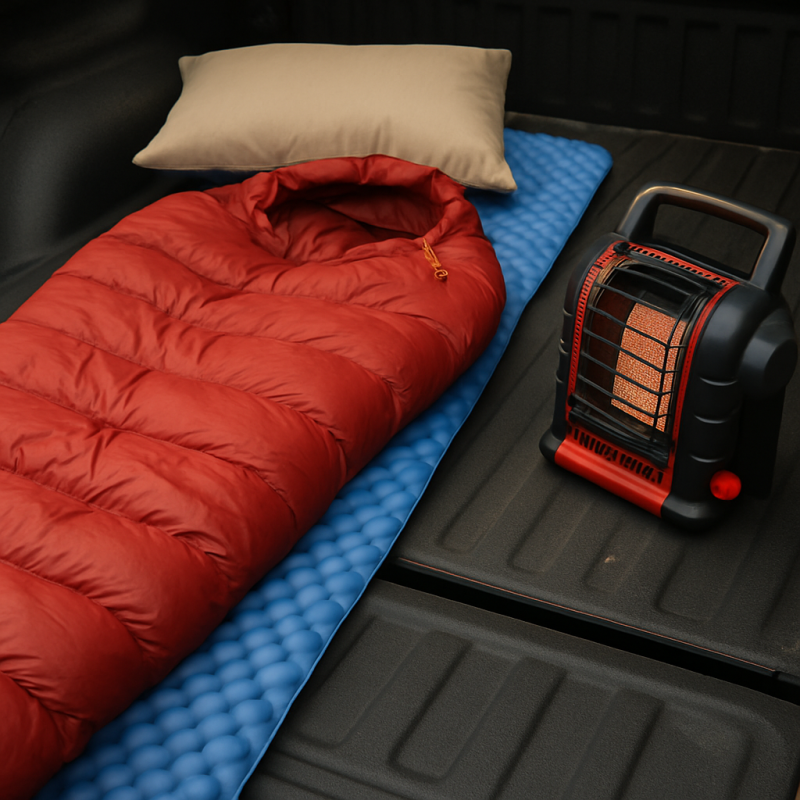
Your sleeping gear is the foundation of warmth — a proper sleep system rated for cold weather matters more than any heater. Focus on three layers: a sleeping pad for ground insulation, a sleeping bag for core warmth, and supplemental blankets for temperature fine-tuning.
Sleeping pads are your most critical piece of gear. A thick, insulated pad creates a barrier between your body and the cold truck bed surface. Look for these specs:
- Thickness: Minimum 3 inches for comfort and insulation — 4 inches is ideal for truck beds
- R-value: At least R-5 for three-season use, R-7+ for winter camping
- Material: Memory foam or self-inflating pads outperform basic air mattresses, which actually conduct cold
- Size: Measure your truck bed interior — most full-size trucks fit a twin or full-size pad
A quality truck camping mattress pad rated above R-5 prevents the conductive heat loss that makes people miserable. The 4" Ultra-Thick Self-Inflating Sleeping Pad with its R-9.5 rating is specifically designed for four-season truck and van use, with an integrated pump and foam-plus-air construction.
Sleeping bags should be rated 15°F below your expected lowest temperature. Bag ratings assume you're using a sleeping pad, so without one, you'll need an even warmer bag. For cold-weather truck camping, consider the Sportneer Heated Sleeping Bag, which features five USB-powered heating zones and warm flannel lining for nights when passive insulation isn't enough.
- Down bags: Best warmth-to-weight ratio, compress small, but lose insulation when wet
- Synthetic bags: Heavier but maintain warmth when damp — better for truck camping humidity
- Double bags: Ideal for couples — shared body heat significantly increases warmth
4" Ultra-Thick Self-Inflating Sleeping Pad with Rechargeable Pump
With an R-9.5 insulation rating and 4 inches of foam-plus-air construction, this pad is purpose-built for four-season truck and van camping. The integrated rechargeable pump makes setup easy in tight spaces.
Check Price On AmazonIf you click this link and buy, we earn a commission at no additional cost to you.

How Should You Insulate Your Truck Bed or Cab?
Insulating your truck's sleeping area blocks the three heat-loss pathways and can raise interior temperatures by 15-25°F compared to an uninsulated setup. Start with the floor, then address walls and windows — this priority order gives you the biggest return on effort.
Floor insulation is non-negotiable. Layer your truck bed in this order:
- Reflective barrier: Place Reflectix or a similar radiant barrier directly on the truck bed floor to reflect heat back upward
- Foam layer: Add 1-2 inches of closed-cell foam (like EVA puzzle mats) for R-value and cushioning
- Sleeping pad: Your primary mattress goes on top — this creates a combined R-value of R-8 to R-12
Window insulation prevents the biggest source of radiant and convective heat loss in a cab sleeper setup. Options from budget to premium include:
- Reflectix cut-outs: Cut to fit each window, held in place with magnets or friction — cheap and effective
- Thermal curtains: Hang behind the front seats to isolate the cab sleeping area
- Custom window covers: Companies like WeatherTech and Heatshield make form-fitting options
For truck bed camping, your tonneau cover or camper shell is your primary weather barrier. A camper shell with factory-sealed windows outperforms a soft tonneau by a wide margin. According to the Expedition Portal community, adding a half-inch of closed-cell foam to the interior walls of a camper shell can increase overnight temperatures by 10-15°F.
If you're sleeping in the cab, a sleeping platform that folds flat across the back seat creates a more insulated sleeping surface than the seat cushions alone. Pair it with window covers and a thermal curtain behind the front seats.
What Are the Best Heating Options for Truck Camping?
Portable heaters can maintain comfortable sleeping temperatures inside your truck even in sub-zero conditions — but choosing the right type and following safety protocols is critical. Your three main options are diesel heaters, propane heaters, and electric heaters, each with distinct trade-offs.
| Heater Type | Cost | Heat Output | Runtime | Safety Risk | Best For |
|---|---|---|---|---|---|
| Diesel (e.g., Chinese diesel heater) | $150-$300 | 2-8 kW | 8-12 hrs/gallon | Low (vented outside) | Camper shells, long-term setups |
| Propane (e.g., Mr. Buddy) | $80-$150 | 4,000-9,000 BTU | 3-6 hrs/canister | Moderate (CO risk) | Short trips, quick warm-up |
| Electric (12V or inverter) | $30-$80 | 150-300W | Limited by battery | Very low | Cab sleeping with idling or battery bank |
Diesel heaters are the gold standard for truck camping. They tap into your truck's fuel tank (or a separate reservoir), vent exhaust outside, and pump warm air inside through a duct. They're safe to run all night because combustion gases never enter your sleeping space.
- Pros: Safe, efficient, runs all night, fuel is cheap
- Cons: Requires installation (drilling), noise, initial setup time
- Cost to run: Approximately $1-2 per night at low settings
Propane heaters like the Mr. Heater Buddy are popular for their simplicity. However, they consume oxygen and produce carbon monoxide, so adequate ventilation is mandatory. Crack a window at least one inch on each side of your sleeping area.
Electric options work well if you have a large battery bank (200Ah+ lithium) or shore power. A 12V heated blanket draws 4-5 amps and can run all night on a 100Ah battery — a great supplement to your sleep system without any combustion risks.
For budget-conscious truck campers, hot water bottles are a surprisingly effective zero-tech solution. Fill a Nalgene bottle with boiling water, wrap it in a sock, and place it in your sleeping bag 10 minutes before bed. It'll provide warmth for 6-8 hours.
Sportneer Heated Sleeping Bag with 5 Heating Zones
Five USB-powered heating zones with three temperature levels provide targeted warmth without any combustion risk. The flannel lining adds comfort for cold-weather truck camping nights.
Check Price On AmazonIf you click this link and buy, we earn a commission at no additional cost to you.

How Do You Layer Clothing for Sleeping in Cold Trucks?
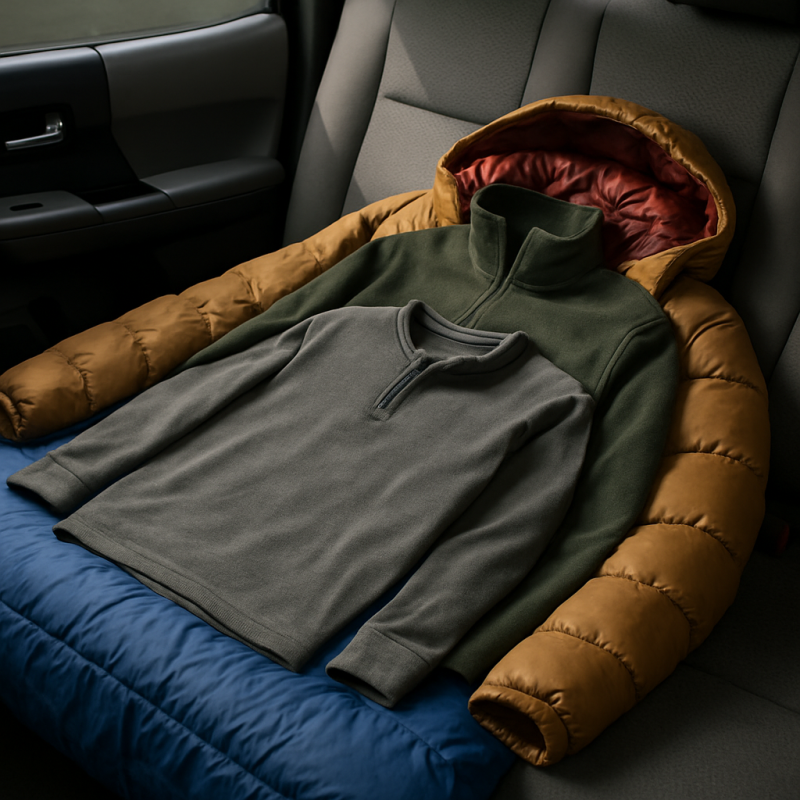
What you wear to bed matters almost as much as what you sleep in. Proper clothing layers trap warm air against your skin and wick away moisture that would otherwise chill you. The key rule: wear dry, moisture-wicking base layers — never sleep in the clothes you wore all day.
- Base layer (next to skin): Merino wool or synthetic long underwear. Cotton is the worst choice — it absorbs sweat and loses all insulating ability when damp.
- Mid layer: Fleece pants and a fleece pullover for sub-freezing temperatures. Skip this layer above 35°F.
- Head: A fleece or wool beanie — you lose 10-15% of body heat through your head. Wear one every night below 40°F.
- Feet: Clean, dry wool socks. Bring a dedicated pair just for sleeping — damp socks from hiking will make your feet colder, not warmer.
- Hands: Thin liner gloves if your sleeping bag doesn't have a draft collar to tuck hands into.
A common mistake is overdressing inside a sleeping bag. If you wear too many layers, you compress the bag's insulation and actually reduce its effectiveness. Your sleeping bag works by trapping warm air in its loft — crushed loft means less warmth.
The ideal approach depends on your sleeping bag's rating:
- Bag rated to 15°F, temps above 25°F: Base layer only
- Bag rated to 15°F, temps 10-25°F: Base layer + mid layer
- Bag rated to 15°F, temps below 10°F: Full layers + bag liner + external blanket
Before climbing into your sleeping bag, do 25-30 jumping jacks or push-ups to raise your core temperature. This pre-warms your body so the sleeping bag has heat to trap. According to REI's expert advice, starting warm is one of the most effective strategies for staying warm all night.
Keep tomorrow's clothes inside your sleeping bag overnight. They'll be warm when you put them on in the morning, and your body heat dries any residual moisture.
What Safety Precautions Should You Take?
Carbon monoxide poisoning is the #1 killer of people sleeping in vehicles. Every heating method that involves combustion — including your truck's engine — produces this odorless, colorless gas. A battery-operated CO detector is non-negotiable for anyone sleeping in a truck.
- Never idle your engine overnight: Exhaust can seep into the cab through rust holes, body seams, or recirculated air. The NHTSA reports that hundreds of people die annually from vehicle-related CO poisoning.
- Propane heater ventilation: Crack windows on opposite sides of the vehicle at least 1 inch each. Even heaters with low-oxygen shutoffs should not be your only safety measure.
- Diesel heater installation: Ensure exhaust vents completely outside with no leaks. Test with a CO detector after installation.
- Battery-powered CO detector: Mount it near sleeping height (CO mixes with air, unlike some gases). Replace batteries every trip.
Condensation is another serious concern. Two adults sleeping in an enclosed truck produce about 1-2 pints of moisture per night through breathing and perspiration. This moisture condenses on cold metal surfaces, soaks your gear, and promotes mold.
- Ventilation: Always leave a small gap for airflow, even in cold weather — a cracked window or roof vent prevents dangerous moisture buildup
- Moisture barriers: Use waterproof sleeping pad covers to prevent condensation from soaking your mattress from below
- Wipe down: In the morning, wipe condensation from interior surfaces before it pools
Keep your cab organized with emergency supplies accessible — a flashlight, phone charger, water bottle, and snacks should all be within arm's reach. If temperatures drop unexpectedly, having a backup plan (driving to shelter, extra blankets in the cab) could be lifesaving.
Finally, tell someone your location and plans before sleeping in your truck in remote areas. A simple text with your GPS coordinates and expected departure time provides a safety net.
How Do You Set Up a Warm Truck Bed Sleep System?
Setting up your truck bed for warm sleeping follows a specific order — each layer builds on the one below it. Here's a step-by-step system that works from mild fall nights down to single-digit winter temperatures.
Step 1: Prepare the truck bed
- Clean the bed surface of debris and moisture
- Install your tonneau cover or camper shell and check all seals for gaps
- If using a camper shell, close and latch all windows
Step 2: Lay the insulation base
- Roll out Reflectix or a similar radiant barrier across the entire bed floor
- Add closed-cell foam tiles (interlocking EVA mats work great) on top
- This base layer alone adds R-4 to R-6 of insulation
Step 3: Set up your sleeping surface
- Place your sleeping pad or mattress on the insulation base
- A Kingfun 3-Inch Memory Foam Camping Mattress fits most full-size truck beds and adds significant R-value with its CertiPUR-US foam construction and waterproof bottom
- If sleeping as a pair, a double sleeping bag lets you share body heat — the most efficient heater you'll ever own
Step 4: Cover the windows and seal drafts
- Press Reflectix panels into any exposed windows
- Stuff small gaps around the tailgate or tonneau with microfiber towels
- Hang a thermal curtain to section off your sleeping area from cold zones
Step 5: Pre-warm and settle in
- Run a propane heater for 10-15 minutes (with ventilation) to pre-warm the space, then turn it off before sleeping
- Place a hot water bottle inside your sleeping bag 10 minutes early
- Do light exercise to raise your core temperature before getting in
- Cinch your sleeping bag's hood and draft collar snug around your neck
This layered approach has been tested by the overlanding community in conditions well below 0°F. The Dyrt's truck camping guide confirms that proper insulation layering is the difference between a comfortable night and a dangerously cold one.
Kingfun 3-Inch Memory Foam Camping Mattress (Twin)
CertiPUR-US memory foam with a waterproof bottom layer prevents moisture and cold transfer from the truck bed. The removable travel bag makes storage between trips simple.
Check Price On AmazonIf you click this link and buy, we earn a commission at no additional cost to you.

Double Sleeping Bag for Camping and Truck Use
Queen-size double bag that converts into two singles, ideal for couples sharing body heat in a truck bed. Waterproof shell and included pillows add convenience for truck camping setups.
Check Price On AmazonIf you click this link and buy, we earn a commission at no additional cost to you.

What Budget-Friendly Tips Keep You Warm Without Expensive Gear?
You don't need to spend hundreds of dollars to sleep warm in your truck. Smart, low-cost strategies can get you through three-season truck camping for under $100 total. Here are proven budget hacks that experienced truck campers rely on.
DIY insulation on a budget:
- Cardboard: Free from any store, cardboard has an R-value of approximately R-3 per inch. Layer two pieces under your sleeping pad for meaningful insulation.
- Emergency space blankets: Tape these to your truck canopy ceiling and walls — they reflect up to 90% of radiant heat for about $2 each.
- Bubble wrap: Cut to fit windows, spritz with water, and press on — it sticks and provides R-1 to R-2 insulation. Free if you save packaging material.
- EVA foam floor mats: Interlocking puzzle mats from discount stores cost $10-15 for a truck bed's worth of R-2 insulation.
Heat retention tricks:
- Hot water bottles: A $5 Nalgene bottle filled with boiling water provides 6-8 hours of warmth inside your sleeping bag
- Hand warmers: Toss 2-3 air-activated hand warmers into your sleeping bag's foot box — they last 8-10 hours and cost about $0.50 each
- Eat a high-fat snack before bed: Your body generates heat through digestion. A handful of nuts or a spoonful of peanut butter before sleep keeps your metabolic furnace running.
- Boil water for a thermos: Keep a thermos of hot water or tea next to you — sipping warm liquid at 3 AM when you wake up cold gets you back to sleep fast
Free strategies that cost nothing:
- Park strategically: Use buildings, tree lines, or terrain features as windbreaks. Wind chill can drop perceived temperatures by 10-20°F.
- Park facing east: Morning sun hits your truck first and warms it faster, making those cold morning wake-ups more bearable.
- Minimize dead air space: A smaller sleeping area retains heat better. If sleeping in a truck bed, partition off the space you need and stuff the rest with gear bags to reduce the volume of air your body has to warm.
For a more comfortable budget setup, pair these tips with a quality mattress pad — it's the one item worth investing in even on a tight budget, since no amount of blankets can compensate for heat lost through an uninsulated truck bed floor.
Related Articles
- Best Truck Camping Mattress Pads — Directly relevant — reviews the top mattress pads for truck bed insulation and comfort
- Best Truck Bed Sleeping Platforms for Camping — Sleeping platforms create a flat, insulated surface in truck cabs and beds for camping
- Best Truck Cab Organizers for Road Trips — Keeping emergency supplies and gear organized and accessible during overnight truck camping
Conclusion
Recommended Products
4" Ultra-Thick Self-Inflating Sleeping Pad with Rechargeable Pump
With an R-9.5 insulation rating and 4 inches of foam-plus-air construction, this pad is purpose-built for four-season truck and van camping. The integrated rechargeable pump makes setup easy in tight spaces.
Check Price On AmazonIf you click this link and buy, we earn a commission at no additional cost to you.
Sportneer Heated Sleeping Bag with 5 Heating Zones
Five USB-powered heating zones with three temperature levels provide targeted warmth without any combustion risk. The flannel lining adds comfort for cold-weather truck camping nights.
Check Price On AmazonIf you click this link and buy, we earn a commission at no additional cost to you.
Kingfun 3-Inch Memory Foam Camping Mattress (Twin)
CertiPUR-US memory foam with a waterproof bottom layer prevents moisture and cold transfer from the truck bed. The removable travel bag makes storage between trips simple.
Check Price On AmazonIf you click this link and buy, we earn a commission at no additional cost to you.
Double Sleeping Bag for Camping and Truck Use
Queen-size double bag that converts into two singles, ideal for couples sharing body heat in a truck bed. Waterproof shell and included pillows add convenience for truck camping setups.
Check Price On AmazonIf you click this link and buy, we earn a commission at no additional cost to you.
Frequently Asked Questions
What temperature is too cold to sleep in a truck?
Is it safe to run your truck heater while sleeping?
Do I need a camper shell to sleep warm in a truck bed?
How do I prevent condensation when sleeping in my truck?
What is the best sleeping bag for truck camping in cold weather?
Can I use an air mattress for winter truck camping?
How much does it cost to set up a warm truck sleeping system?
Should I sleep in the truck cab or the truck bed?
Affiliate Disclosure: This article contains affiliate links. If you purchase through these links, we may earn a commission at no extra cost to you.