Best Truck Features for Camping and Overlanding
Key Takeaways
- Four-wheel drive with low-range gearing is non-negotiable for serious overlanding — part-time 4WD systems offer the best balance of on-road efficiency and off-road capability.
- Payload capacity matters more than towing capacity for overlanding since you're loading gear directly into and onto the truck, not pulling a trailer.
- A truck bed between 5.5 and 6.5 feet unlocks the widest range of camping accessories including tents, sleeping platforms, and slide-out kitchens.
- Factory-installed 120V outlets and auxiliary power systems dramatically reduce your dependence on generators and separate battery setups at camp.
- Invest in recovery and safety gear before cosmetic upgrades — tire repair kits, first aid supplies, and water storage keep you self-sufficient in remote areas.
What Makes a Truck Ideal for Camping and Overlanding?
The ideal camping and overlanding truck combines off-road capability, cargo capacity, and built-in utility features that reduce your dependence on external gear. Unlike daily-driver trucks, an overlanding rig needs to perform double duty — getting you to remote locations and then functioning as a livable basecamp once you arrive.
Not every truck checks every box, but these core attributes separate a capable overlanding platform from a truck that just looks the part:
- Ground clearance: At minimum 9 inches, ideally 10+ inches for rocky terrain and water crossings
- Approach and departure angles: Steeper angles prevent bumper damage on steep inclines — look for 25°+ approach and 23°+ departure
- Payload capacity: At least 1,200 lbs to handle gear, water, fuel, and passengers without sagging
- Four-wheel drive: A proper 4WD system with low-range gearing, not just AWD
- Bed length: 5.5 to 6.5 feet accommodates most truck tents and sleeping platforms
The best truck features for camping and overlanding aren't always the flashiest options on the build sheet. Features like skid plates, locking rear differentials, and auxiliary power outlets deliver far more real-world value than chrome trim or oversized wheels.
If you're new to the overlanding world, resources like Overlanding 101: A Field Guide to Vehicle-Based Adventure Travel provide an excellent foundation for understanding what your vehicle actually needs versus what marketing tells you it needs. The Overland Journal community has been a trusted resource for vehicle-based travel planning for over a decade.
Overlanding 101: A Field Guide to Vehicle-Based Adventure Travel
The definitive beginner's guide to overlanding covers vehicle selection, gear lists, route planning, and camp setup — essential reading before your first build.
Check Price On AmazonIf you click this link and buy, we earn a commission at no additional cost to you.

Which Drivetrain and Suspension Features Matter Most?
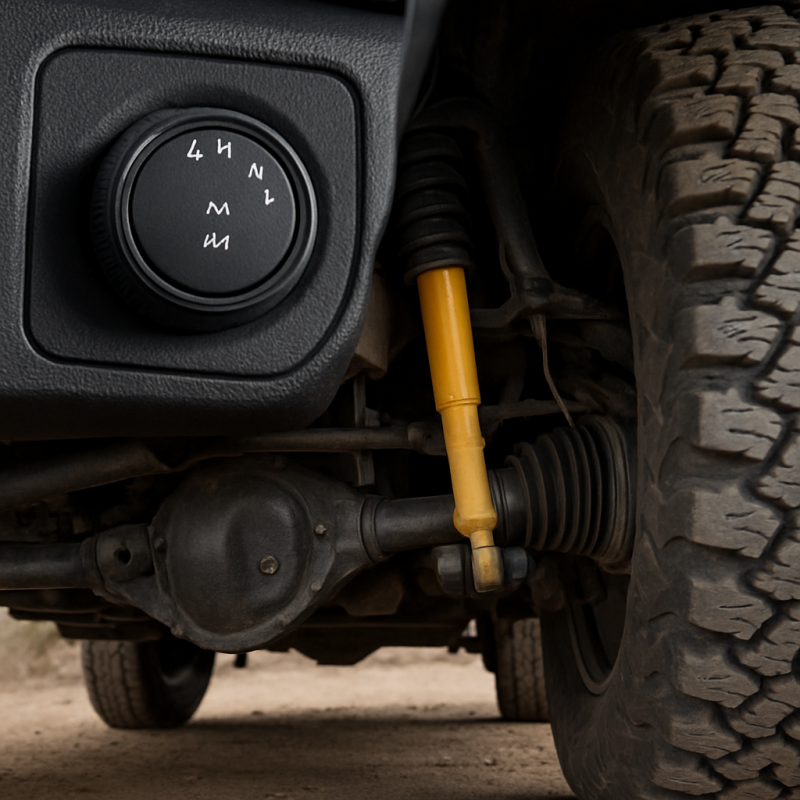
A part-time four-wheel-drive system with low-range transfer case is the single most important mechanical feature for overlanding. It gives you maximum traction on trails while preserving fuel economy on paved roads between destinations.
Here's what to look for in a capable off-road drivetrain:
- Part-time 4WD with 4-Lo: Found in the Toyota Tacoma TRD Off-Road, Ford F-150 Tremor, Ram 1500 Rebel, and Chevy Colorado ZR2
- Locking rear differential: Sends equal power to both rear wheels when stuck — a must-have for sand, mud, and rock crawling
- Electronic-locking front differential: Available on select trims like the Ford Raptor and Chevy ZR2 for maximum articulation
- Multi-mode terrain management: Systems like Ford's GOAT modes or Toyota's Multi-Terrain Select optimize traction for specific surfaces
Suspension is equally critical. Factory off-road suspensions from packages like the TRD Off-Road, FX4, or ZR2 include tuned shocks (often Bilstein or Fox), lifted springs, and reinforced components that handle washboard roads and trail impacts far better than standard setups.
- Bilstein shocks: Standard on many off-road trims, excellent for sustained rough-road driving
- Fox internal bypass shocks: Found on the ZR2, Raptor, and TRD Pro — superior damping at high speeds over rough terrain
- Rear leaf springs vs. coil springs: Coils (Ram 1500) offer better ride quality; leafs (most others) handle heavy loads more predictably
According to MotorTrend's off-road truck testing, factory off-road packages typically add 1-2 inches of lift and 15-20% more suspension travel compared to base models — a meaningful improvement that costs far less than aftermarket alternatives.
How Important Is Payload and Towing Capacity?
Payload capacity is the more critical number for overlanders because your gear rides in and on the truck, not behind it. Many first-time overlanders focus on towing ratings, but exceeding your payload limit creates dangerous handling problems and accelerates wear on brakes, suspension, and tires.
Here's how overlanding gear weight adds up fast:
- Rooftop tent: 120-180 lbs
- Full-size spare tire and carrier: 60-80 lbs
- Water (10 gallons): 83 lbs
- Fuel (5-gallon jerry can): 30 lbs
- Camping gear (kitchen, chairs, cooler, sleeping bags): 150-250 lbs
- Recovery gear (winch, boards, straps): 40-80 lbs
- Two passengers: 300-400 lbs
That totals 780-1,100 lbs for a moderately equipped rig — and that's before adding a bed rack, toolbox, or slide-out kitchen system like the SHIWAGIN Overland Kitchen Slide-Out System, which provides a complete cooking station that deploys in about a minute.
| Truck Model | Max Payload | Usable After Passengers | Best For |
|---|---|---|---|
| Ford F-150 (5.0L V8) | 2,120 lbs | ~1,720 lbs | Heavy overland builds |
| Ram 1500 Rebel | 1,240 lbs | ~840 lbs | Light to moderate builds |
| Toyota Tacoma TRD Off-Road | 1,155 lbs | ~755 lbs | Minimalist setups |
| Chevy Colorado ZR2 | 1,137 lbs | ~737 lbs | Midsize efficiency |
| Ford Ranger Tremor | 1,560 lbs | ~1,160 lbs | Balanced midsize option |
Always check the yellow tire placard on your driver's door jamb for your truck's exact payload rating — it accounts for factory-installed options that reduce capacity from the advertised maximum.
What Truck Bed Features Enhance Camp Life?
Your truck bed is the foundation of your entire camping setup, and bed length, liner type, and accessory mounting options determine how versatile it becomes. A well-configured bed transforms from cargo hauler to sleeping quarters to outdoor kitchen in minutes.
Key bed features to prioritize:
- Bed length (5.5-6.5 ft): The sweet spot for truck tents, air mattresses, and sleeping platforms. Shorter beds limit options; longer beds add turning radius
- Spray-in bed liner: Protects against scratches, provides grip for gear, and prevents water pooling — far superior to drop-in liners for camping
- Factory tie-downs and cleats: Adjustable rail systems (like Ford's Boxlink or Ram's RamBox) let you secure gear without drilling
- LED bed lighting: Invaluable for setting up camp after dark — most modern trucks offer this as standard or a cheap add-on
- Tailgate step: Makes loading and accessing gear significantly easier, especially with a bed rack installed
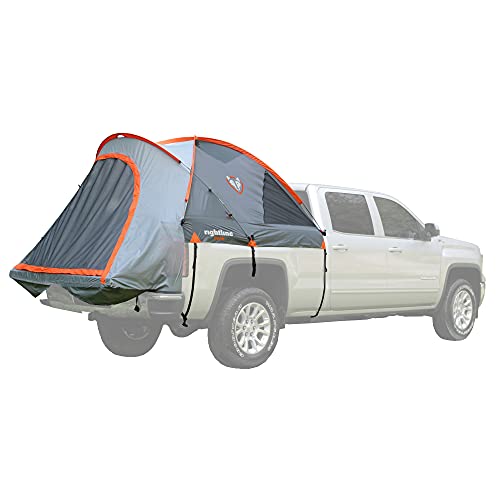
For sleeping in the bed, a quality truck camping mattress pad is essential for comfort on multi-night trips. Pair it with a truck bed tent like the Rightline Gear Mid-Size Truck Bed Tent for a complete sleep system that sets up in under 10 minutes.
If you want a more permanent sleeping solution, the Pop Up Pickup Truck Camper Topper provides an insulated cabin with a custom interior — essentially turning your truck into a self-contained camper without the weight of a traditional shell.
For inflatable comfort, the Umbrauto Truck Bed Air Mattress is custom-fitted for 5.5-5.8 ft short beds and comes with a pump for quick inflation at camp.
Rightline Gear Mid-Size Short Truck Bed Tent
A two-person truck bed tent that sets up in minutes without requiring a tonneau cover removal. Fits 5-foot beds and includes a built-in floor and weather protection.
Check Price On AmazonIf you click this link and buy, we earn a commission at no additional cost to you.
Which Cab and Interior Features Improve Comfort on Long Trips?
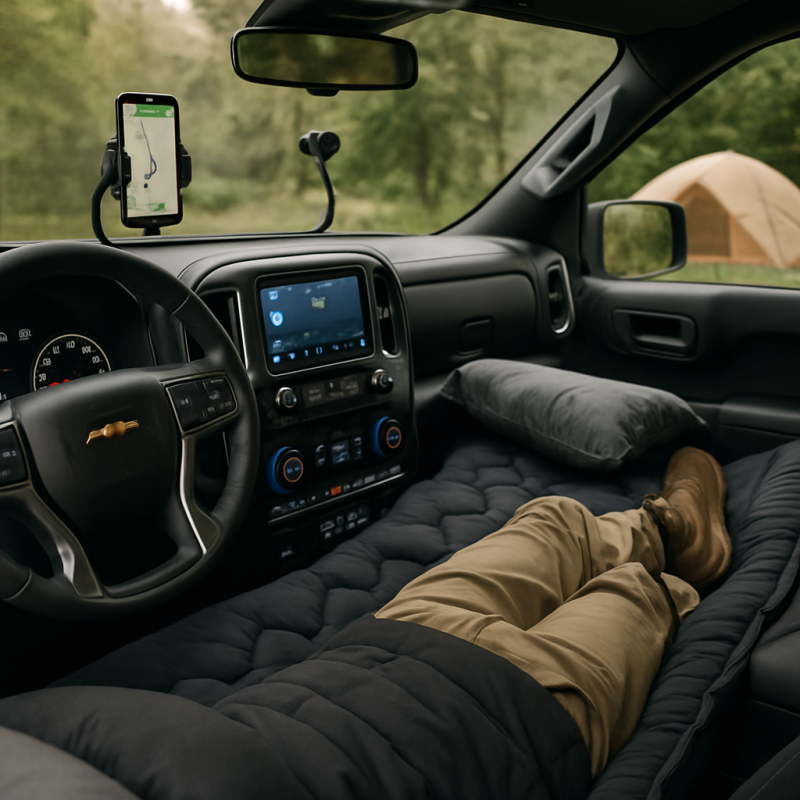
Heated seats, lumbar support, and smart storage solutions make the biggest comfort difference on long overlanding drives. You'll spend hours behind the wheel on dirt roads — your cab needs to be ergonomic, organized, and capable of keeping you comfortable in varying weather conditions.
Interior features worth paying for:
- Ventilated/heated seats: Critical for temperature extremes — desert heat and mountain cold are common on the same trip
- Power-adjustable lumbar: Prevents back fatigue on 6-8 hour drive days over rough terrain
- Rear under-seat storage: Found on crew cab models, perfect for securing valuables and emergency supplies
- Multiple USB-C and 12V ports: You'll charge phones, GPS units, radios, and camera batteries simultaneously
- Rubber or all-weather floor mats: Mud, sand, and water are inevitable — carpet floor mats are a liability
Protecting your interior starts with quality all-weather floor mats that can handle trail debris, and durable seat covers that resist UV damage and moisture.
Organization is an overlooked comfort feature. A cluttered cab means digging for sunscreen, maps, or snacks while driving forest roads. Invest in purpose-built cab organizers that keep essentials within arm's reach. A ceiling cargo net with pockets adds overhead storage for lightweight items like gloves, headlamps, and maps without eating into passenger space.
For documenting your trips and maintaining security at remote campsites, a reliable dash cam records trail conditions and serves as a safety backup when you're miles from cell service.
What Power and Electrical Features Should Overlanders Prioritize?
Factory-installed 120V AC outlets, auxiliary battery systems, and high-output alternators are the truck features that separate a capable basecamp from one that runs out of juice on night two. Electrical demand at camp — lights, coolers, phones, laptops, medical devices — adds up faster than most people expect.
Critical power features by priority:
- Pro Power Onboard (Ford) or similar: Ford's system delivers 2.0-9.6 kW from the truck itself — enough to run a full campsite without a generator
- Bed-mounted 120V outlet: Standard on most modern trucks, powers small appliances and chargers directly
- High-output alternator: 220+ amp alternators (standard on diesel and hybrid trucks) keep auxiliary batteries charged while driving
- Dual-battery system: Isolates your starter battery from camp loads — you'll never drain your starting battery running a fridge overnight
A portable power station complements your truck's electrical system for situations where you don't want to idle the engine. Modern lithium stations in the 1,000-2,000 Wh range can run a 12V cooler for 30-40 hours.
Speaking of coolers, a quality 12V truck cooler is one of the best investments for overlanding — it maintains consistent temperatures without ice, keeping food safe for days instead of hours.
| Power Feature | Typical Output | Best Use Case | Available On |
|---|---|---|---|
| Pro Power Onboard 2.0 | 2,000W | Lights, cooler, chargers | Ford F-150 (standard) |
| Pro Power Onboard 9.6 | 9,600W | Full campsite, power tools | Ford F-150 Hybrid |
| Bed 120V Outlet | 400W | Phone/laptop charging | Most trucks (option) |
| Multi-Function Tailgate Power | 650W | Tailgate workspace | GMC Sierra |
The TFL Truck team has documented real-world power consumption in their overlanding builds, confirming that a dual-battery setup with 200Ah of lithium capacity handles most 3-5 day trips without needing to idle or drive.
How Do You Handle Water and Food Prep in the Field?
Dedicated water storage and a portable kitchen system are the two features that most dramatically improve camp comfort and self-sufficiency. Clean water is your most critical resource — you need it for drinking, cooking, cleaning, and emergency first aid.
Water management essentials:
- Onboard water storage: Carry at minimum 5-10 gallons (1-2 gallons per person per day). A lockable water container mount secures a 5-gallon Scepter container to your truck or rack
- Water filtration: A portable water filter lets you refill from streams and lakes, extending your range dramatically
- Gravity-fed shower bag: A 5-gallon solar shower hung from a bed rack provides hot water for washing after dusty trail days
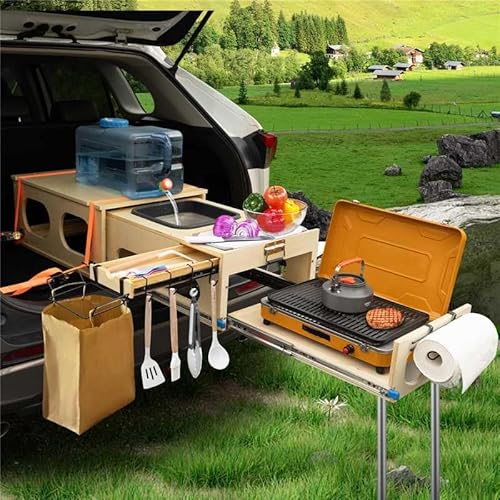
For cooking, the trend has moved from traditional camp stoves on folding tables toward integrated truck bed kitchen systems. These slide-out units mount inside your bed or on a bed rack and deploy a full prep station — cutting board, stove mount, storage drawers, and sometimes even a sink.
Shade is another critical camp comfort feature that's easy to overlook. A portable vehicle awning attaches to your roof rack or bed rack and provides instant shade for cooking, eating, and relaxing — no trees required. The best models don't require permanent roof rack hardware, making them suitable for trucks without factory rails.
The National Park Service recommends proper food storage practices at all campsites, including bear-resistant containers in designated areas. Your truck bed with a locking tonneau cover serves as effective food storage in most camping scenarios.
SHIWAGIN Overland Kitchen Slide-Out System
All-in-one camp kitchen with sink, chopping board, and cooking station that slides out from your truck bed. Sets up in about one minute for maximum convenience.
Check Price On AmazonIf you click this link and buy, we earn a commission at no additional cost to you.
What Recovery and Safety Gear Should Every Overlander Carry?
A tire repair kit, first aid supplies, and traction recovery boards are the three non-negotiable safety items for any overlanding trip. When you're 50 miles from the nearest paved road, self-recovery capability isn't optional — it's the difference between a minor inconvenience and a dangerous situation.
Essential recovery and safety gear:
- Tire repair kit: The Boulder Tools Compact Tire Repair Kit includes everything needed for trailside plug repairs and stores in a MOLLE-compatible pouch that mounts anywhere
- Tire deflators: The ALL-TOP Adjustable Tire Deflator Kit lets you air down to your target PSI automatically — critical for sand and soft terrain traction
- First aid kit: A waterproof 152-piece first aid kit covers everything from minor cuts to more serious wilderness injuries
- Traction recovery boards: MaxTrax or similar rated to 8,000+ lbs for extracting stuck vehicles from sand, mud, or snow
- Kinetic recovery rope: A 30-ft kinetic rope with a 19,000+ lb breaking strength for vehicle-to-vehicle extraction
- Full-size spare tire: Not a compact spare — a matching full-size tire mounted underneath or on a bed rack carrier
Organization matters for recovery gear. A roll-up tool bag keeps wrenches, sockets, and repair tools organized and accessible without taking up excessive space. For larger items, a spare tire trash bag from Rhino USA mounts to your spare and provides storage for firewood, wet gear, or recovery straps.
The NHTSA recommends checking tire pressure before every off-road trip and carrying a portable air compressor rated for your tire size. Re-inflating after airing down is essential before returning to highway speeds.
Boulder Tools Compact Tire Repair Kit with Molle Pouch
Heavy-duty universal tire plug kit in a MOLLE-compatible pouch that mounts to your seat, rack, or roll bar. Essential for trailside repairs far from tire shops.
Check Price On AmazonIf you click this link and buy, we earn a commission at no additional cost to you.

ALL-TOP Adjustable Auto-Stop Tire Deflator Kit
Set-and-forget tire deflators that automatically stop at your target PSI (10-30 range). Saves time airing down all four tires simultaneously at the trailhead.
Check Price On AmazonIf you click this link and buy, we earn a commission at no additional cost to you.

152 PCS Waterproof First Aid Kit
Comprehensive 152-piece kit in a waterproof dry bag — designed for outdoor use where exposure to water and dust is unavoidable. Covers cuts, burns, and sprains.
Check Price On AmazonIf you click this link and buy, we earn a commission at no additional cost to you.

Related Articles
- Best Truck Camping Mattress Pads — Recommended for truck bed sleeping comfort on multi-night camping trips
- Best Truck Floor Mats for All-Weather Protection — Essential interior protection against mud, sand, and water from overlanding
- Best Truck Seat Covers — Protects seats from UV damage and moisture during outdoor adventures
- Best Truck Cab Organizers for Road Trips — Keeps essentials organized and accessible during long overlanding drives
- Best Truck Dash Cams for Road Protection — Records trail conditions and provides security at remote campsites
- Best Portable Power Stations for Truck Camping — Supplements truck electrical systems for off-grid power needs
- Best 12V Truck Coolers for Camping — Maintains food temperatures without ice for multi-day overlanding trips
- Best Portable Water Filters for Truck Camping — Enables water refills from natural sources to extend trip range
Conclusion
Recommended Products
Overlanding 101: A Field Guide to Vehicle-Based Adventure Travel
The definitive beginner's guide to overlanding covers vehicle selection, gear lists, route planning, and camp setup — essential reading before your first build.
Check Price On AmazonIf you click this link and buy, we earn a commission at no additional cost to you.
Rightline Gear Mid-Size Short Truck Bed Tent
A two-person truck bed tent that sets up in minutes without requiring a tonneau cover removal. Fits 5-foot beds and includes a built-in floor and weather protection.
Check Price On AmazonIf you click this link and buy, we earn a commission at no additional cost to you.
SHIWAGIN Overland Kitchen Slide-Out System
All-in-one camp kitchen with sink, chopping board, and cooking station that slides out from your truck bed. Sets up in about one minute for maximum convenience.
Check Price On AmazonIf you click this link and buy, we earn a commission at no additional cost to you.
Boulder Tools Compact Tire Repair Kit with Molle Pouch
Heavy-duty universal tire plug kit in a MOLLE-compatible pouch that mounts to your seat, rack, or roll bar. Essential for trailside repairs far from tire shops.
Check Price On AmazonIf you click this link and buy, we earn a commission at no additional cost to you.
ALL-TOP Adjustable Auto-Stop Tire Deflator Kit
Set-and-forget tire deflators that automatically stop at your target PSI (10-30 range). Saves time airing down all four tires simultaneously at the trailhead.
Check Price On AmazonIf you click this link and buy, we earn a commission at no additional cost to you.
152 PCS Waterproof First Aid Kit
Comprehensive 152-piece kit in a waterproof dry bag — designed for outdoor use where exposure to water and dust is unavoidable. Covers cuts, burns, and sprains.
Check Price On AmazonIf you click this link and buy, we earn a commission at no additional cost to you.
Frequently Asked Questions
What is the best truck for overlanding on a budget?
Do I need a diesel truck for overlanding?
What size truck bed is best for camping?
How much does it cost to set up a truck for overlanding?
Is a mid-size or full-size truck better for overlanding?
What PSI should I run for off-road overlanding?
Can I overland with a two-wheel-drive truck?
What are the most important factory options for an overlanding truck?
Affiliate Disclosure: This article contains affiliate links. If you purchase through these links, we may earn a commission at no extra cost to you.