12V Cooler vs Ice Chest for Trucks
Key Takeaways
- 12V compressor coolers maintain precise temperatures without ice but cost 5-10x more than traditional ice chests upfront.
- Traditional ice chests keep food cold for 3-5 days with no power source needed, making them more reliable for remote off-grid trips.
- For daily work truck use, a 12V cooler eliminates the hassle of buying ice and draining meltwater every day.
- Thermoelectric 12V coolers are the cheapest electric option but only cool 30-40°F below ambient — compressor models are far superior.
- Most truck owners benefit from owning both: a 12V cooler for daily use and an ice chest for weekend camping or hauling large quantities.
How Do 12V Coolers and Ice Chests Actually Work?
The fundamental difference comes down to how each unit removes heat. Traditional ice chests use passive insulation to slow heat transfer while ice absorbs warmth through phase change. 12V coolers actively pump heat out using either a compressor or thermoelectric element, similar to your kitchen refrigerator.
Understanding the technology matters because it directly affects performance, reliability, and cost.
- Compressor 12V coolers: Use a miniature refrigeration compressor (same technology as home fridges) to actively cool contents down to -7°F or lower. These are true portable refrigerator-freezers.
- Thermoelectric 12V coolers: Use a Peltier chip to transfer heat. They can only cool about 30-40°F below ambient temperature — so on a 100°F day, your food sits at 60-70°F. Not ideal for perishables.
- Rotomolded ice chests: Premium coolers with thick insulation walls (2-3 inches of polyurethane foam) that can hold ice for 5-10 days depending on conditions.
- Standard ice chests: Thinner insulation with injection-molded construction. Budget-friendly but ice lasts only 1-3 days in warm weather.
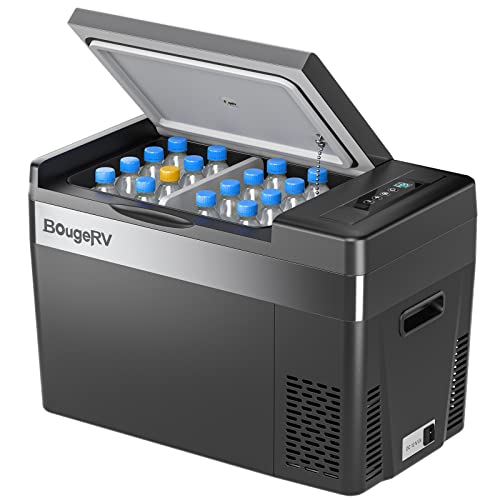
For truck owners who need consistent cold temperatures, compressor-based 12V coolers are the clear winner in cooling technology. The BougeRV 23-Quart Portable Freezer is a solid example — it reaches -7°F and runs on 12/24V DC or household AC power.
Thermoelectric models like the Ivation 24L Electric Cooler & Warmer cost less but sacrifice meaningful cooling ability. They're fine for keeping already-cold drinks cool on short trips, but they won't reliably keep meat or dairy safe in summer heat.
How Does Cooling Performance Compare?
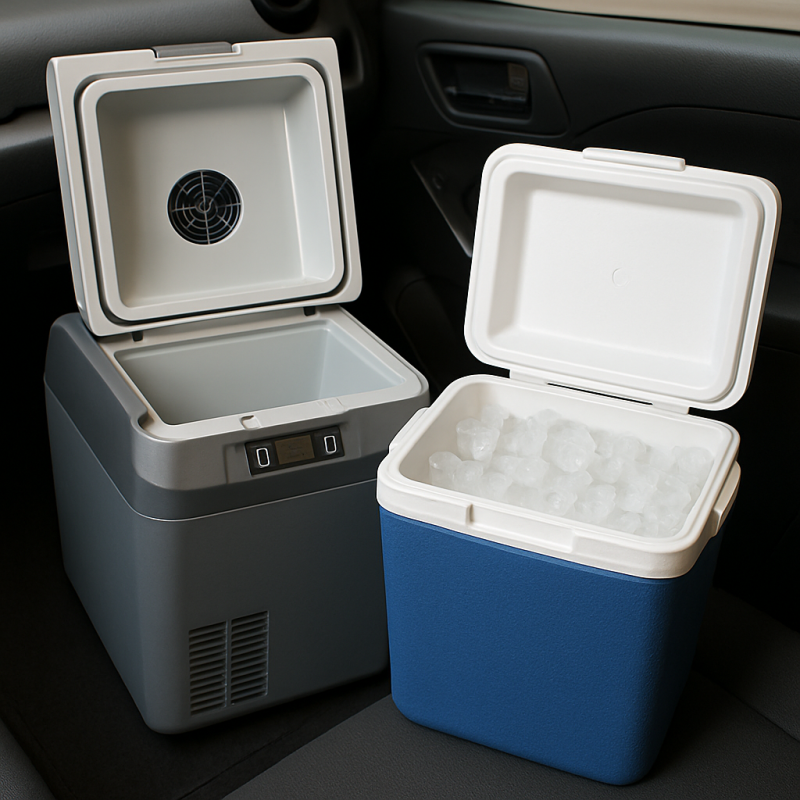
A compressor 12V cooler wins on temperature control — it holds a set temperature regardless of outside conditions, while an ice chest gradually warms as ice melts. However, a quality ice chest can outperform cheap thermoelectric coolers in extreme heat.
| Performance Metric | 12V Compressor Cooler | Thermoelectric 12V Cooler | Traditional Ice Chest |
|---|---|---|---|
| Min Temperature | -7°F to 0°F | 30-40°F below ambient | 32°F (while ice remains) |
| Temperature Consistency | ±2°F (thermostat controlled) | Fluctuates with ambient temp | Slowly rises as ice melts |
| Ice Retention / Runtime | Unlimited (while powered) | Unlimited (while powered) | 1-5 days depending on quality |
| Performance in 100°F Heat | Excellent — holds set temp | Poor — contents reach 60-70°F | Good — ice melts faster but stays cold |
| Freezing Capability | Yes | No | No |
The key advantage of 12V compressor coolers is precision. You set 35°F, it stays at 35°F whether you're parked in Phoenix or driving through Montana. According to the FDA's food safety guidelines, perishable food must stay below 40°F to prevent bacterial growth — a thermostat-controlled cooler guarantees this.
- Best for food safety: 12V compressor cooler — precise, reliable temperature control
- Best for drinks only: Traditional ice chest — cold enough and much cheaper
- Worst option for summer heat: Thermoelectric coolers — they simply cannot cool enough when ambient temps climb above 90°F
If you haul perishable food for work or extended road trips, a compressor cooler like the BougeRV 30-Quart Portable Freezer is worth every penny. It reaches -8°F and handles both fridge and freezer duty.
BougeRV 30-Quart 12V Portable Freezer
Compressor-based portable fridge-freezer that reaches -8°F. Runs on 12V DC or household AC, making it the most versatile 12V cooler for daily truck use and extended trips alike.
Check Price On AmazonIf you click this link and buy, we earn a commission at no additional cost to you.
What Does Each Option Really Cost?
Ice chests cost far less upfront but add ongoing ice expenses, while 12V coolers have a high purchase price with near-zero operating costs. Over 2-3 years of regular use, the total cost of ownership can actually favor electric coolers.
| Cost Factor | 12V Compressor Cooler | Traditional Ice Chest (Standard) | Traditional Ice Chest (Premium) |
|---|---|---|---|
| Purchase Price | $150-$500+ | $25-$60 | $150-$400 |
| Ice Cost (per use) | $0 | $3-$6 | $3-$6 |
| Annual Ice Cost (3x/week) | $0 | $470-$940 | $470-$940 |
| Power Cost (per day) | $0.15-$0.40 | $0 | $0 |
| 2-Year Total Cost | $260-$790 | $965-$1,940 | $1,090-$2,280 |
The math is simple: if you buy ice three or more times per week, a 12V compressor cooler pays for itself within the first year. A bag of ice at a gas station runs $3-6, and that adds up shockingly fast.
- Daily work truck use (250+ days/year): 12V cooler saves $700-$1,400 annually on ice
- Weekend warrior (50 days/year): Ice chest is cheaper — ice costs only $150-$300/year
- Occasional use (under 20 days/year): A standard ice chest like the Coleman Chiller 48-Quart Cooler is the smart financial choice
Don't forget the hidden costs of ice chests: water damage to truck bed contents, soggy food from meltwater, and the daily inconvenience of stopping for ice. For contractors and tradespeople who keep their trucks outfitted for work, eliminating daily ice runs saves valuable time too.
Coleman Classic 52-Quart Insulated Cooler
A proven ice chest that keeps ice for up to 5 days at an unbeatable price. Perfect for weekend truck camping and tailgating when you don't need electric cooling.
Check Price On AmazonIf you click this link and buy, we earn a commission at no additional cost to you.

Which Is Better for Truck Bed Space and Portability?
Ice chests offer more capacity per dollar, but 12V coolers are more space-efficient because they don't waste volume on ice. A 30-quart 12V cooler holds roughly the same amount of food as a 50-quart ice chest once you account for ice displacement.
- Ice displacement factor: Traditional coolers lose 30-40% of usable space to ice. A 52-quart ice chest gives you roughly 30-35 quarts of actual food/drink space.
- Weight comparison: A loaded 50-quart ice chest weighs 50-60 lbs with ice. A 30-quart 12V cooler weighs 25-30 lbs with the same amount of food.
- Footprint: 12V coolers tend to be taller and narrower; ice chests are wider and shorter. Consider your truck bed or cab layout.
For truck cab use, compact 12V models excel. The YELLOW JACKET 16-Quart Car Refrigerator fits behind the driver's seat in most full-size trucks and draws power from the 12V outlet. No ice, no mess, no wasted space.
For truck bed mounting, larger units work well when properly secured. The BougeRV 42-Quart Portable Freezer offers serious capacity for extended trips while still fitting between wheel wells in most full-size truck beds.
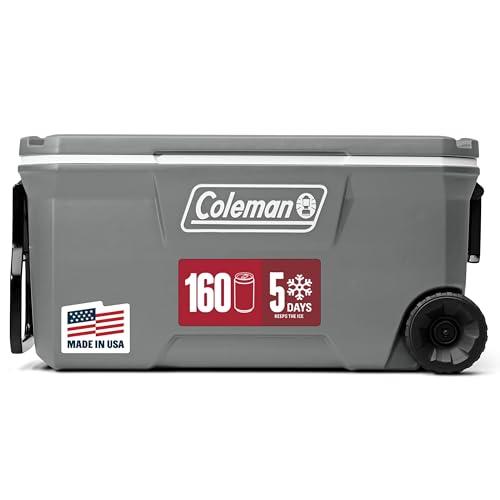
If you need sheer volume for tailgating or group camping, nothing beats a large ice chest. The Coleman 100-Quart Rolling Cooler holds up to 160 cans — no 12V cooler comes close to that capacity at a reasonable price. Just make sure your truck bed is equipped with proper tie-downs. Many truck owners who invest in quality floor mats and bed protection accessories already have the mounting points needed to secure a large cooler.
Coleman 100-Quart Rolling Cooler
Massive 100-quart capacity with wheels for easy transport. Holds up to 160 cans with 5-day ice retention — the king of tailgating and group camping coolers.
Check Price On AmazonIf you click this link and buy, we earn a commission at no additional cost to you.
What About Power Draw and Battery Concerns?
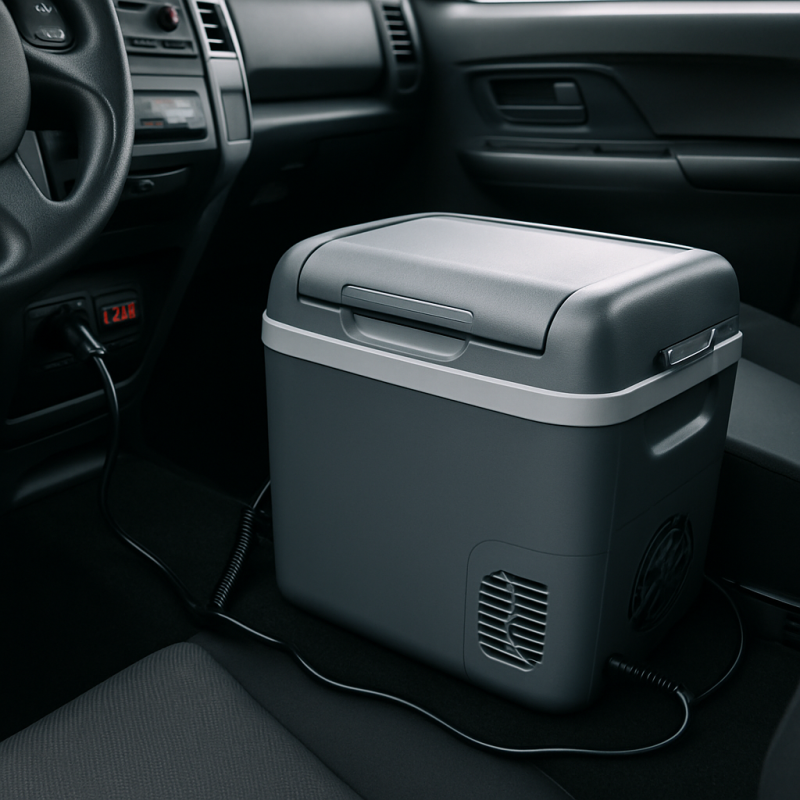
12V coolers draw 30-60 watts while actively cooling and cycle on and off like a home fridge. Modern compressor coolers include low-voltage cutoff protection so they won't kill your truck's battery — but power management still matters for extended use.
- Running engine draw: 30-60W is negligible while your truck runs. Your alternator produces 1,500-2,500W — a 12V cooler uses about 2-3% of that capacity.
- Parked/engine off: A compressor cooler draws roughly 1-2 amps/hour once at temperature. A standard truck battery (600-800 CCA) can run a cooler for 8-15 hours before reaching the low-voltage cutoff.
- Duty cycle: Compressor coolers don't run continuously. Once contents reach target temperature, the compressor cycles off. Real-world draw averages 0.5-1.0 amps/hour.
- Battery protection: Quality units like the OLIXIS 42-Quart Dual-Zone Cooler include three-level battery protection that automatically shuts off before draining your starting battery.
Traditional ice chests have zero power concerns — a clear advantage for off-grid camping and remote work sites without generator access. If you're spending multiple days in the backcountry with no way to charge, an ice chest is more dependable.
For truck owners who already have auxiliary power setups — dual batteries, solar panels, or portable power stations — running a 12V cooler is effortless. The U.S. Department of Energy notes that modern compressor refrigeration has become remarkably efficient, and portable 12V models reflect those improvements.
If you're concerned about overnight power draw while truck camping, look for models with ECO mode, which reduces compressor frequency and can extend battery-only runtime by 30-50%.
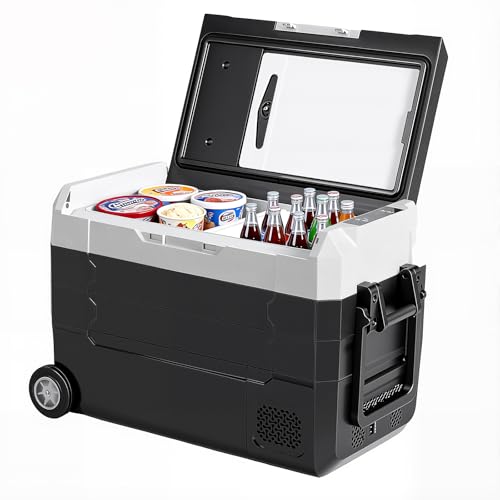
OLIXIS 42-Quart Dual-Zone Portable Refrigerator
Dual-zone design lets you run a fridge and freezer simultaneously. Built-in wheels, cutting board, and three-level battery protection make it ideal for overlanding.
Check Price On AmazonIf you click this link and buy, we earn a commission at no additional cost to you.
How Durable Is Each Option for Truck Use?
Traditional ice chests — especially rotomolded models — are nearly indestructible, while 12V coolers contain sensitive electronics and compressors that can fail from rough handling, vibration, or moisture. For harsh truck bed environments, ice chests have a durability edge.
- Impact resistance: Rotomolded ice chests (YETI, Pelican, RTIC) can survive drops, impacts, and truck bed sliding. Standard injection-molded coolers crack more easily. 12V coolers have electronic components that don't tolerate hard impacts.
- Water/dust resistance: Ice chests handle rain, mud, and truck bed conditions without issue. 12V coolers need protection from standing water around electrical connections.
- Vibration tolerance: Truck beds vibrate constantly. Quality 12V compressor coolers are designed for vehicle use and handle vibration well, but cheap units may develop compressor issues over time.
- Lifespan: A quality ice chest lasts 10-20+ years with zero maintenance. A 12V compressor cooler typically lasts 5-10 years with proper care.
For work trucks that see daily abuse, a tough ice chest like the Klein Tools 17-Quart Work Cooler is purpose-built for the job site. It holds 18 cans, keeps contents cold for 30 hours, and doubles as a seat rated to 300 lbs — a feature tradespeople love.
If you mount a 12V cooler in the truck bed, secure it with ratchet straps or a mounting bracket. Consumer Reports testing found that the primary cause of portable cooler failure is physical damage from unsecured movement during transport.
For truck owners who prioritize interior protection alongside their gear, pairing a well-secured cooler with proper seat covers and floor protection keeps the whole cab in good shape through heavy daily use.
Klein Tools 17-Quart Work Cooler
Built for job sites with a 300-lb seat rating, 30-hour cold retention, and tradesman-tough construction. The go-to lunch cooler for contractors and tradespeople.
Check Price On AmazonIf you click this link and buy, we earn a commission at no additional cost to you.

Which Is Best for Different Truck Use Cases?
The right choice depends entirely on how you use your truck. There's no universal winner — daily commuters, contractors, overlanders, and weekend campers each have different priorities. Here's a definitive breakdown by use case.
| Use Case | Best Choice | Why |
|---|---|---|
| Daily work truck / contractor | 12V compressor cooler | No daily ice runs, consistent cold, pays for itself in months |
| Weekend camping (1-2 nights) | Standard ice chest | Cheap, reliable, no power needed |
| Extended overlanding (3+ days) | 12V compressor cooler + auxiliary battery | Unlimited cold without resupply, freezer capability |
| Tailgating / group events | Large ice chest (80-120qt) | Maximum capacity for lowest cost |
| Food delivery / perishable transport | 12V compressor cooler | FDA-compliant temperature control is non-negotiable |
| Fishing trips | Ice chest (with drain plug) | Easy to drain, clean, and load heavy catches |
| Road trips with family | 12V compressor cooler in cab | Accessible cold snacks without stopping |
- Contractors and tradespeople: A 12V cooler mounted in the cab eliminates your daily ice stop and keeps lunch at safe temperatures all day. The EUHOMY 19-Quart Compressor Cooler with app control is compact enough to fit behind the passenger seat.
- Overlanders: A dual-zone 12V cooler lets you run one side as a fridge and the other as a freezer — a massive advantage on week-long trips.
- Weekend warriors: Save your money. A Coleman Classic 52-Quart Cooler with a bag of ice handles two days perfectly.
Many serious truck owners end up with both: a compact 12V cooler for daily cab use and a large ice chest for the bed when hauling food for groups. It's the same logic behind keeping your cab organized — the right tool for each situation.
BougeRV 42-Quart Portable Freezer
Large-capacity 12V compressor cooler ideal for truck bed mounting on extended trips. Fits between wheel wells in most full-size trucks with room to spare.
Check Price On AmazonIf you click this link and buy, we earn a commission at no additional cost to you.

What Should You Look for When Buying?
Whether you choose electric or ice, specific features separate good coolers from bad ones. Don't just buy the cheapest option — these details determine real-world performance in a truck environment.
For 12V compressor coolers, prioritize:
- Low-voltage battery protection: Non-negotiable for truck use. Three-stage cutoff (low/medium/high) is best so you can set your comfort level.
- Compressor type: Look for brand-name compressors (Secop/Danfoss or LG). Cheap no-name compressors fail sooner and run louder.
- Noise level: In-cab coolers should run under 45 dB. Anything louder gets annoying on long drives. The truck enthusiast community frequently rates the BougeRV line as among the quietest.
- Dual-zone capability: Lets you run fridge and freezer simultaneously. Worth the premium for extended trips.
- AC/DC compatibility: Models that accept both 12V DC and 110V AC give you flexibility at camp, hotels, or home.
For traditional ice chests, prioritize:
- Insulation thickness: 2+ inches of polyurethane foam for multi-day ice retention. Thinner walls mean faster ice melt.
- Drain plug quality: Cheap drain plugs leak. Look for threaded or tethered plugs that won't pop out in the truck bed.
- Latches: Rubber T-latches are more durable than plastic clips. They also create a tighter seal.
- Non-slip feet: Essential for truck bed use — your cooler slides less during turns and stops.
- Tie-down points: Molded slots for rope or straps keep your cooler secured. The EchoSmile 21-Quart Portable Cooler is an ultra-light option for truck owners who want minimal weight.
Regardless of which type you choose, measure your available space first. Check behind-seat clearance for cab-mounted 12V coolers, or bed width between wheel wells for truck bed placement. Nothing is worse than buying a cooler that doesn't fit.
Related Articles
- Best Portable Air Compressors for Trucks — Referenced when discussing truck power accessories and auxiliary power setups
- Best Truck Floor Mats for All-Weather Protection — Referenced when discussing truck bed protection and interior care alongside cooler use
- Best Truck Seat Covers — Referenced when discussing protecting truck interiors during heavy daily use with gear
- Best Truck Center Console Organizers — Referenced when discussing cab organization and having the right tool for each situation
Conclusion
Recommended Products
BougeRV 30-Quart 12V Portable Freezer
Compressor-based portable fridge-freezer that reaches -8°F. Runs on 12V DC or household AC, making it the most versatile 12V cooler for daily truck use and extended trips alike.
Check Price On AmazonIf you click this link and buy, we earn a commission at no additional cost to you.
Coleman Classic 52-Quart Insulated Cooler
A proven ice chest that keeps ice for up to 5 days at an unbeatable price. Perfect for weekend truck camping and tailgating when you don't need electric cooling.
Check Price On AmazonIf you click this link and buy, we earn a commission at no additional cost to you.
Klein Tools 17-Quart Work Cooler
Built for job sites with a 300-lb seat rating, 30-hour cold retention, and tradesman-tough construction. The go-to lunch cooler for contractors and tradespeople.
Check Price On AmazonIf you click this link and buy, we earn a commission at no additional cost to you.
OLIXIS 42-Quart Dual-Zone Portable Refrigerator
Dual-zone design lets you run a fridge and freezer simultaneously. Built-in wheels, cutting board, and three-level battery protection make it ideal for overlanding.
Check Price On AmazonIf you click this link and buy, we earn a commission at no additional cost to you.
Coleman 100-Quart Rolling Cooler
Massive 100-quart capacity with wheels for easy transport. Holds up to 160 cans with 5-day ice retention — the king of tailgating and group camping coolers.
Check Price On AmazonIf you click this link and buy, we earn a commission at no additional cost to you.
BougeRV 42-Quart Portable Freezer
Large-capacity 12V compressor cooler ideal for truck bed mounting on extended trips. Fits between wheel wells in most full-size trucks with room to spare.
Check Price On AmazonIf you click this link and buy, we earn a commission at no additional cost to you.
Frequently Asked Questions
Will a 12V cooler drain my truck battery overnight?
How long does a 12V cooler take to get cold?
Are thermoelectric coolers worth buying for a truck?
Can I use a 12V cooler as a freezer in my truck?
How much ice do I need for a truck cooler on a weekend trip?
Is a 12V cooler better than a regular cooler for long road trips?
Where should I mount a 12V cooler in my truck?
Do 12V coolers work well in extreme heat?
Affiliate Disclosure: This article contains affiliate links. If you purchase through these links, we may earn a commission at no extra cost to you.