Steel vs Aluminum Off-Road Bumpers
Key Takeaways
- Steel bumpers weigh 60-120 lbs and offer superior impact protection for serious rock crawling and trail abuse.
- Aluminum bumpers cut weight by 40-50%, improving fuel economy and reducing front-end sag on lighter trucks.
- Steel bumpers cost $400-$1,200 on average, while comparable aluminum bumpers run $800-$2,000 due to higher material and fabrication costs.
- Aluminum naturally resists corrosion without coatings, making it the better choice for coastal or high-humidity climates.
- Choose steel if you prioritize maximum protection and weldability; choose aluminum if weight savings and rust resistance matter most.
How Do Steel and Aluminum Bumpers Compare Overall?
Steel and aluminum off-road bumpers serve the same purpose — protecting your truck's front and rear end — but they differ significantly in weight, strength, cost, and longevity. Steel is the traditional choice for maximum impact protection, while aluminum has gained ground among overlanders and daily drivers who want protection without the weight penalty.
| Feature | Steel Bumpers | Aluminum Bumpers |
|---|---|---|
| Weight | 60–120 lbs | 30–65 lbs |
| Tensile Strength | ~58,000 PSI (mild steel) | ~45,000 PSI (6061-T6) |
| Price Range | $400–$1,200 | $800–$2,000 |
| Corrosion Resistance | Requires coating/paint | Naturally resistant |
| Repairability | Easy to weld | Requires TIG welding |
| Fuel Economy Impact | Noticeable reduction | Minimal impact |
| Best For | Rock crawling, heavy trails | Overlanding, daily driving |
The right choice depends on how you use your truck. A weekend rock crawler needs different protection than a cross-country overlander. Understanding these trade-offs prevents you from overspending on features you don't need — or under-protecting your truck on the trail.
- Heavy off-road use: steel wins on raw durability and repairability
- Long-distance overlanding: aluminum's weight savings reduce wear on suspension and brakes
- Daily driver with occasional trails: aluminum offers the best balance of protection and practicality
- Budget builds: steel delivers more protection per dollar
Which Material Is Stronger for Trail Impacts?
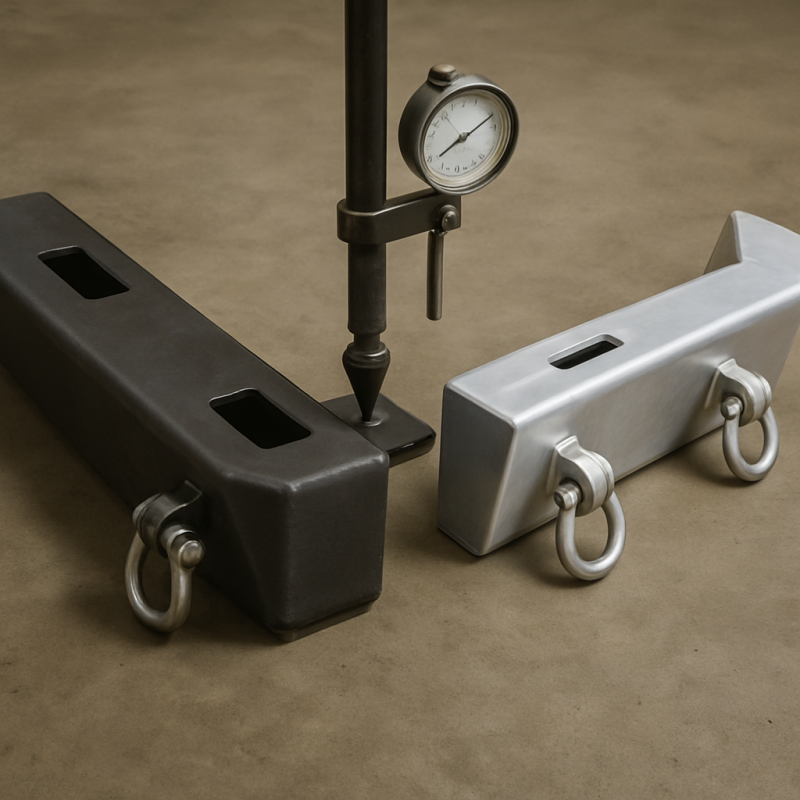
Steel is the stronger material for absorbing direct impacts on the trail. Mild steel's tensile strength of roughly 58,000 PSI outperforms 6061-T6 aluminum's ~45,000 PSI, and steel's superior ductility means it bends and deforms rather than cracking under extreme force.
That said, the strength difference is less dramatic than the raw numbers suggest. Aluminum bumper manufacturers compensate by using thicker material — typically 3/16" to 1/4" plate versus 3/16" for most steel bumpers. This closes the gap considerably for normal off-road impacts.
- Rock strikes: steel absorbs impacts with minor dents; aluminum may crack at weld points under severe force
- Tree contacts: both materials handle glancing blows equally well at trail speeds
- Winch mounting: steel provides a more rigid winch plate, which matters during high-tension recoveries
- Head-on collisions: steel's energy absorption is superior, offering better protection in serious impacts
For serious rock crawling and technical trails, steel remains the standard. The TIOYAR Wrangler Front Bumper is a solid example of a steel crawler bumper with an integrated winch plate and D-rings — exactly the setup you need for technical terrain.
However, if your off-roading is primarily fire roads, desert trails, and moderate rock gardens, aluminum provides more than enough strength. The difference only becomes critical when you're regularly smashing into boulders at low speed or using your bumper as a contact point for recoveries.
TIOYAR Wrangler Front Bumper with Winch Plate & D-Rings
A heavy-duty steel rock crawler bumper with integrated winch plate, aluminum accent lights, and D-rings. Ideal for Wrangler TJ owners who want maximum trail protection at a budget-friendly price.
Check Price On AmazonIf you click this link and buy, we earn a commission at no additional cost to you.

How Much Weight Difference Should You Expect?
Aluminum bumpers weigh 40-50% less than their steel equivalents, and that weight difference has real consequences for your truck's performance, fuel economy, and suspension. A typical steel front bumper weighs 80-120 lbs, while a comparable aluminum bumper comes in at 40-65 lbs.
- Front-end sag: steel bumpers often require upgraded coil springs or leveling kits, adding $200-$500 to the total cost
- Fuel economy: every 100 lbs of added weight reduces fuel efficiency by roughly 1-2%, according to the U.S. Department of Energy
- Braking distance: more weight on the front axle increases stopping distances, especially off-road
- Payload capacity: a heavier bumper eats into your truck's available payload, which matters when loaded for overlanding
Weight matters most for trucks that already carry heavy loads. If you're running a bed rack for overlanding with a rooftop tent, water tanks, and recovery gear, every pound on the front end counts. An aluminum bumper can save 50+ lbs that you can reallocate to cargo.
For half-ton trucks like the F-150 or RAM 1500, the weight savings are especially noticeable. These trucks have lighter front suspensions than three-quarter and one-ton models, and a 100+ lb steel bumper can cause noticeable nose dive under braking. The CALLIERT Aluminum Front Bumper for Jeep Wrangler JL and Gladiator is a good example of how aluminum bumpers keep weight manageable while still offering a winch plate and off-road-ready design.
On heavier platforms like the Silverado 2500 or Super Duty, the weight penalty of steel is less noticeable thanks to beefier suspension components.
CALLIERT Aluminum Front Bumper for Jeep Wrangler JL & Gladiator JT
A lightweight aluminum bumper with winch plate designed for the Wrangler JL and Gladiator JT. Perfect for owners who want front-end protection without the weight penalty of steel.
Check Price On AmazonIf you click this link and buy, we earn a commission at no additional cost to you.

What About Corrosion and Long-Term Durability?
Aluminum wins the corrosion battle decisively. It forms a natural oxide layer that protects against rust without any coatings, while steel bumpers depend entirely on powder coating or paint to prevent corrosion — and once that coating chips from trail debris, rust starts immediately.
- Aluminum: naturally corrosion-resistant, even with scratches and chips in the finish
- Mild steel: rusts quickly when bare; requires regular inspection and touch-up paint
- Stainless steel: resists corrosion but costs 2-3x more and is rarely used for bumpers
- Powder coating quality: varies dramatically between manufacturers — cheap coatings fail within 1-2 years
Your environment matters as much as the material. If you drive in coastal areas with salt air, use your truck in winter states with road salt, or frequently cross water on trails, aluminum's corrosion resistance saves significant maintenance headaches over time.
Steel bumpers in corrosive environments need proactive care. Plan on inspecting the coating every few months and addressing chips immediately with touch-up paint or spray-on bed liner. Even high-quality textured powder coats eventually show rust at bolt holes, weld seams, and impact points.
For trucks that also run grille guards or bull bars, the same corrosion considerations apply to those accessories. Mixing steel and aluminum components on the same truck can cause galvanic corrosion where the two metals contact each other. Always use isolating hardware or rubber washers when mounting aluminum accessories to steel frames.
In dry climates like the Southwest, corrosion is far less of a concern, and steel bumpers can last a decade or more with minimal maintenance. Climate should be a major factor in your material decision.
How Do Costs Compare Between Steel and Aluminum?
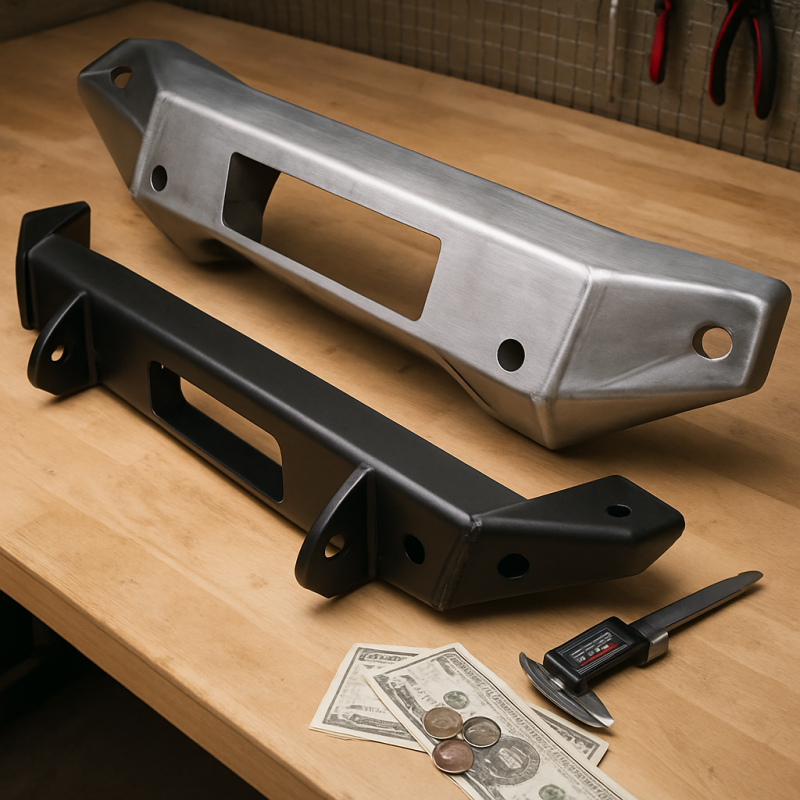
Steel off-road bumpers are significantly cheaper than aluminum alternatives, typically costing 30-50% less for comparable designs. The cost difference comes from both raw material prices and fabrication complexity — aluminum requires specialized TIG welding and more precise manufacturing processes.
| Price Tier | Steel Bumpers | Aluminum Bumpers |
|---|---|---|
| Budget | $400–$600 | $800–$1,000 |
| Mid-Range | $600–$900 | $1,000–$1,500 |
| Premium | $900–$1,200 | $1,500–$2,000+ |
But the sticker price doesn't tell the whole story. Factor in these hidden costs when comparing materials:
- Suspension upgrades: steel bumpers often need upgraded springs or a leveling kit ($200-$500)
- Fuel costs: the extra weight of steel adds up over thousands of miles
- Maintenance: steel requires periodic touch-up paint and rust prevention products
- Resale value: aluminum bumpers hold value better on the used market due to no rust concerns
For budget-conscious builders, steel delivers the best value by a wide margin. The GNG Front and Rear Bumper set for Chevy Silverado 2500/3500 includes both bumpers with a winch plate, LED lights, and D-rings at a price point that's hard to match with aluminum.
Similarly, the VOJEYD Front and Rear Bumper for Toyota Tundra and the UTVJATV Front Bumper for GMC Sierra offer complete steel protection packages with integrated lighting at competitive prices.
If total cost of ownership matters more than upfront price, aluminum can actually be cheaper over a 5+ year ownership period once you factor in suspension wear, fuel, and maintenance savings.
GNG Front and Rear Bumper for Chevy Silverado 2500/3500
Complete front and rear steel bumper set with winch plate, LED lights, and D-rings. An excellent value for heavy-duty truck owners who want full coverage without buying separate pieces.
Check Price On AmazonIf you click this link and buy, we earn a commission at no additional cost to you.

VOJEYD Front and Rear Bumper for Toyota Tundra
Textured powder-coated steel bumper set with 10 aluminum lights and a winch plate. A strong choice for 2007-2013 Tundra owners who want durable off-road protection.
Check Price On AmazonIf you click this link and buy, we earn a commission at no additional cost to you.

Can You Repair and Modify Each Material?
Steel is far easier and cheaper to repair and modify than aluminum. Any local welding shop can patch a bent steel bumper with basic MIG welding equipment, while aluminum repair requires specialized TIG welding skills that not every shop offers — and it costs more when you find one.
- Steel repair: MIG weldable, straightforward to cut and reshape, most fabrication shops can handle it
- Aluminum repair: requires TIG welding with argon gas shielding, specialized filler rod, and experienced welder
- Field repairs: steel can be hammered back into shape on the trail; aluminum is more likely to crack than bend
- Custom modifications: adding light tabs, antenna mounts, or fairlead openings is simple on steel
This repairability difference is a major consideration for remote overlanding. If you're hundreds of miles from the nearest town on a backcountry trail, a bent steel bumper can be hammered or cut to keep you moving. A cracked aluminum bumper may leave you stranded.
Modifications are another area where steel shines. Want to add a light bar mount? Weld on some tabs. Need to fit a different winch? Cut and re-fabricate the plate. Steel's forgiveness makes it the preferred material for custom builds where the design may evolve over time.
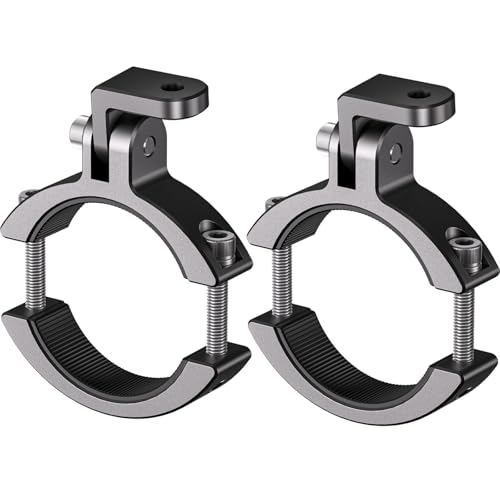
For trucks that also need mud flaps or other accessories that bolt near the bumper area, steel provides more flexibility for drilling and mounting without worrying about material cracking. When mounting accessories like LOKTENWO LED Light Bar Mounting Brackets, aluminum alloy brackets pair well with either bumper material and keep accessory weight minimal.
That said, aluminum's difficulty to modify can be seen as a positive — it forces you to buy the right bumper from the start rather than cobbling together modifications over time.
LOKTENWO LED Light Bar Mounting Brackets for Bull Bars & Bumpers
Lightweight aluminum alloy mounting brackets that fit 1.85"-3" diameter bars. A simple add-on for mounting auxiliary lighting to any steel or aluminum off-road bumper.
Check Price On AmazonIf you click this link and buy, we earn a commission at no additional cost to you.
Which Material Is Better for Winch Mounting?
Both steel and aluminum bumpers can safely mount winches up to 12,000 lbs, but steel provides a stiffer, more forgiving platform for high-stress recovery situations. The rigidity of steel distributes winch loads more evenly across the bumper structure and into the frame mounts.
- Steel winch plates: handle repeated high-load recoveries without fatigue cracking
- Aluminum winch plates: adequate for occasional recoveries but more susceptible to stress fractures over time
- Frame integration: both materials bolt to the same frame mounting points — the frame is the limiting factor, not the bumper
- Fairlead compatibility: both support standard Hawse and roller fairleads
If you run a winch regularly for self-recovery or helping others on the trail, steel is the safer choice. The repeated loading and unloading cycles of winch use can cause aluminum to fatigue at weld points over time — a failure mode that doesn't give much warning.
For occasional winch use — the kind where you carry a winch "just in case" and use it a few times per year — aluminum is perfectly adequate. Most aluminum off-road bumpers from reputable manufacturers are rated for winches up to 10,000-12,000 lbs, which covers the majority of truck-mounted winches.
According to WARN Industries, proper winch mounting depends more on the bumper-to-frame connection than the bumper material itself. Ensure your bumper uses grade 8 mounting hardware and ties into the frame rails — not just the bumper brackets.
The bottom line: steel is better for heavy, frequent winching. Aluminum works fine for occasional use on a properly engineered bumper.
Which Should You Choose for Your Build?
The best bumper material depends on your specific truck, driving style, and priorities. There's no universally "better" option — only the right option for your situation. Here's a decision framework to make the choice clear.
Choose steel if you:
- Do regular rock crawling or technical trail riding
- Use your winch frequently for recoveries
- Want the most affordable bumper option upfront
- Plan to modify or customize your bumper over time
- Drive a three-quarter-ton or one-ton truck that handles the extra weight easily
- Live in a dry climate where rust isn't a major concern
Choose aluminum if you:
- Prioritize fuel economy and reduced front-end weight
- Drive a half-ton truck where every pound counts
- Live in a coastal or high-humidity area
- Use your truck primarily for overlanding and long-distance travel
- Want a bumper that holds resale value
- Prefer minimal maintenance over the life of the bumper
| Use Case | Recommended Material | Reason |
|---|---|---|
| Rock crawling | Steel | Maximum impact protection and repairability |
| Overlanding | Aluminum | Weight savings for loaded trucks |
| Daily driver + weekends | Aluminum | Best balance of protection and fuel economy |
| Budget build | Steel | 30-50% cheaper upfront |
| Coastal/salt environment | Aluminum | Natural corrosion resistance |
| Heavy towing + off-road | Steel | Rigidity under combined loads |
Don't forget to consider your full build. If you're also adding fender flares, rock sliders, and a rear bumper, the cumulative weight of steel components adds up fast. An all-steel armor package on a half-ton truck can easily add 300-400 lbs — enough to require suspension upgrades and noticeably impact handling.
Whatever material you choose, buy from a manufacturer that provides vehicle-specific fitment, uses appropriate plate thickness, and includes proper frame mounting hardware. A well-engineered aluminum bumper outperforms a cheaply made steel one every time.
Related Articles
- Best Truck Bed Racks for Overlanding — Relevant when discussing weight management for overlanding builds that combine bumpers with bed racks and cargo
- Best Truck Grille Guards for Front-End Protection — Related front-end protection accessory that faces similar corrosion considerations as off-road bumpers
- Best Truck Bull Bars for Front-End Protection — Alternative front-end protection option mentioned alongside grille guards in the corrosion section
- Best Truck Mud Flaps for Every Setup — Complementary accessory that bolts near the bumper area, relevant to the modification and mounting discussion
- Best Truck Fender Flares for Silverado & F-150 — Part of a full armor build where cumulative weight of steel vs aluminum components becomes a significant factor
Conclusion
Recommended Products
TIOYAR Wrangler Front Bumper with Winch Plate & D-Rings
A heavy-duty steel rock crawler bumper with integrated winch plate, aluminum accent lights, and D-rings. Ideal for Wrangler TJ owners who want maximum trail protection at a budget-friendly price.
Check Price On AmazonIf you click this link and buy, we earn a commission at no additional cost to you.
CALLIERT Aluminum Front Bumper for Jeep Wrangler JL & Gladiator JT
A lightweight aluminum bumper with winch plate designed for the Wrangler JL and Gladiator JT. Perfect for owners who want front-end protection without the weight penalty of steel.
Check Price On AmazonIf you click this link and buy, we earn a commission at no additional cost to you.
GNG Front and Rear Bumper for Chevy Silverado 2500/3500
Complete front and rear steel bumper set with winch plate, LED lights, and D-rings. An excellent value for heavy-duty truck owners who want full coverage without buying separate pieces.
Check Price On AmazonIf you click this link and buy, we earn a commission at no additional cost to you.
VOJEYD Front and Rear Bumper for Toyota Tundra
Textured powder-coated steel bumper set with 10 aluminum lights and a winch plate. A strong choice for 2007-2013 Tundra owners who want durable off-road protection.
Check Price On AmazonIf you click this link and buy, we earn a commission at no additional cost to you.
LOKTENWO LED Light Bar Mounting Brackets for Bull Bars & Bumpers
Lightweight aluminum alloy mounting brackets that fit 1.85"-3" diameter bars. A simple add-on for mounting auxiliary lighting to any steel or aluminum off-road bumper.
Check Price On AmazonIf you click this link and buy, we earn a commission at no additional cost to you.
Frequently Asked Questions
Are aluminum off-road bumpers strong enough for rock crawling?
How much do steel off-road bumpers weigh compared to aluminum?
Do aluminum bumpers rust over time?
Can you mount a winch on an aluminum off-road bumper?
Why are aluminum bumpers more expensive than steel?
Will a steel bumper cause my truck to sag in the front?
Can you weld a cracked aluminum bumper?
Is it okay to mix steel and aluminum off-road accessories on the same truck?
Affiliate Disclosure: This article contains affiliate links. If you purchase through these links, we may earn a commission at no extra cost to you.