Truck Camper Shell vs Bed Tent
Key Takeaways
- Camper shells cost $1,000–$3,500+ installed but add permanent weatherproof storage and improve fuel efficiency by 1–3 MPG.
- Truck bed tents cost $150–$400, set up in under 15 minutes, and remove completely when not needed for camping.
- Choose a camper shell if you need daily cargo protection, year-round security, and plan to camp frequently in all weather conditions.
- Choose a bed tent if you camp occasionally, want to keep your truck bed open for hauling, and prefer a lower upfront investment.
- Many truck owners eventually buy both — a soft topper for daily use and a bed tent for spontaneous weekend trips.
What Is the Difference Between a Camper Shell and a Bed Tent?
A camper shell is a rigid or semi-rigid structure that bolts onto your truck bed rails and creates a fully enclosed cargo area. A bed tent is a collapsible fabric shelter that attaches temporarily to your truck bed for camping. They serve fundamentally different primary purposes.
| Feature | Camper Shell | Bed Tent |
|---|---|---|
| Primary Purpose | Cargo protection + camping | Camping only |
| Installation | Semi-permanent (bolted) | Temporary (10–15 min setup) |
| Weight | 150–250 lbs | 10–25 lbs |
| Price Range | $1,000–$3,500+ | $150–$400 |
| Weather Protection | Excellent (4 seasons) | Moderate (3 seasons) |
| Security | Lockable doors/windows | Fabric only (no locks) |
| Fuel Efficiency Impact | +1 to 3 MPG improvement | No impact when removed |
| Daily Usability | Always available | Must be set up each time |
Camper shells come in three main types: fiberglass hardtops, aluminum canopies, and newer soft or inflatable toppers. Fiberglass shells like those from Leer and ARE match your truck's paint and look factory-installed. Aluminum canopies prioritize function over form and are popular with contractors.
- Hardtop fiberglass shells: most weather-resistant, paint-matched, heaviest
- Aluminum canopies: lighter, utilitarian, great for work trucks
- Soft/inflatable toppers: removable in minutes, budget-friendly, lighter
Bed tents are simpler — most use a pole-and-fabric design that clamps to your bed rails and wraps around the tailgate. Some premium models include integrated rain flies and vestibules for gear storage.
How Do Costs Compare Between Camper Shells and Bed Tents?
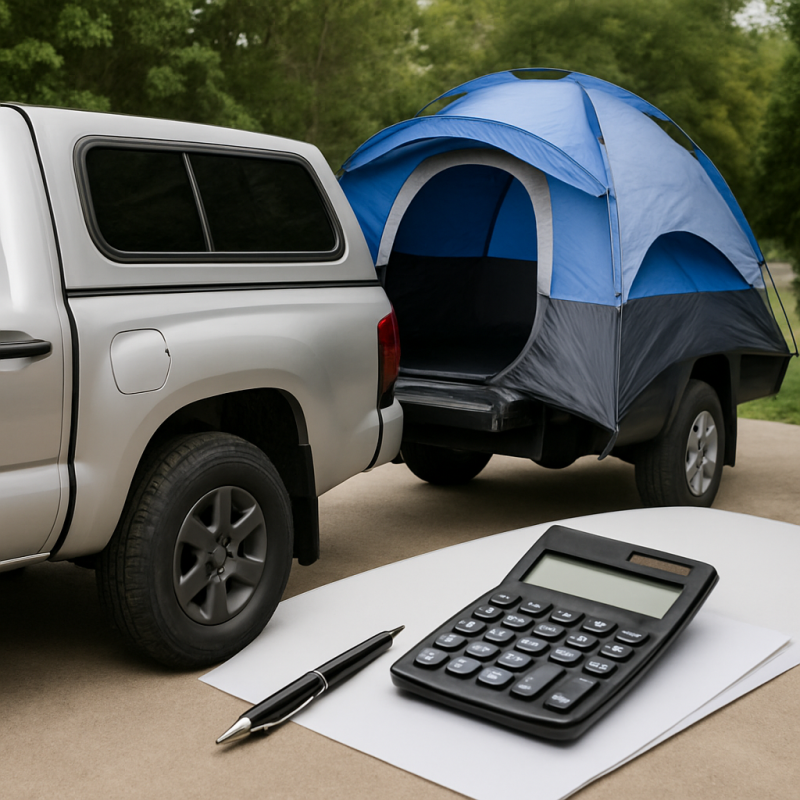
Camper shells cost 5–10 times more than bed tents upfront, but they add resale value to your truck and serve double duty as daily cargo protection. The total cost of ownership tells a more nuanced story than sticker price alone.
| Cost Factor | Camper Shell | Bed Tent |
|---|---|---|
| Purchase Price | $1,000–$3,500 | $150–$400 |
| Professional Install | $100–$300 | $0 (DIY) |
| Accessories (lights, racks, insulation) | $200–$800 | $50–$150 |
| Resale Value Added | $500–$1,500 | $0 |
| Replacement Frequency | 10–20 years | 3–5 years |
Here's what each price tier gets you with camper shells:
- $1,000–$1,500: soft toppers and inflatable caps — the JOYTUTUS Foldable Truck Bed Soft Topper falls in this range and offers a foldable, removable design
- $1,500–$2,500: basic fiberglass or aluminum shells with manual windows
- $2,500–$3,500+: premium paint-matched fiberglass with power locks, LED lighting, and carpeted interiors
Bed tents in the $150–$250 range cover most campers well. You get a waterproof rain fly, mesh windows for ventilation, and a floor that fits standard 5.5–6.5 ft beds. Premium models around $300–$400 add thicker fabric, better pole systems, and integrated awnings. Check our roundup of truck bed tents for camping for top-rated options at every price point.
FLATED AirTopper CAP80 Inflatable Truck Cap
Innovative inflatable camper shell that sets up in minutes and packs into a duffel bag. Perfect for truck owners who want shell-level protection without permanent installation or heavy lifting.
Check Price On AmazonIf you click this link and buy, we earn a commission at no additional cost to you.

Which Offers Better Weather Protection?
Camper shells win on weather protection by a wide margin. A fiberglass or aluminum shell is waterproof, windproof, and insulated enough for four-season use. Bed tents handle light rain and mild cold but struggle in heavy storms, snow, or sustained winds above 30 MPH.
- Rain: Camper shells shed water completely with no seam leaks. Bed tents rely on rain flies and sealed seams — most perform well in moderate rain, but prolonged downpours can cause dripping at pole contact points.
- Wind: Shells are aerodynamic and immovable. Tents flex and flap in wind gusts, making sleep difficult above 25–30 MPH winds.
- Cold: An insulated shell with a sleeping platform and good sleeping bag handles temperatures down to 20°F comfortably. Tents offer one thin fabric layer — you'll feel the cold below 40°F.
- Heat: Shells trap heat without adequate ventilation windows. Tents breathe better with mesh panels — advantage tent in summer.
If you camp primarily in spring and fall, a bed tent handles those conditions fine. For winter camping, mountain weather, or rainy climates like the Pacific Northwest, a camper shell is the only serious option.
One important note: camper shells require additional ventilation planning. Without cracking windows or adding a vent fan, condensation builds up overnight and soaks your gear. The condensation management challenge is the most common complaint from truck camper owners.
How Easy Is Setup and Removal?
Bed tents take 10–15 minutes to set up and pack down completely. Camper shells require 30–90 minutes and two people for removal — most owners leave them installed permanently. This is the biggest practical difference between the two options.
Here's what setup looks like for each:
- Bed tent setup: unfold the tent, extend the poles, clamp to bed rails, secure rain fly. One person, no tools. Packs into a carry bag that fits behind your rear seats.
- Camper shell installation: lift 150–250 lb shell onto bed rails (need two people or a hoist), align mounting clamps, tighten bolts, connect brake light wiring. First install takes 60–90 minutes.
- Camper shell removal: disconnect wiring, loosen clamps, lift off with help. Need a storage space (garage ceiling hoist is popular).
The newer soft toppers and inflatable shells split the difference nicely. Products like the FLATED AirTopper CAP80 Inflatable Truck Cap inflate in minutes and deflate for storage without needing a second person or a garage hoist. They weigh under 50 lbs and store in a duffel bag.
If you frequently switch between hauling mode and camping mode, a bed tent or soft topper makes more sense than a traditional hard shell. Contractors and weekend warriors who haul lumber or ATVs during the week shouldn't commit to a permanent fiberglass shell unless they have a second truck or a reliable removal system.
JOYTUTUS Foldable Truck Bed Soft Topper for F150
A budget-friendly soft topper that folds for easy removal. Great middle-ground option for F-150 owners who want camper shell protection without permanent installation.
Check Price On AmazonIf you click this link and buy, we earn a commission at no additional cost to you.

What About Interior Space and Sleeping Comfort?
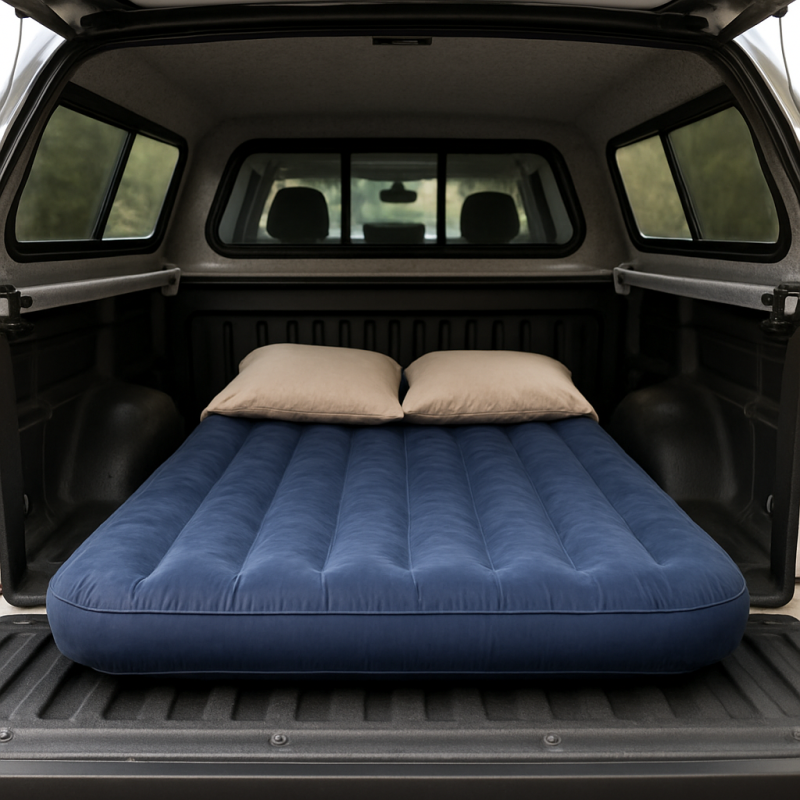
Both options give you roughly the same footprint — your truck bed dimensions dictate floor space. The real difference is headroom and livability. Camper shells offer 20–30 inches of clearance above the bed rails, while most bed tents provide 40–60 inches at their peak.
- Camper shell headroom: 20–30 inches above bed rails. You can sit up if you're on the bed floor, but standing is impossible. Feels enclosed and cave-like.
- Bed tent headroom: 40–60 inches at peak. More open, airy feel. Easier to change clothes and move around.
- Floor space: identical for both — limited by your bed length (5.5, 6.5, or 8 ft) and width (~50–65 inches between wheel wells).
For sleeping comfort, the shelter type matters less than your mattress setup. Both options benefit enormously from a proper truck bed air mattress or foam pad. Sleeping directly on a bed liner or bare metal is miserable regardless of what's over your head.
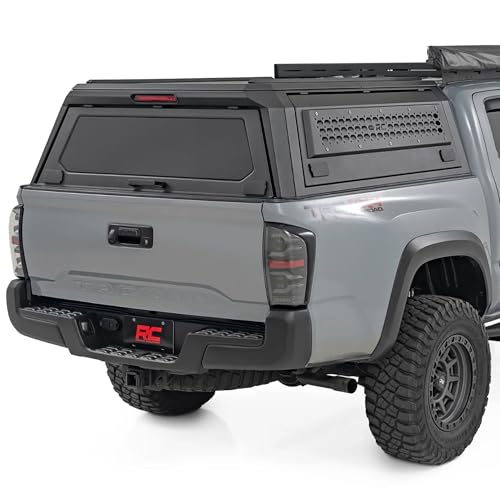
Camper shells have one comfort advantage: interior accessories. You can install LED light strips, a 12V fan, shelving, and a carpet kit to create a genuine micro-camper. The Rough Country Truck Bed Cap Topper comes with LED interior lighting, Molle panels for gear organization, and locking gullwing access doors — features no bed tent can match.
Bed tents counter with better ventilation. Multiple mesh windows and a breathable canopy top keep air flowing on warm nights. In a camper shell, you're managing condensation and heat buildup unless you invest in aftermarket ventilation.
Rough Country Truck Bed Cap Topper for Tacoma
Premium hard shell with LED interior lighting, Molle panels, and locking gullwing doors. The best camper shell option for Tacoma owners who want a full-featured micro-camper build.
Check Price On AmazonIf you click this link and buy, we earn a commission at no additional cost to you.
Which Is Better for Security and Daily Use?
Camper shells are dramatically better for security. A lockable fiberglass shell protects tools, gear, and valuables from theft and weather every day — not just on camping trips. Bed tents offer zero security since they're made of fabric and designed to be temporary.
- Theft protection: camper shells have lockable rear doors and windows. Most use keyed-alike locks matching your tailgate. A bed tent can be unzipped by anyone.
- Daily cargo protection: shells keep groceries dry, tools secure, and dogs contained. Tents pack away between trips.
- Resale value: a quality camper shell adds $500–$1,500 to your truck's resale value. Tents add nothing.
- Insurance: some policies cover items stored in a locked camper shell as part of your vehicle. Items in an open bed or tent typically aren't covered.
For daily drivers, a camper shell transforms your truck into something closer to an SUV. You gain a weatherproof, lockable trunk space for everything from camping gear to grocery runs. Browse our picks for the best truck bed canopies and toppers to find one that fits your truck and budget.
If you primarily use your truck bed for hauling — lumber, motorcycles, furniture, ATVs — a permanent shell gets in the way. A bed tent stays packed in your backseat until you need it, leaving your bed completely open for work. This is the core trade-off: permanent protection vs. maximum flexibility.
Some owners solve this by running a hard truck cap with locking function during winter months and switching to an open bed with a tent for summer camping season.
Truck Cap for RAM 1500/2500 with Locking Function
Hard top canopy with integrated locking system for RAM trucks. Delivers the daily security and weather protection that makes camper shells worth the investment for full-time daily drivers.
Check Price On AmazonIf you click this link and buy, we earn a commission at no additional cost to you.

How Do They Affect Fuel Economy and Truck Performance?
A properly fitted camper shell can improve fuel economy by 1–3 MPG by smoothing airflow over the truck bed. An open truck bed creates a turbulent air pocket that increases drag. Bed tents have zero impact on fuel economy because they're removed during driving.
- Camper shell aerodynamics: reduces drag coefficient by enclosing the bed cavity. According to testing by MotorTrend, truck bed enclosures can improve highway fuel economy measurably, though results vary by truck model and driving conditions.
- Weight penalty: fiberglass shells add 150–250 lbs, which slightly offsets aero gains. Soft toppers add only 30–50 lbs.
- Bed tent weight: 10–25 lbs packed. No drag impact since you drive with it removed.
The fuel savings from a camper shell are modest — roughly $200–$500 per year depending on your mileage and gas prices. Over a 10-year ownership period, that adds up to $2,000–$5,000 in savings, which partially offsets the higher purchase price.
Other performance considerations:
- Payload capacity: a 200 lb shell reduces your payload by 200 lbs. For half-ton trucks with 1,500 lb payloads, this is rarely an issue. For maxed-out towing setups, every pound matters.
- Rear visibility: shells with tinted or solid rear panels reduce your rearview mirror visibility. Most have glass rear windows with defrosters, but they're smaller than your original rear window.
- Height clearance: shells add 18–24 inches to your truck height. Watch for parking garages and low-hanging branches.
Which Should You Choose? Recommendations by Use Case
The right choice depends entirely on how you use your truck. Here are definitive recommendations for the most common scenarios — no fence-sitting.
Choose a camper shell if:
- You camp more than 6 times per year: the convenience of a permanent setup pays off quickly with frequent use
- You need daily cargo security: tools, gear, and valuables stay locked and dry every day
- You camp in cold or rainy climates: four-season weather protection is non-negotiable
- You want to build a micro-camper: shells support interior buildouts with platforms, lighting, and storage systems
- Your truck is a daily driver: the SUV-like enclosed bed adds everyday utility
Choose a bed tent if:
- You camp 1–5 times per year: the low cost makes occasional use sensible
- You haul regularly: keep your bed open for lumber, ATVs, or furniture between camping trips
- You're on a tight budget: $150–$300 gets you camping without a major investment
- You own multiple vehicles: a bed tent moves between trucks easily
- You camp in warm weather only: three-season fabric shelter is perfectly adequate
Consider both if:
- You want a soft topper for daily cargo protection plus a bed tent for warm-weather overflow camping
- You swap seasonally — shell in winter, open bed in summer
For most truck owners who camp occasionally and haul regularly, a bed tent is the smarter first purchase. You can always add a camper shell later. But if your truck is primarily a daily driver and weekend adventure rig, invest in a quality camper shell from the start — it pays for itself in convenience, security, and fuel savings within two to three years.
Related Articles
- Best Truck Bed Tents for Camping — Comprehensive review of top-rated truck bed tents for readers who decide a tent is the right choice
- Best Truck Bed Canopies and Toppers — Detailed reviews of camper shells and toppers for readers who want to invest in a permanent solution
- Best Truck Bed Air Mattresses for Camping — Essential sleeping comfort upgrade that works with both camper shells and bed tents
- Best Truck Bed Sleeping Platforms for Camping — Elevated sleeping platforms that pair well with camper shells for micro-camper buildouts
Conclusion
Recommended Products
JOYTUTUS Foldable Truck Bed Soft Topper for F150
A budget-friendly soft topper that folds for easy removal. Great middle-ground option for F-150 owners who want camper shell protection without permanent installation.
Check Price On AmazonIf you click this link and buy, we earn a commission at no additional cost to you.
Rough Country Truck Bed Cap Topper for Tacoma
Premium hard shell with LED interior lighting, Molle panels, and locking gullwing doors. The best camper shell option for Tacoma owners who want a full-featured micro-camper build.
Check Price On AmazonIf you click this link and buy, we earn a commission at no additional cost to you.
FLATED AirTopper CAP80 Inflatable Truck Cap
Innovative inflatable camper shell that sets up in minutes and packs into a duffel bag. Perfect for truck owners who want shell-level protection without permanent installation or heavy lifting.
Check Price On AmazonIf you click this link and buy, we earn a commission at no additional cost to you.
Truck Cap for RAM 1500/2500 with Locking Function
Hard top canopy with integrated locking system for RAM trucks. Delivers the daily security and weather protection that makes camper shells worth the investment for full-time daily drivers.
Check Price On AmazonIf you click this link and buy, we earn a commission at no additional cost to you.
Frequently Asked Questions
Can you sleep in a truck camper shell?
How much does a truck camper shell cost?
Are truck bed tents worth it?
Do camper shells improve gas mileage?
Can you use a truck bed tent in the rain?
How long does it take to install a camper shell?
Do truck bed tents fit all trucks?
Can you stand up in a truck bed tent?
Affiliate Disclosure: This article contains affiliate links. If you purchase through these links, we may earn a commission at no extra cost to you.