How to Insulate Your Truck Bed for Cold Weather
Key Takeaways
- Rigid foam board insulation (R-5 to R-10) is the most effective and affordable option for truck bed insulation, costing under $50 for most setups.
- Sealing gaps around the tailgate, bed rails, and tonneau cover with EPDM rubber weatherstripping eliminates the biggest source of cold air infiltration.
- A proper insulation setup combines three layers: a bed liner or mat on the bottom, foam insulation on the walls and floor, and reflective radiant barrier on top.
- Preparing your truck bed surface by cleaning, degreasing, and drying it is critical — insulation adhesive fails on dirty or damp metal surfaces.
- A fully insulated truck bed with a canopy or tent can maintain temperatures 20-30°F warmer than outside air, making winter camping comfortable down to single digits.
Why Does Truck Bed Insulation Matter in Cold Weather?
Bare metal truck beds lose heat at an alarming rate because steel conducts thermal energy roughly 1,000 times faster than air. Without insulation, your truck bed becomes a cold plate that radiates chill into everything it touches — gear, cargo, or your sleeping bag.
- Heat loss reduction: Proper insulation creates an R-value barrier that slows conductive heat transfer through the metal bed floor and walls
- Condensation prevention: When warm air meets cold metal, moisture condenses — leading to rust, mold, and wet gear. Insulation keeps interior surfaces above the dew point
- Cargo protection: Liquids, electronics, paint, and food can all be damaged by freezing temperatures during transport
- Camping comfort: A well-insulated truck bed with a quality truck bed tent can maintain temperatures 20-30°F warmer than outside air
The U.S. Department of Energy rates insulation by R-value — the higher the number, the better it resists heat flow. For truck beds, you want a minimum R-5 for mild cold (30-40°F) and R-10 or higher for extreme cold (below 20°F).
Insulation also reduces noise. Road vibration resonates through bare metal, but foam insulation dampens those frequencies significantly. You'll notice a quieter ride immediately after installation.
What Materials Do You Need to Insulate a Truck Bed?
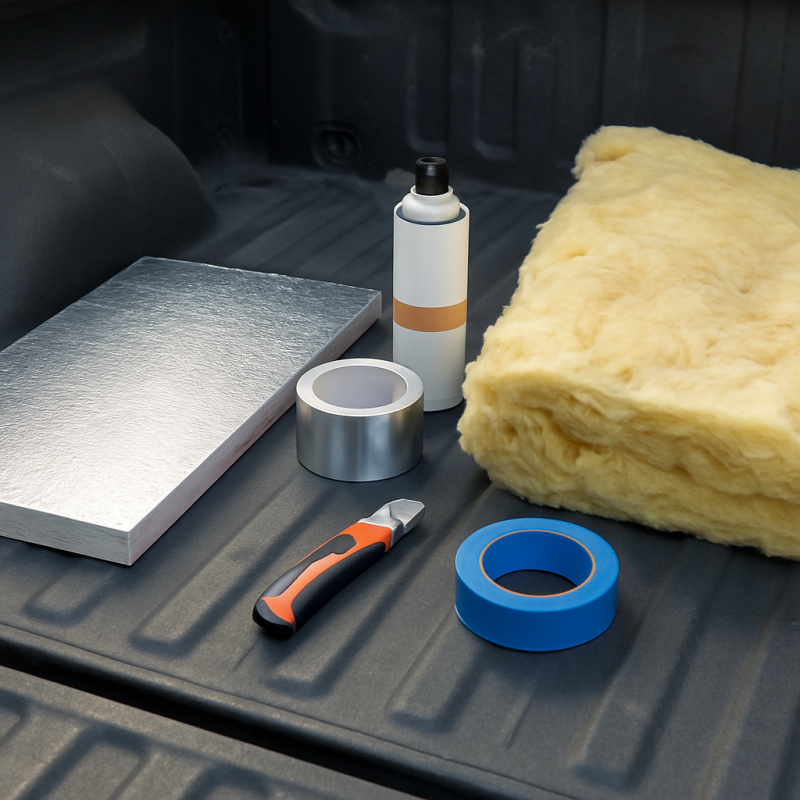
The best truck bed insulation setup uses rigid foam board as the primary barrier, reflective radiant material as a secondary layer, and weatherstripping to seal all gaps. Here's your complete materials list with estimated costs.
Primary insulation (choose one):
- Extruded polystyrene (XPS) foam board: Pink or blue rigid panels, R-5 per inch, moisture-resistant, easy to cut — the best all-around choice ($15-$30 for a 4×8 sheet)
- Polyisocyanurate (polyiso) foam board: Foil-faced, R-6.5 per inch, doubles as a radiant barrier — best for extreme cold ($20-$40 per sheet)
- Closed-cell spray foam: R-6.9 per inch, fills irregular shapes perfectly — best for permanent installations ($40-$80 per kit)
Supporting materials:
- Reflective bubble insulation: Adds R-1 to R-2 and reflects radiant heat back inward ($20-$40 per roll)
- EPDM rubber weatherstripping: Seals gaps around tailgate, bed rails, and cover edges
- Foil tape or spray adhesive: Secures insulation panels without permanent modification ($5-$10)
- Utility knife and straight edge: For cutting foam to precise dimensions
- Measuring tape: Essential for templating panel cuts
- Rubbing alcohol and rags: For surface preparation before adhesive application
A good truck bed mat underneath your insulation protects both the bed surface and the foam from abrasion. Budget $50-$150 total depending on which materials you choose.
How Do You Prepare Your Truck Bed for Insulation?
Proper surface preparation is the most overlooked step — and the main reason insulation fails prematurely. Spend 30-45 minutes cleaning your truck bed before you cut a single piece of foam.
Step 1: Remove everything from the bed.
- Take out bed liners, mats, toolboxes, and any cargo
- Remove tie-down hooks or accessories that will interfere with panel placement
- If you have a spray-in bed liner, leave it — insulation adheres well to textured liner surfaces
Step 2: Deep clean the bed surface.
- Sweep out debris: Remove dirt, leaves, gravel, and loose material
- Degrease the metal: Use rubbing alcohol or automotive degreaser on all surfaces where adhesive will contact metal
- Scrub rust spots: Wire brush any surface rust and apply a rust converter before insulating over it
- Dry completely: Moisture trapped under insulation causes corrosion — allow 1-2 hours to air dry or use a leaf blower
Step 3: Measure and template.
Measure the floor length and width, both sidewall heights, the front wall dimensions, and note the locations of wheel wells, stake pockets, and drain holes. Sketch a rough layout on paper — this saves material and prevents costly cutting mistakes.
Don't cover bed drain holes. Either cut around them or create removable panels over those areas so water can still escape.
How Do You Install Rigid Foam Board Insulation?
Installing rigid foam insulation takes 1-2 hours once your bed is prepped. Work from the floor up — install the bed floor first, then sidewalls, then the front wall. This order ensures snug corner fits.
Step 1: Cut the floor panels.
- Transfer your floor measurements onto the foam board
- Use a straight edge and sharp utility knife — score the foam twice, then snap along the line
- Cut panels slightly undersized (1/4 inch smaller than measurements) so they drop in without forcing
- Cut notches for wheel wells using a jigsaw or serrated knife for curved cuts
Step 2: Install floor insulation.
- Lay panels into the bed floor — gravity holds them in place
- For added security, apply spray adhesive to the bed surface before placing panels
- Butt panels tightly together and seal seams with foil tape
Step 3: Cut and install sidewall panels.
- Measure each sidewall section between stake pockets
- Cut panels to fit snugly between the bed floor insulation and the top of the bed rail
- Apply spray adhesive to the metal sidewall, then press the foam panel firmly in place
- Hold for 30-60 seconds until the adhesive grabs
Step 4: Install front wall insulation.
- Cut a panel to fit the front wall below the cab window
- Adhesive works best here since this panel bears no weight
- Seal all edges where panels meet with foil tape to eliminate thermal bridging
If you're building a more permanent sleeping setup, consider adding a truck bed sleeping platform on top of the insulated floor for an air gap that adds even more thermal resistance.
How Do You Seal Gaps and Prevent Cold Air Leaks?
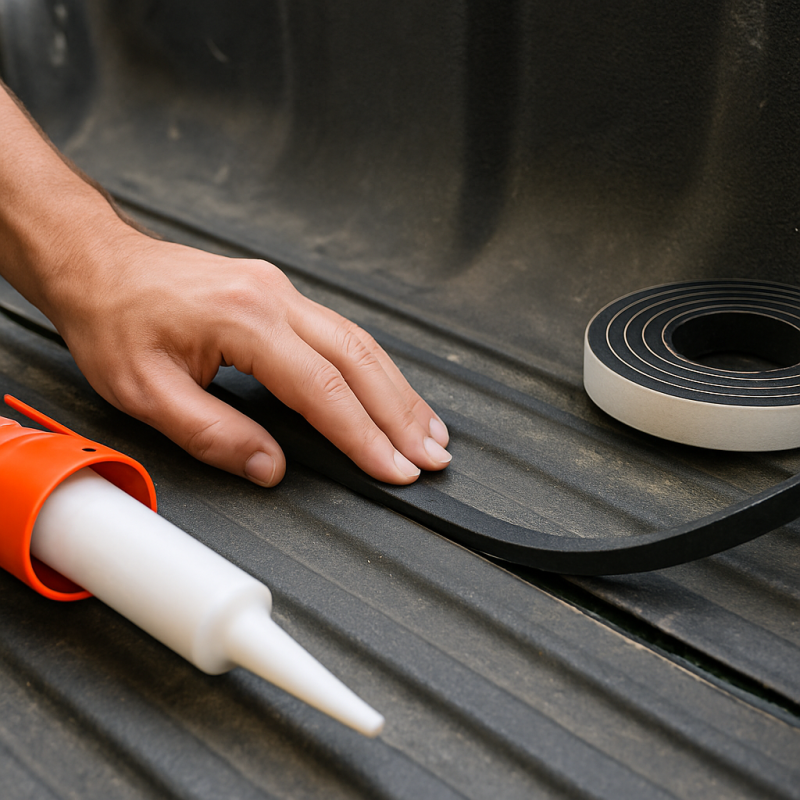
Gaps around the tailgate, bed rails, and tonneau cover let cold air pour in and destroy your insulation's effectiveness. Sealing these gaps is just as important as the insulation itself — sometimes more so.
Tailgate seal:
- The tailgate gap is the single biggest source of cold air infiltration
- Apply EPDM rubber weatherstripping along the top and sides of the tailgate where it meets the bed
- Self-adhesive strips work best — clean the surface with rubbing alcohol first, then press firmly along the entire seam
- Use D-shaped profiles for larger gaps (over 3/8 inch) and flat profiles for tighter seals
Bed rail and tonneau cover seals:
- If you have a tonneau cover, check the existing rubber seals for cracks or compression wear
- Replace worn seals with D-shaped EPDM weatherstripping rated for outdoor and automotive use
- For truck bed canopies and toppers, seal the mounting points where the shell meets the bed rails
Other leak points to address:
- Stake pocket holes: Stuff with closed-cell foam plugs or cover with foil tape
- Bed bolt access holes: Seal from underneath with silicone or foam plugs
- Tailgate cable holes: Pack with small pieces of foam insulation
Test your seal job by closing the tailgate at night and shining a flashlight from inside — any light escaping reveals an air gap that needs attention. According to Energy.gov, air sealing alone can reduce heating needs by up to 30%.
UIOCSSC 26Ft EPDM Rubber Weather Stripping
Essential for sealing tailgate and bed rail gaps that let cold air infiltrate your insulated truck bed. The 26-foot roll covers all seams on a full-size pickup with material to spare.
Check Price On AmazonIf you click this link and buy, we earn a commission at no additional cost to you.
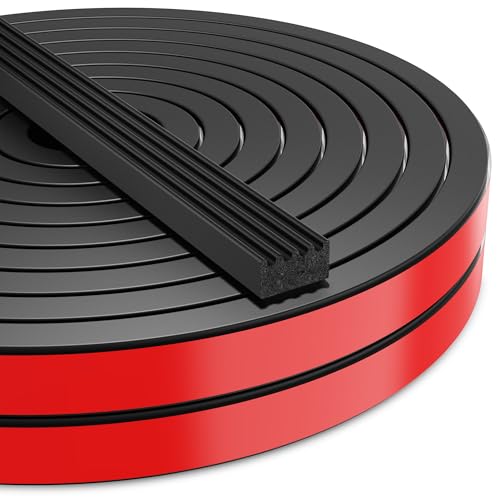
UIOCSSC EPDM Rubber D-Shaped Weather Stripping
The D-shaped profile fills larger gaps around tonneau covers and canopy mounting points where standard flat weatherstripping can't create a complete seal.
Check Price On AmazonIf you click this link and buy, we earn a commission at no additional cost to you.

How Can You Add Extra Warmth for Winter Camping?
Once your truck bed is insulated and sealed, you can push cold-weather comfort even further with layered warmth strategies. These additions are especially valuable if you're sleeping in your truck below 20°F.
Reflective radiant barrier:
- Layer reflective bubble insulation over your foam board panels — the foil surface reflects up to 97% of radiant heat back toward you
- Attach with foil tape to the top surface of your rigid insulation
- This adds R-1 to R-2 and dramatically reduces heat loss through radiation
Insulated sleeping system:
- Use a truck bed air mattress or thick sleeping pad — air mattresses provide an insulating air gap between you and the floor
- An insulated truck bed air mattress designed specifically for pickup beds gives the best combination of comfort and thermal protection
- Layer a closed-cell foam pad under your air mattress for a combined R-value of R-8 to R-12 at your sleeping surface
Truck bed tent or canopy:
- A Napier Backroadz Truck Tent with rainfly creates a trapped air pocket above the bed that acts as additional insulation
- The tent fabric blocks wind chill while the rainfly adds a second air barrier
- Combined with bed insulation, tent setups routinely keep interior temps 25-35°F warmer than outside
Safe heating options:
- Portable propane heater (ventilated): Mr. Buddy heaters work but require cracking a window for oxygen — the CPSC warns that CO poisoning is a serious risk in enclosed spaces
- 12V heated blankets: Plug into your truck's power outlet — safe and effective for mild cold
- Hot water bottles: Zero risk, surprisingly effective when placed in your sleeping bag 15 minutes before bedtime
hufaut Camping Pickup Truck Bed Air Mattress
This thickened air mattress adds a substantial insulating air gap above your foam insulation, keeping you warmer through the night. Designed specifically for 5.5-5.8ft short bed pickups.
Check Price On AmazonIf you click this link and buy, we earn a commission at no additional cost to you.

Napier Backroadz Truck Tent
Creates the enclosed airspace above your insulated truck bed that makes the whole system work. The rainfly adds a second insulating air layer, and setup takes just 10 minutes.
Check Price On AmazonIf you click this link and buy, we earn a commission at no additional cost to you.

What Are Common Mistakes When Insulating a Truck Bed?
Most failed truck bed insulation projects share the same handful of mistakes. Avoid these and your setup will last for years instead of falling apart after one trip.
- Skipping surface prep: Adhesive won't bond to dirty, oily, or damp metal. This is the number one reason insulation panels fall off sidewalls within days. Always degrease and dry thoroughly before applying anything.
- Using the wrong foam type: Open-cell foam (like household fiberglass batts) absorbs water like a sponge. In a truck bed exposed to rain, snow, and condensation, this leads to mold and rust. Always use closed-cell foam — XPS, polyiso, or closed-cell spray foam.
- Ignoring air gaps: Insulation panels with unsealed seams allow convective heat loss. Cold air circulates through gaps and bypasses your insulation entirely. Tape every seam with foil tape.
- Covering drain holes permanently: Your truck bed has drain holes for a reason. Permanently sealing them traps water inside, creating a rust problem. Use removable panels or foam plugs over drains.
- Choosing too-thin insulation: A single 1/2-inch foam panel provides only R-2.5 — barely noticeable in freezing temperatures. For serious cold weather use, go with 1.5 to 2 inches minimum (R-7.5 to R-10).
- Forgetting the tailgate: An unsealed tailgate negates your entire insulation project. Cold air rushes in through the bottom gap and creates a wind tunnel effect.
Also consider your truck bed liner situation. Spray-in liners provide a good bonding surface for adhesive, but drop-in liners can trap moisture between the liner and metal bed. Remove drop-in liners before insulating, or insulate on top of them and accept that you won't be insulating the actual metal surface underneath.
How Do You Troubleshoot Truck Bed Insulation Problems?
Even a well-installed insulation setup can develop issues over time. Here's how to diagnose and fix the most common problems quickly.
Insulation panels falling off sidewalls:
- Cause: poor adhesive bond due to surface contamination or temperature
- Fix: Remove panel, clean both surfaces with rubbing alcohol, reapply spray adhesive in temperatures above 50°F (adhesive doesn't cure well in cold)
- Prevention: Use mechanical fasteners (small screws with fender washers) in addition to adhesive for vertical panels
Condensation forming under insulation:
- Cause: moisture trapped between insulation and metal during installation, or humidity migrating through unsealed seams
- Fix: Remove affected panels, dry the metal surface completely, apply a vapor barrier (6-mil poly sheeting) before reinstalling insulation
- Prevention: Install on a dry day, seal all seams with foil tape, and ensure no gaps exist for humid air to reach the metal
Musty smell developing:
- Cause: mold growth from trapped moisture — common when open-cell materials are used
- Fix: Remove all insulation, clean metal with a bleach solution (1:10 ratio), dry thoroughly, and replace with closed-cell materials only
Cold spots despite insulation:
- Cause: thermal bridging where metal contacts or protrudes through the insulation layer (bolt heads, stake pockets, wheel well edges)
- Fix: Add a second layer of foam or reflective insulation over cold spots
- Use an infrared thermometer ($15-$25 at any hardware store) to scan your insulated bed and identify exactly where heat is escaping
Check your insulation at the start of each cold season. Look for panel gaps, damaged tape seals, and any signs of moisture. A 15-minute inspection prevents major problems down the road.
Related Articles
- Best Truck Bed Tents for Camping — Truck bed tents pair with insulation to create warm winter camping setups
- Best Truck Bed Mats for Every Pickup — Bed mats provide a protective base layer under foam insulation panels
- Best Truck Bed Sleeping Platforms for Camping — Sleeping platforms add an air gap above insulation for extra thermal resistance
- Best Truck Bed Air Mattresses for Camping — Air mattresses provide insulating air gaps between the sleeper and insulated floor
- Best Truck Bed Canopies and Toppers — Canopies and toppers create an enclosed space that makes insulation far more effective
- Best Truck Bed Liners for Protection — Bed liner type affects insulation adhesion and moisture management
Conclusion
Recommended Products
UIOCSSC 26Ft EPDM Rubber Weather Stripping
Essential for sealing tailgate and bed rail gaps that let cold air infiltrate your insulated truck bed. The 26-foot roll covers all seams on a full-size pickup with material to spare.
Check Price On AmazonIf you click this link and buy, we earn a commission at no additional cost to you.
hufaut Camping Pickup Truck Bed Air Mattress
This thickened air mattress adds a substantial insulating air gap above your foam insulation, keeping you warmer through the night. Designed specifically for 5.5-5.8ft short bed pickups.
Check Price On AmazonIf you click this link and buy, we earn a commission at no additional cost to you.
Napier Backroadz Truck Tent
Creates the enclosed airspace above your insulated truck bed that makes the whole system work. The rainfly adds a second insulating air layer, and setup takes just 10 minutes.
Check Price On AmazonIf you click this link and buy, we earn a commission at no additional cost to you.
UIOCSSC EPDM Rubber D-Shaped Weather Stripping
The D-shaped profile fills larger gaps around tonneau covers and canopy mounting points where standard flat weatherstripping can't create a complete seal.
Check Price On AmazonIf you click this link and buy, we earn a commission at no additional cost to you.
Frequently Asked Questions
What is the best insulation for a truck bed?
How much does it cost to insulate a truck bed?
Can you insulate a truck bed without a tonneau cover?
How warm can an insulated truck bed stay in winter?
Will truck bed insulation cause rust?
How do you insulate a truck bed for sleeping?
Is spray foam insulation good for truck beds?
How thick should truck bed insulation be?
Affiliate Disclosure: This article contains affiliate links. If you purchase through these links, we may earn a commission at no extra cost to you.