How to Build a Truck Bed Sleeping Platform
Key Takeaways
- A basic truck bed sleeping platform costs $150–$300 in materials and takes 4–6 hours to build with standard power tools.
- 3/4-inch plywood is the ideal platform surface — strong enough to support 400+ lbs while keeping weight manageable for one person to lift.
- Building the platform in two removable sections makes it easy to install, remove, and store when you need full bed access.
- The ideal platform height of 12–16 inches creates enough underneath storage for gear bins, coolers, and recovery equipment.
- Pair your platform with a 3–4 inch memory foam mattress topper for comfortable sleep that rivals a real bed at a fraction of the cost.
What Tools and Materials Do You Need?
You need basic woodworking tools and about $150–$300 in lumber and hardware to build a solid sleeping platform. Most builders already own the essential tools, so the real cost is just materials.
Essential tools:
- Circular saw or jigsaw: for cutting plywood and framing lumber to size
- Drill/driver: with countersink bit for flush screw heads
- Tape measure: at least 25 feet for accurate bed measurements
- Speed square: for marking straight cuts on plywood
- Sandpaper or orbital sander: 120-grit for smoothing edges and surfaces
- Level: to check your platform sits flat in the bed
- Clamps: for holding pieces while drilling and assembling
Materials list:
- 3/4-inch plywood: two 4×8 sheets (birch or sanded pine work best)
- 2×4 lumber: six 8-foot boards for the support frame
- 2×6 lumber: two 8-foot boards for cross supports on wider beds
- Wood screws: 2.5-inch and 1.5-inch deck screws (1 lb box of each)
- Wood glue: for reinforcing joints
- Polyurethane or exterior paint: to seal against moisture
- L-brackets: 8–12 steel corner brackets for extra joint strength
- Rubber cabinet bumpers: to prevent scratching your bed liner
If you already have a quality bed liner installed, you can skip the rubber bumpers — the liner itself provides enough protection against scratches from the platform legs.
How Do You Measure Your Truck Bed Correctly?
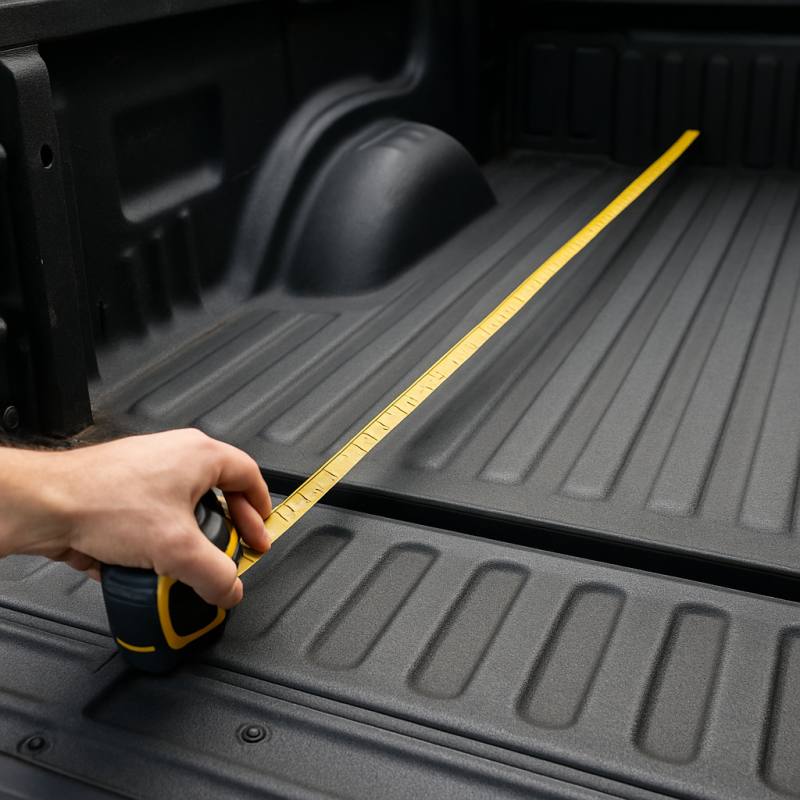
Accurate measurements are the single most important step in this entire build. Truck beds aren't perfectly rectangular — they taper slightly toward the cab and have wheel wells that eat into usable width — so you need precise numbers before cutting anything.
Key measurements to take:
- Length at floor: measure from the inside of the tailgate to the bulkhead (cab wall)
- Width at narrowest point: measure between the wheel wells at their widest intrusion
- Width at tailgate: measure the full inside width at the tailgate end
- Wheel well depth: how far each wheel well protrudes into the bed
- Wheel well height: measure from bed floor to the top of each wheel well
- Bed depth: floor to top of bed rail on both sides
Here are common truck bed dimensions for reference:
| Truck Model | Bed Length | Width (Wheel Wells) | Full Width |
|---|---|---|---|
| Ford F-150 (5.5 ft) | 67" | 51" | 65" |
| Ram 1500 (5.7 ft) | 68" | 51" | 66" |
| Chevy Silverado (5.8 ft) | 69" | 51" | 64" |
| Toyota Tundra (5.5 ft) | 66" | 50" | 62" |
| Toyota Tacoma (5 ft) | 60" | 42" | 56" |
Pro tip: measure everything twice and subtract 1/4 inch from each dimension. You want a slight gap around the platform edges for easy installation and removal. A platform that's too tight is a nightmare to wrestle in and out of the bed.
Write every measurement on a sketch showing the bed shape from above, including exactly where the wheel wells are. This sketch becomes your cutting guide.
How Should You Design the Platform Frame?
The best platform design uses a two-piece modular frame that splits at the midpoint of the bed. This lets one person install or remove each half without help, and you can use just one section when you need partial bed access for hauling.
Frame design principles:
- Target height: 12–16 inches from the bed floor gives the best balance of storage space and headroom under a topper or tent
- Two-section split: divide at the midpoint so each piece weighs 40–60 lbs
- Perimeter frame: 2×4s form the outer rectangle of each section
- Cross supports: add a 2×4 cross brace every 16 inches to prevent plywood flex
- Leg design: vertical 2×4 legs at each corner and at every cross brace
For the leg height calculation, subtract the plywood thickness (3/4 inch) and framing lumber width (1.5 inches for a 2×4 laid flat) from your desired total height. If you want a 14-inch platform, your legs should be 11.75 inches tall.
The section that sits over the wheel wells needs notched corners. Measure the wheel well dimensions from your sketch and cut notches into the plywood and frame so the platform sits flush around them. Leave 1/4-inch clearance around each notch.
If you plan to use a truck bed tent, keep your platform height at 12 inches or less — taller platforms reduce headroom inside the tent significantly. Pair it with a canopy or topper instead if you want more height and weather protection.
Consider adding alignment pins — short dowels on one section that fit into holes on the other — so the two halves lock together and don't shift while you sleep.
How Do You Cut and Assemble the Frame?
With measurements and design finalized, it's time to cut lumber and assemble. Expect this phase to take 2–3 hours if you work methodically and double-check every cut before making it.
Step 1: Cut the plywood tops
- Transfer your bed measurements onto the plywood sheets
- Mark the midpoint split line — each piece covers half the bed length
- Cut wheel well notches on the rear section
- Sand all cut edges smooth with 120-grit sandpaper
Step 2: Build the leg assemblies
- Cut all 2×4 legs to your calculated height (e.g., 11.75 inches for a 14-inch platform)
- Cut perimeter frame pieces to match each plywood section's dimensions
- Cut cross braces to fit inside the perimeter frame every 16 inches
Step 3: Assemble each frame section
- Lay out the perimeter 2×4s on a flat surface and screw corners together with two 2.5-inch screws per joint
- Add cross braces inside the perimeter, securing with screws through the outside
- Reinforce every joint with an L-bracket on the inside — this prevents racking
- Attach legs at each corner and at each cross brace intersection using wood glue plus two screws per leg
- Flip the frame upright and check with a level — trim any uneven legs
Step 4: Attach the plywood top
- Set the plywood on the frame and align all edges
- Pre-drill and countersink screw holes every 8 inches around the perimeter and along each cross brace
- Drive 1.5-inch screws through the plywood into the frame
- The countersink ensures screw heads sit flush so your mattress lies flat
Attach rubber cabinet bumpers to the bottom of every leg. This protects your bed surface and prevents the platform from sliding around on smooth truck bed mats.
How Do You Finish and Weatherproof the Platform?
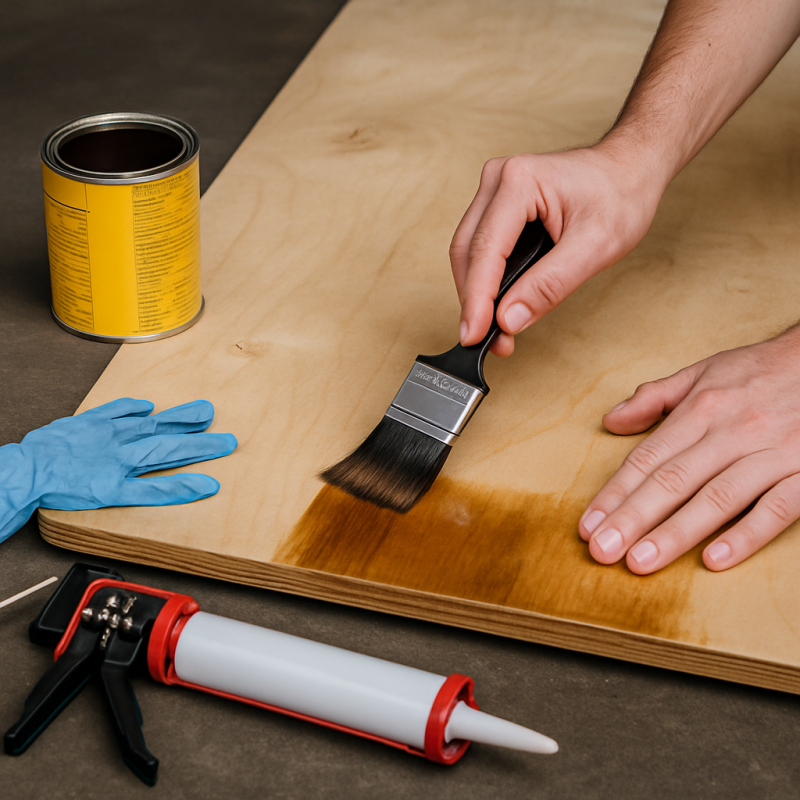
Raw plywood and lumber will absorb moisture, swell, and eventually rot if you don't seal them. Two coats of polyurethane or exterior paint protect your platform for years of truck camping use.
Finishing steps:
- Sand all surfaces: hit everything with 120-grit, then 220-grit for a smooth finish
- Wipe clean: use a tack cloth to remove all sawdust before applying finish
- Apply first coat: brush or roll polyurethane on all exposed surfaces, including the underside
- Dry and sand: let it dry 4–6 hours, then lightly sand with 220-grit
- Apply second coat: focus especially on edges and end grain where moisture penetrates fastest
- Final dry: allow 24 hours before loading gear or placing a mattress
Alternative finishes:
- Truck bed liner spray: gives a rugged, textured surface that's completely waterproof — ideal if aesthetics don't matter
- Marine-grade spar varnish: the toughest option for extreme weather exposure
- Exterior latex paint: budget-friendly and available in any color — two coats provide solid protection
If you plan to store gear underneath the platform, consider adding carpet or indoor/outdoor fabric to the top surface. This keeps your mattress from sliding and adds a small comfort layer. Staple it down around the edges and trim with a utility knife.
For the underside storage area, you might want to line the bed floor with a rubber mat to protect both your gear and the bed surface. A truck bed drawer system can maximize the under-platform storage space by keeping gear organized and accessible from the tailgate end.
What's the Best Mattress Setup for Your Platform?
Your sleeping platform is only as comfortable as the mattress you put on it. A 3–4 inch memory foam mattress offers the best balance of comfort, packability, and value for truck bed camping.
Mattress options ranked by comfort:
- Memory foam mattress pad (3–4 inches): the gold standard for platform builds — conforms to your body, rolls up for storage, and costs $60–$120
- Self-inflating sleeping pad: lighter and more compact but less comfortable for multi-night trips
- Air mattress: most affordable but can deflate overnight and feels less stable on a flat platform
- Futon mattress: thick and comfortable, folds in half for easy transport and doubles as seating
The CYMULA CertiPUR-US Memory Foam Camping Mattress is an excellent choice at around 3 inches thick — it rolls up compactly for storage and uses certified foam that won't off-gas in an enclosed truck bed space.
For those who prefer a thicker sleep surface, the Japanese Floor Futon Mattress with its 9-layer construction provides exceptional comfort — though it's bulkier to store when not in use.
Sizing tips:
- Measure your platform surface and order a mattress that's 1–2 inches narrower on each side for easy placement
- Twin size (38" × 75") fits most short-bed trucks between the wheel wells
- Full size (54" × 75") works in full-width builds that span over the wheel wells
- Many camping mattresses come in custom truck-bed dimensions — check before buying
If you want the fastest setup with no building required, truck bed air mattresses are purpose-built to fit pickup beds and inflate in minutes — though they lack the storage benefits of a raised platform.
CYMULA CertiPUR-US Memory Foam Camping Mattress Pad
A portable roll-up memory foam pad that fits perfectly on DIY sleeping platforms. CertiPUR-US certified so it won't off-gas in enclosed truck bed spaces.
Check Price On AmazonIf you click this link and buy, we earn a commission at no additional cost to you.

6th Generation Japanese Floor Futon Mattress
Extra-thick 9-layer futon mattress that provides exceptional comfort on flat platforms. Folds in half for easy transport and doubles as camp seating.
Check Price On AmazonIf you click this link and buy, we earn a commission at no additional cost to you.

How Do You Install and Secure the Platform?
Installation takes 5–10 minutes once the platform is built — that's the beauty of a two-piece modular design. Here's how to get it locked in place securely.
Installation steps:
- Lower the tailgate and clean the bed floor of any debris or loose items
- Slide the rear section in first — the piece with wheel well notches goes against the cab-side wheel wells
- Position it flush against the wheel wells and centered side-to-side
- Slide the front section in and butt it against the rear section
- Align the dowel pins (if you installed them) so both halves lock together
- Check stability by pressing down on each corner and the center — no rocking allowed
Securing methods:
- Ratchet straps: loop through the tie-down points in your bed and over the platform frame — this prevents shifting during driving
- Bed cleat mounts: bolt L-brackets to the bed tie-down holes and use wing nuts to lock the platform down
- Non-slip pads: heavy-duty rubber shelf liner under each leg adds friction and prevents sliding on smooth surfaces
- Velcro strips: industrial-strength Velcro between the two sections keeps them from separating
For short-bed trucks (5–5.5 feet), your platform won't be long enough for taller sleepers. Consider building the platform to extend slightly past the tailgate opening and sleeping with the tailgate down. A bed extender can provide extra support for the overhang.
Important: always test the platform by sitting and lying on it in your driveway before heading to camp. Check for any creaking, wobbling, or flexing that needs reinforcement. It's much easier to fix issues at home than at a remote campsite.
What Are Common Mistakes and How Do You Fix Them?
Even experienced builders run into issues with truck bed platforms. Here are the most common problems and proven solutions so you can avoid them or fix them quickly.
Problem: Platform rocks or wobbles
- Cause: legs are slightly different heights, or the bed floor isn't perfectly flat
- Fix: use adjustable furniture leveling feet instead of fixed legs — screw them into the bottom of each 2×4 leg and dial in the height
Problem: Plywood flexes or bounces
- Cause: cross braces are too far apart (more than 16 inches)
- Fix: add additional cross braces to reduce unsupported plywood span to 12 inches or less
Problem: Platform is too heavy to move alone
- Cause: single-piece design or oversized lumber
- Fix: rebuild as two sections, or switch from 2×4 framing to 2×3 or even 2×2 lumber if weight capacity allows
Problem: Condensation forms underneath
- Cause: poor airflow between the platform surface and mattress, especially in cold weather
- Fix: drill 1-inch ventilation holes in the plywood every 12 inches, or use a breathable mattress pad that promotes airflow
Problem: Platform slides during driving
- Cause: smooth bed surface or liner with no friction
- Fix: add non-slip rubber feet, use ratchet straps to tie-down points, or install cleats that bolt to the bed
Problem: Not enough headroom with a topper
- Cause: platform is too tall for the available space
- Fix: reduce frame height to 10–12 inches and use stackable bins for under-platform storage instead of tall gear
If building from scratch feels too ambitious, check out our reviews of pre-built sleeping platforms — several commercial options offer similar functionality with no tools required.
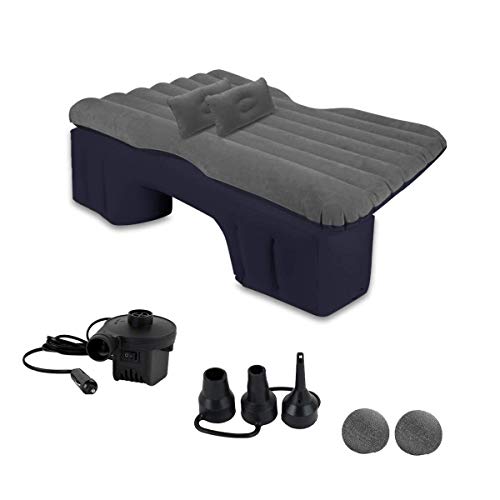
Zento Deals Truck and Car Air Mattress with 2 Pillows
A quick alternative while you build your platform — this inflatable mattress fits truck beds and includes two pillows for immediate camping comfort.
Check Price On AmazonIf you click this link and buy, we earn a commission at no additional cost to you.
Gonex 31.5" Extra Wide Camping Cot
A no-build alternative that sets up inside a truck bed in minutes. The 31.5-inch width and 350 lb capacity make it a solid option for solo truck campers.
Check Price On AmazonIf you click this link and buy, we earn a commission at no additional cost to you.

Related Articles
- Best Truck Bed Sleeping Platforms for Camping — Pre-built platform alternatives for those who prefer not to build from scratch
- Best Truck Bed Air Mattresses for Camping — Alternative to platform builds — inflatable mattresses designed for truck beds
- Best Truck Bed Tents for Camping — Tent options that pair with sleeping platforms for weather protection
- Best Truck Bed Canopies and Toppers — Toppers provide enclosed sleeping space above the platform
- Best Truck Bed Liners for Protection — Bed liners protect the truck bed surface under the platform
- Best Truck Bed Mats for Every Pickup — Bed mats add cushioning and grip under platform legs
- Best Truck Bed Drawers for Storage — Drawer systems maximize under-platform storage organization
- Best Truck Bed Extenders for Hauling — Extenders support platform overhang past the tailgate for short beds
Conclusion
Recommended Products
CYMULA CertiPUR-US Memory Foam Camping Mattress Pad
A portable roll-up memory foam pad that fits perfectly on DIY sleeping platforms. CertiPUR-US certified so it won't off-gas in enclosed truck bed spaces.
Check Price On AmazonIf you click this link and buy, we earn a commission at no additional cost to you.
6th Generation Japanese Floor Futon Mattress
Extra-thick 9-layer futon mattress that provides exceptional comfort on flat platforms. Folds in half for easy transport and doubles as camp seating.
Check Price On AmazonIf you click this link and buy, we earn a commission at no additional cost to you.
Zento Deals Truck and Car Air Mattress with 2 Pillows
A quick alternative while you build your platform — this inflatable mattress fits truck beds and includes two pillows for immediate camping comfort.
Check Price On AmazonIf you click this link and buy, we earn a commission at no additional cost to you.
Gonex 31.5" Extra Wide Camping Cot
A no-build alternative that sets up inside a truck bed in minutes. The 31.5-inch width and 350 lb capacity make it a solid option for solo truck campers.
Check Price On AmazonIf you click this link and buy, we earn a commission at no additional cost to you.
Frequently Asked Questions
How much does it cost to build a truck bed sleeping platform?
What type of plywood is best for a truck bed platform?
Can you build a sleeping platform for a short bed truck?
How tall should a truck bed sleeping platform be?
Do you need to remove the platform to use the truck bed normally?
What mattress works best on a truck bed sleeping platform?
How do you prevent condensation under the sleeping platform mattress?
Can two people sleep on a truck bed platform?
Affiliate Disclosure: This article contains affiliate links. If you purchase through these links, we may earn a commission at no extra cost to you.